Ugly Rental Ceiling Light? Is the Fixture Really the Problem?
Ugly rental ceiling light? Find out whether the real problem is the fixture, the light it produces, or the job it does before you replace anything.

An ugly ceiling light can dominate a rental room, but covering or replacing it only makes sense if the fixture itself is actually the problem.
First check what bothers you: the shape or finish of the fixture, the light it casts, where the light lands, or simply the fact that another part of the room is still too dark.
If the fixture is the real problem, then decide whether to work around it, cover it, or consider replacement.
Quick Take
First, Figure Out What Is Actually Wrong With the Ceiling Light
An unattractive ceiling light is one thing. A fixture that may not be functioning normally is another.
If the light flickers unexpectedly, buzzes, smells unusual, seems loose or damaged, or becomes unusually hot, stop treating it as a decorating problem.
Do not add a cover or keep experimenting with cosmetic fixes to make it easier to live with. That is the point to involve your landlord, maintenance contact, or a qualified professional as appropriate.
Once the fixture is functioning normally, you can judge whether the remaining problem is visual or lighting-related.
Turn the Light Off and Look at the Fixture Again
The easiest way to separate a fixture problem from a lighting problem is to remove the light from the equation.
During the day, or when the room has enough light from another source, switch the ceiling light off. Then look at it from the places where you normally see it: the doorway, sofa, bed, or desk.

Ask:
Does the fixture still pull my eye when it is doing nothing?
If the answer is yes, you may genuinely dislike the fixture as an object. A large dome can feel heavy against the ceiling. An old metallic finish may stand out from the rest of the room. A bulky fluorescent housing or oversized flush mount can become a visual feature even when it is off.
But if you barely notice the fixture until the light comes on, pause before assuming the hardware needs to go.
You may not hate the fixture nearly as much as you hate what happens when it turns on.
A fixture you barely notice when it is off may not need a fixture-level solution.
If the Room Looks Worse Only When the Light Is On, Test the Light First
Sometimes the fixture looks tolerable until you switch it on.
Then the room feels harsh. Colors look worse. Shadows become more obvious. Everything seems flatter.
Before changing the fixture, test the easiest reversible variable that could be creating that reaction.
Depending on the fixture, that may mean testing a compatible bulb that matches the fixture’s base and rating, a safe and compatible diffuser or shade option, or using the ceiling light alongside lighting you already own.
The point is not to build a complete lighting scheme. It is to find out whether a smaller change alters what bothers you.
Test the easiest reversible variable before deciding the hardware is the problem.
If that change makes the room feel noticeably better, look at the fixture again.
Do you still hate it?
Or has it gone from something impossible to ignore to something you simply would not have chosen yourself?
If it is the second one, you may already be done.

Ask What Job You Still Need the Ceiling Light to Do
There is a common answer to unattractive overhead lighting: just stop using it.
Sometimes that works. Sometimes it creates a new problem.
Ask:
If this ceiling light disappeared tonight, what job would I immediately miss?
You may rely on it when you enter the room, for daily-use tasks such as cleaning or getting dressed, or because the room is too small to accommodate enough floor and table lamps to replace useful overall light.

If your lamps make the room feel better but leave it too dim when you actually need to use it, keeping the ceiling light off forever is not a complete solution.
Do not solve a fixture-style problem by accidentally creating a room-lighting problem.
If your larger issue is how to light a room when overhead lighting is missing or not useful enough, No Overhead Light? How to Light a Rental Without Rewiring handles that problem separately.
Here, the question is simpler: does this fixture still perform a job you want to keep?
If yes, whatever you do next needs to preserve that function.
RENTAL DAYDREAM CHECK
Before you change the fixture, make sure you are solving the right problem.
Only move to a fixture-level change if the fixture itself is still the problem after these checks.
| CHECK | Column 2 |
|---|---|
| Does the fixture still bother you when it is off? | You may have a fixing problem |
| Does a small reversible lighting change make the room feel better? | Stop at the lighting level |
| Would you miss the overhead light if it disappeared? | Preserve that function |
| Is the fixture behaving abnormally? | Treat it as a repair issue |
If the fixture still bothers you after the light, function, and safety questions are separated out, then a fixture-level change makes sense to consider.
Use the Smallest Safe Fixture-Level Change That Actually Solves the Problem
Suppose the fixture still bothers you when it is off, changing the light quality did not solve it, and you still want the overhead function.
Now it makes sense to look at the fixture itself.
First, keep the safety boundary clear:
Do not improvise with fabric, paper, or decorative covers near bulbs or fixtures that generate heat.
Any change should be safe, compatible with the fixture, and appropriate for a rental.
Then ask:
Do I hate the whole fixture—or mainly the part I can see?
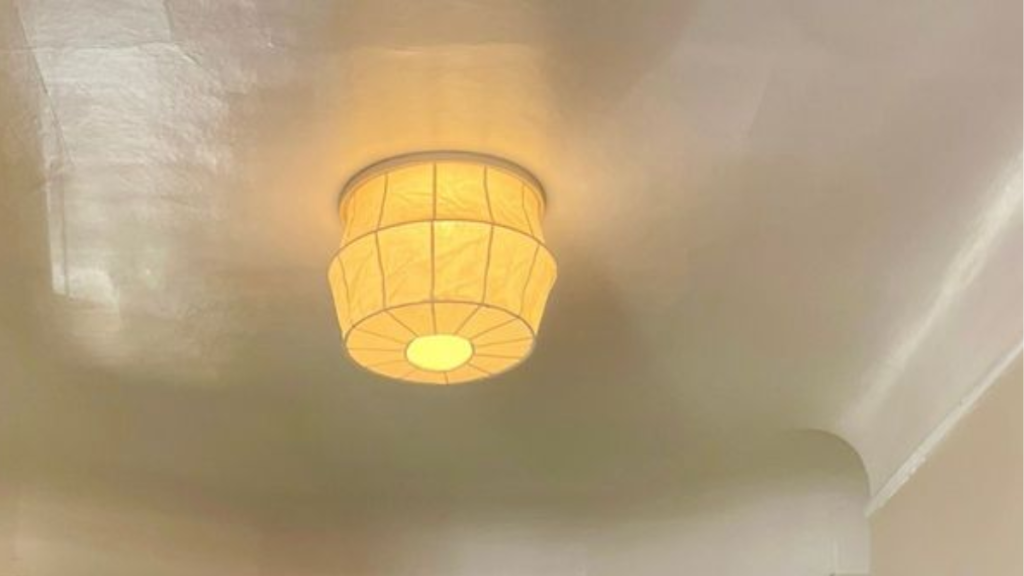
Sometimes most of the visual problem is concentrated in the shade, diffuser, outer cover, visible bulb, or another removable non-electrical component.
If a safe, compatible change to that visible part is enough to stop the fixture dominating the ceiling, you may not need to replace the whole unit.
Use the smallest fixture-level intervention that removes the part you actually dislike.
That is enough. You do not need to turn a ceiling light you dislike into a ceiling light you love.
If the Fixture Still Bothers You, Then Decide Whether Replacement Is Worth It
Sometimes the smaller tests do not change the answer.
You still notice the fixture when it is off. Light quality was not the real problem. There is no smaller safe change that fixes the part you dislike, and you still want the function of an overhead light.
At that point, stop asking bulbs and lamps to solve a fixture problem.
You now have a real replacement decision.
That is where Should You Replace a Rental Light Fixture? becomes the next question.
That article can handle landlord permission, electrical scope, installation, the cost of the new fixture, storing the original, reinstalling it at move-out, and whether the replacement has any value after you leave.
Those questions matter once you know the fixture itself is the problem.
Know When the Ceiling Light Is Good Enough to Leave Alone
Not every rental fixture needs to become something you like.
If the light quality is better, the fixture still performs a useful job, and you no longer notice it every time you enter the room, replacement may be more project than problem.
Ask:
Do I still have a ceiling-light problem—or do I simply know that I would not have chosen this fixture?
If it is only the second one, stop.
A functioning ceiling light that no longer controls your attention can simply remain one of the fixed facts of the rental.
FAQ
How can I make an ugly rental ceiling light look better?
First determine whether the problem is the fixture itself or the light it produces.
Turn the light off and look at the fixture again. If it barely bothers you when it is off, test a reversible lighting variable before changing the hardware. If the fixture itself still pulls your attention, look for the smallest safe fixture-level change that addresses the visible problem.
Can I cover an ugly ceiling light in a rental?
Only use a solution that is safe and compatible with the fixture.
Do not improvise with fabric, paper, or other decorative materials near bulbs or heat-producing fixtures. If you are unsure whether a shade, diffuser, or other component is compatible, do not treat it as a casual DIY cover.
Can I replace a ceiling light fixture in a rental?
Possibly, but confirm landlord permission and any applicable electrical requirements first.
If you have already confirmed that the fixture itself is the problem, see Should You Replace a Rental Light Fixture?
What if I hate overhead lighting but still need the room bright?
Keep the function separate from the style problem.
If the ceiling light provides useful overall illumination for entering the room, everyday tasks, or a space where multiple lamps are impractical, simply keeping it switched off may create another problem. Preserve that lighting job first, then decide how much of the fixture itself actually needs to change.