Small Entryway Ideas for Renters: 10 Setups That Actually Fit
No foyer or room for a bench? Explore 10 small entryway ideas for renters, with realistic apartment layouts, smart storage finds, and useful shopping tips.
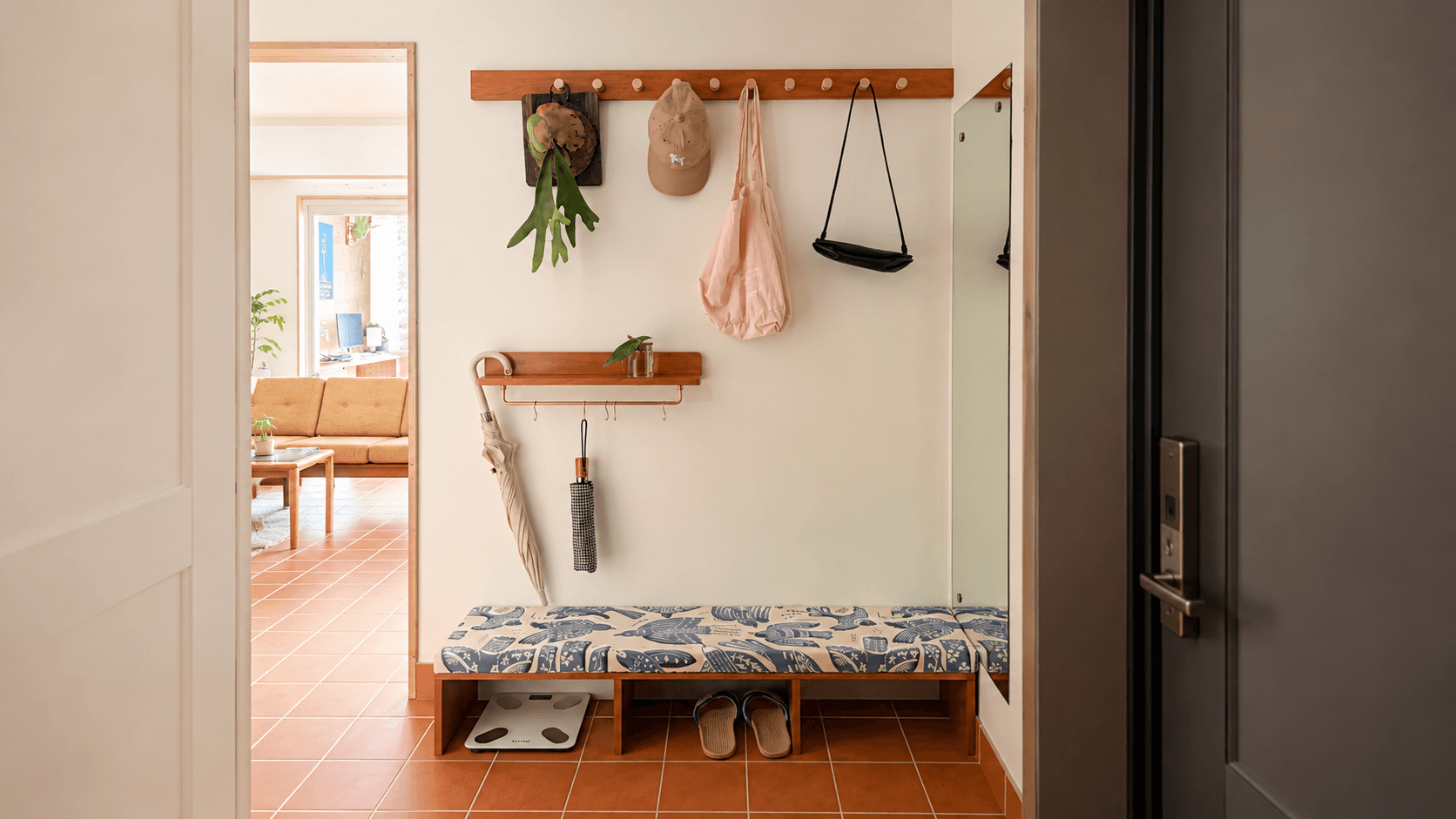
Some apartments have a foyer. Others have a front door that opens straight into the living room, a narrow hall lined with shoes, or one awkward corner that never seems useful. The prettiest entryway furniture won’t help much if it doesn’t fit the way you come and go.
These small entryway ideas take a different approach: 10 real-world types of spaces, ten ways to make them more welcoming, and a useful shopping option for each. You might love the look of a little wood console or discover that a mat and the sideboard you already own are all you need.
Quick Take
| YOUR SPACE | START WITH |
|---|---|
| Front door opens into the living room | A separate entry mat — Idea 1 |
| Narrow wall beside the door | A slim console — Idea 2 |
| Shoes are always underfoot | An open rack or shallow cabinet — Ideas 3–4 |
| You need a place to sit | A compact bench — Idea 5 |
| No coat closet or free floor space | A freestanding rack or interior-door organizer — Ideas 6–7 |
| Awkward nook or shared entrance | A dedicated basket or separate cubbies — Ideas 8–9 |
| Nothing fits next to the door | An existing sideboard farther inside — Idea 10 |
Before bringing in a new piece, open the front door fully and picture carrying groceries through the space. The useful spot for storage is the one that leaves that everyday route clear.
1. Define the Doorway Without a Separate Foyer
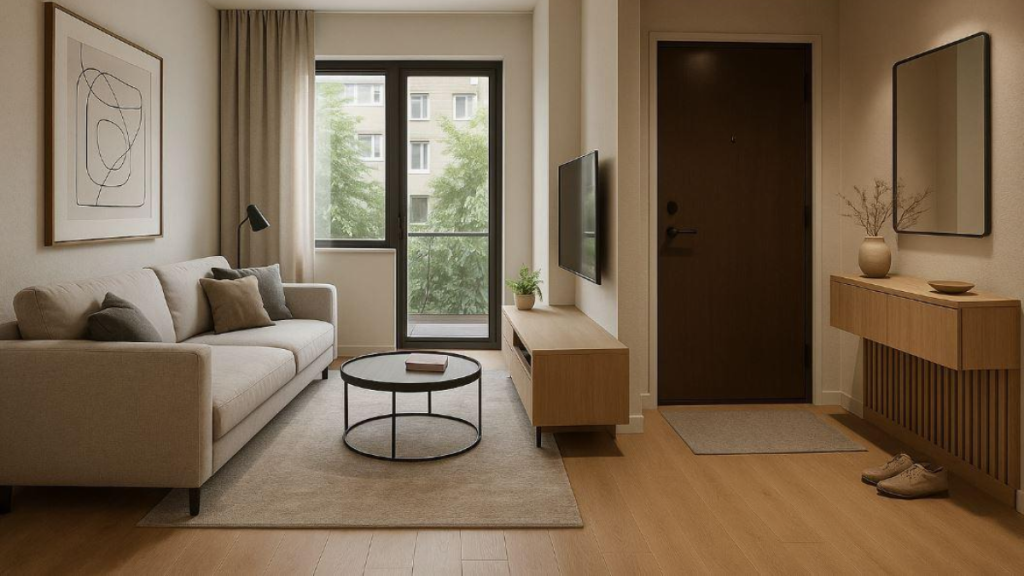
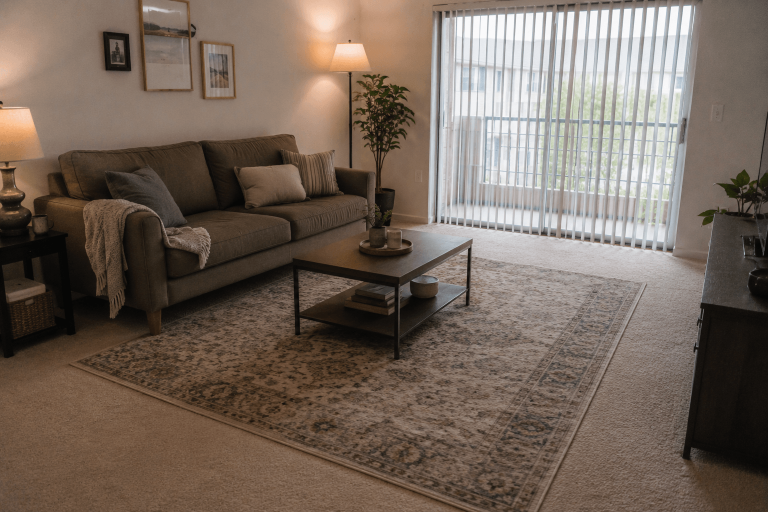
When the entrance is also your living room, a separate mat can make the doorway feel like its own little zone. In this setup, the soft rug stays under the sofa and coffee table, while a smaller neutral mat marks the area by the dark wood front door. Nothing interrupts the view from the entrance to the window, which is part of why the room still feels open.
The narrow wood cabinet and mirror beside the door blend into the living-room furniture rather than announcing a completely different decorating style. For a similar look, pair a low-profile washable entryway mat with one accent that repeats elsewhere in the room—warm wood, black metal, or a quiet neutral fabric. A mat that lies flat and clears the door gives you the visual boundary without needing a divider.
2. Style a Narrow Entryway With a Slim Console
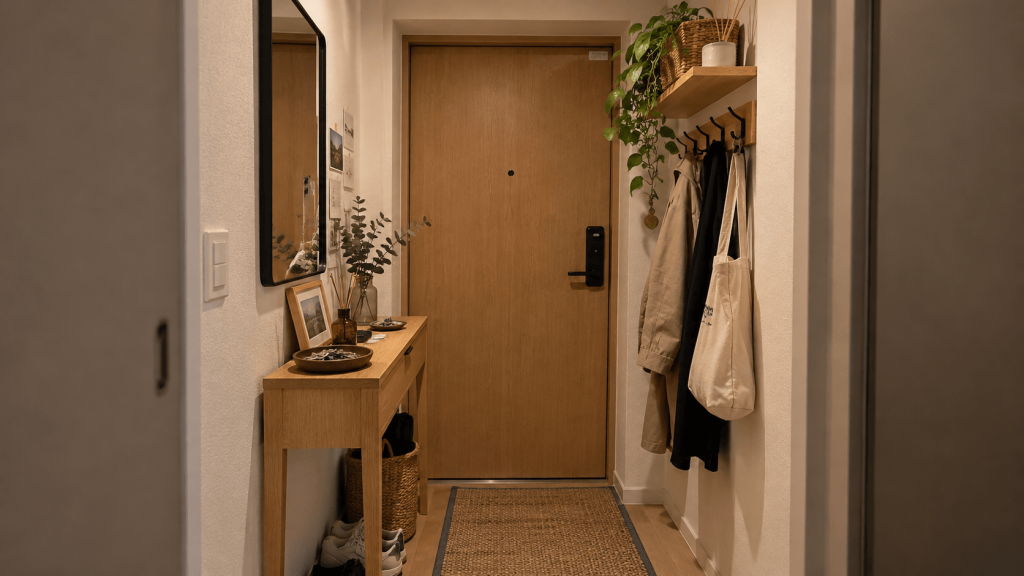
The console in this narrow hallway isn’t just a place for keys; it’s what makes the entrance look finished. A black-framed mirror above the light-wood table adds height, while a shallow bowl, a small picture frame, and a glass vase keep the top interesting without filling it edge to edge. A woven basket and shoes sit below, leaving most of the floor under the table visible.
That combination is easy to adapt with a slim entryway console table. Choose one with a useful drawer if mail and keys tend to pile up, or an open base if you want space for a basket. The coats and tote on the opposite wall show why the table doesn’t need to do every storage job; it only needs to be a good landing surface.
3. Let an Open Shoe Rack Do the Heavy Lifting
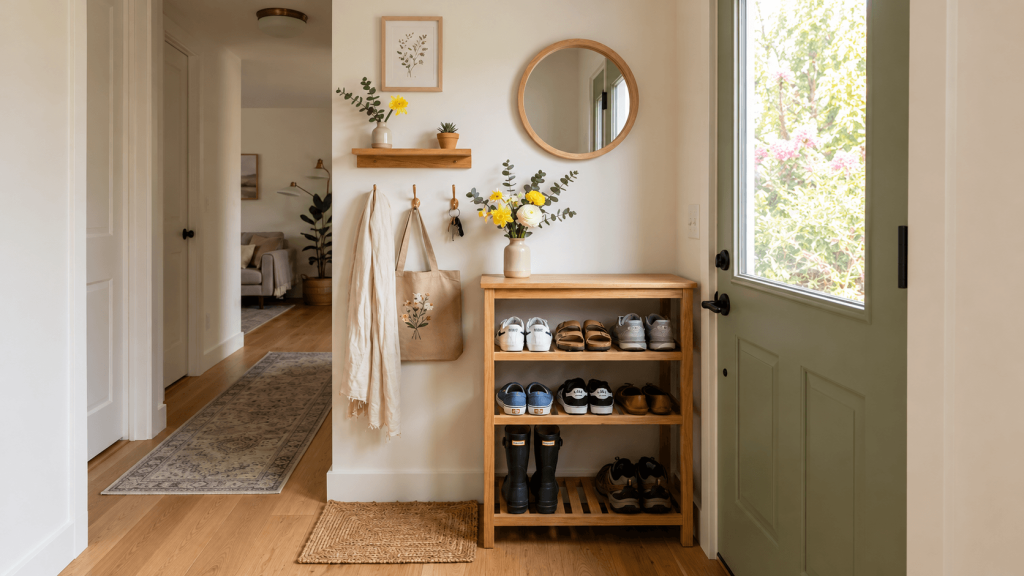
An open shoe rack is satisfying because you can see exactly what belongs there. The wooden shelves in this sunny entrance hold sneakers, sandals, and boots at different heights, with the most-used pairs easy to grab on the way out. Above them, a round mirror and a little shelf with flowers make the rack feel like part of a cheerful entryway rather than a utility corner.
If shoes are the main clutter problem, a compact entryway shoe rack may make a bigger difference than another decorative table. Look at the space between shelves when comparing options: low shelves can suit flats and sneakers, but tall boots need more room. An open rack is also a handy choice for people who want to put shoes away without opening a cabinet every time.
4. Hide Shoe Clutter in a Shallow Cabinet
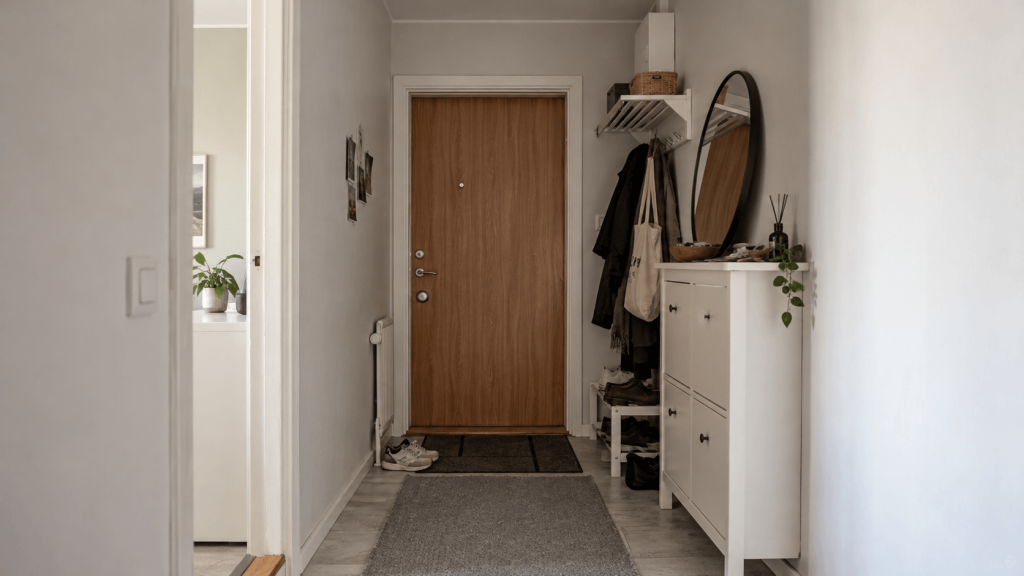
For a narrow hall that already feels busy, closed shoe storage creates a very different look. In this example, a white cabinet almost disappears against the pale wall, while the gray runner carries your eye toward the front door. A tray on top gives keys a home; the shoes themselves stay out of view.
A shallow entryway shoe cabinet is worth exploring if the hallway has a suitable wall but not much depth for a regular dresser. Some styles use tilt-out compartments, which need room to open in front; others have conventional doors. Many tall or tilt-out units require wall anchoring, so choose this style only if you can install it as the manufacturer directs in your rental. Otherwise, the low open rack in Idea 3 may be easier to live with.
5. Pair a Small Bench With a Busy Storage Wall
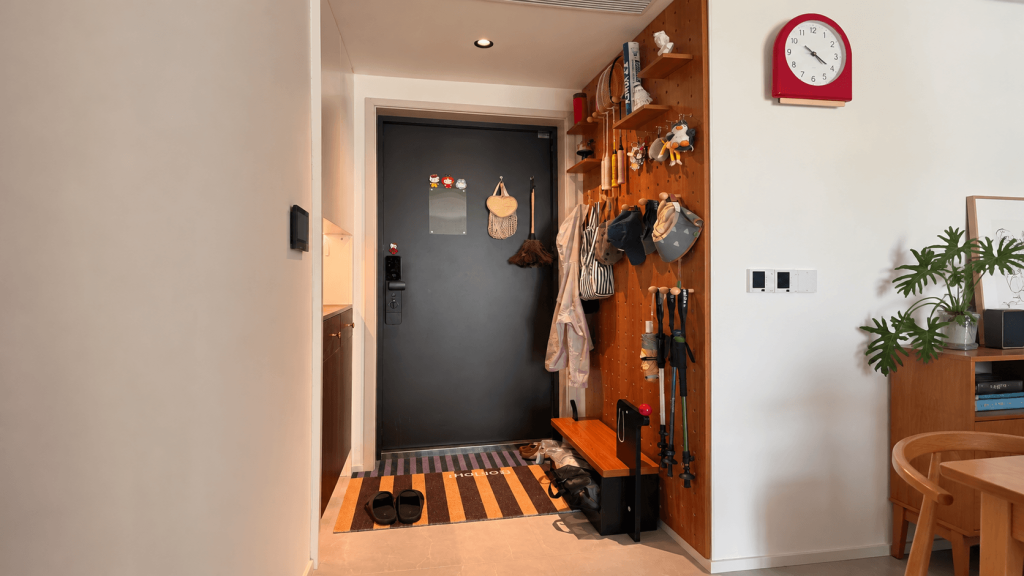
This entryway has personality: a black door, a striped doormat, hats and bags on a wood-toned organizer, and a short bench tucked underneath. The wall is full of everyday gear, but the bench gives the lower half of the arrangement a clear purpose. It’s a place to sit while changing shoes and somewhere to keep a pair close at hand.
You can borrow that part of the look with a small entryway bench with shoe storage, even if you don’t recreate the entire wall. A low shelf beneath the seat is useful for shoes; a solid, seating-rated bench matters more than extra compartments. The pictured pegboard and shelves are mounted installations, so consider them inspiration for organizing your existing hooks rather than a ready-made no-drill setup.
6. Give Bags and Hats a Freestanding Home
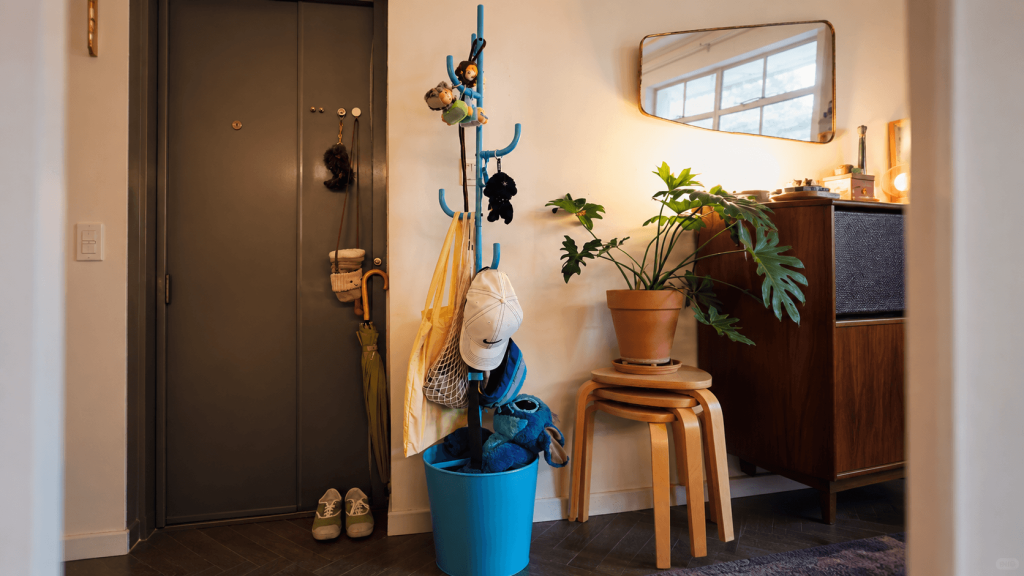
A bright blue coat stand might be the most playful thing in this whole collection, and that’s exactly why it works. It holds a cap, tote bags, small accessories, and soft toys near the dark front door; nearby wood stools, a plant, and a vintage-style cabinet make the color look intentional. This corner feels like someone actually comes home, drops their things, and lives here.
You don’t have to hunt for the same shade of blue. A freestanding entryway coat rack in painted metal, dark wood, or natural oak can give daily bags and hats one dedicated location without adding wall hooks. Pay attention to the base and how wide the rack becomes once things are hanging from it—a slim stand isn’t so slim if bags spread into the doorway.
7. Hang the Little Things on a Nearby Closet Door
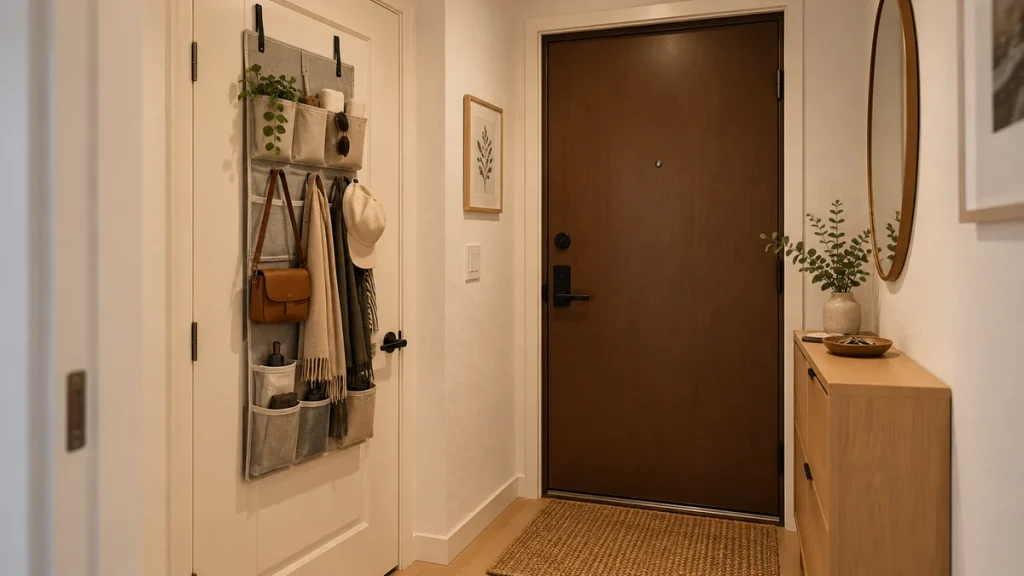
That interior door next to the entrance can store more than you might expect. Here, a fabric organizer holds a small handbag, sunglasses, scarves, a cap, and other grab-and-go accessories, while the main apartment door remains untouched. It’s a useful contrast to the cabinet opposite it: tiny items stay visible in pockets instead of disappearing into one crowded drawer.
Look for an over-door organizer with hooks and pockets if you’re always searching for the same accessories before leaving. Fabric pockets are good for lightweight odds and ends, while hooks make bags easier to lift off quickly. This arrangement depends on a compatible interior door with enough clearance at the top; it isn’t a reason to hang hardware on a front door that has seals, a closer, or other restrictions.
8. Turn an Awkward Nook Into an Umbrella Spot
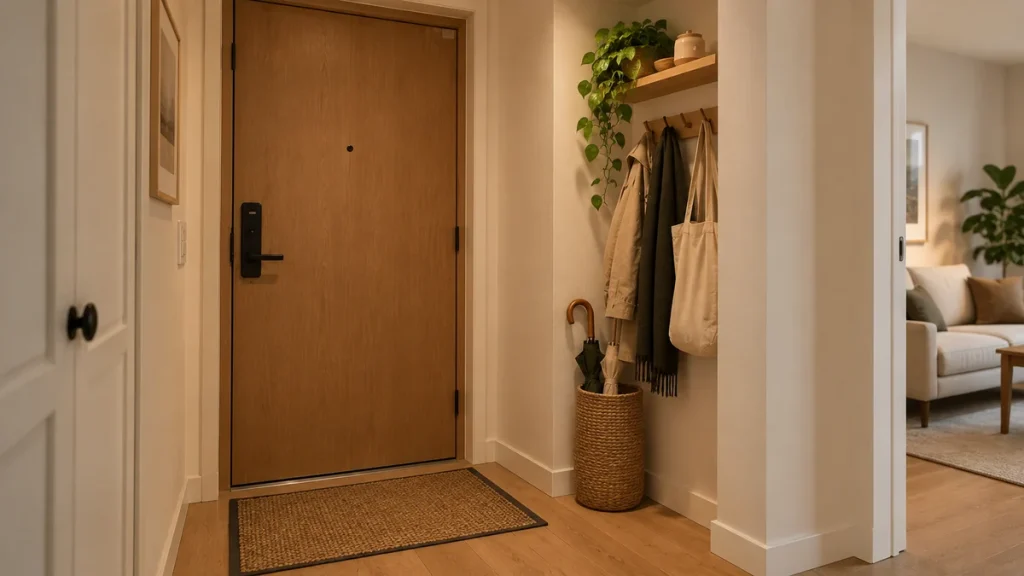
A little recess beside the door can be too narrow for furniture but just right for umbrellas. In this warm-toned setup, a tall woven basket stands below coats and a tote, with a small shelf and trailing greenery above. The basket’s texture softens the otherwise plain corner, and the items are gathered in one place instead of spreading across the entry floor.
For a similar effect, try a woven umbrella stand with a drip tray, or add a removable waterproof liner to a suitable basket. That detail matters if the umbrellas are wet when they come home. You can use an existing recess without copying the wall-mounted shelf or hooks shown in the picture; the floor-level basket is the idea worth starting with.
9. Make Shared Entryway Storage Feel Personal
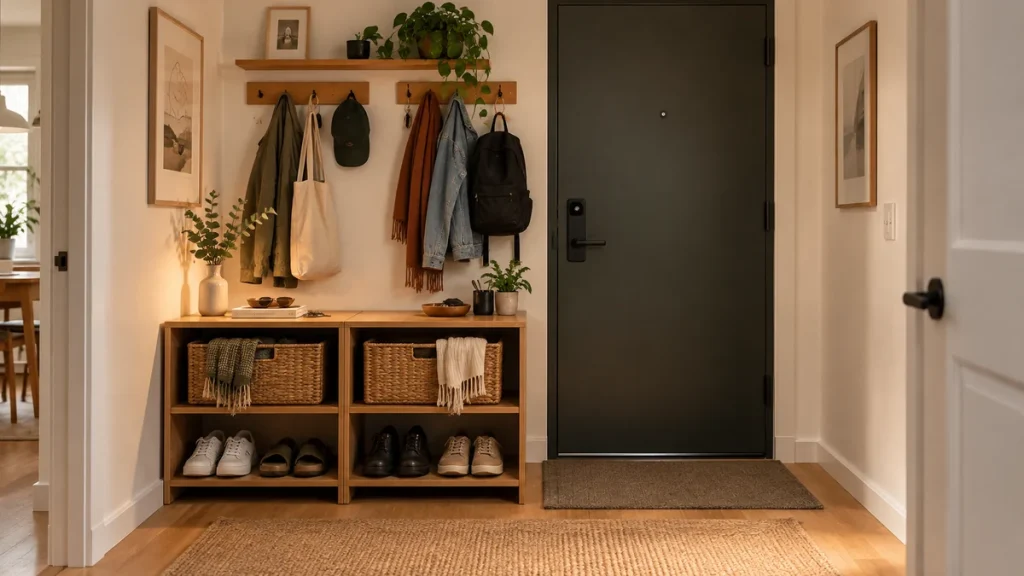
Two people’s everyday things can look surprisingly orderly when each person has a defined space. The low wood cubbies in this entry are arranged as matching halves: individual woven baskets on top, shoes underneath, and separate coats and bags above. The matching furniture pulls everything together even though the contents are different.
A low entryway cubby shoe organizer can create the same effect, whether you use one divided unit or two matching low shelves. Give each person a basket for smaller items, then leave frequently worn shoes in an easy-to-reach lower section. A shared key dish can stay on top, but backpacks and scarves don’t have to become one big communal pile.
10. Build a Drop Zone Beyond the Front Door
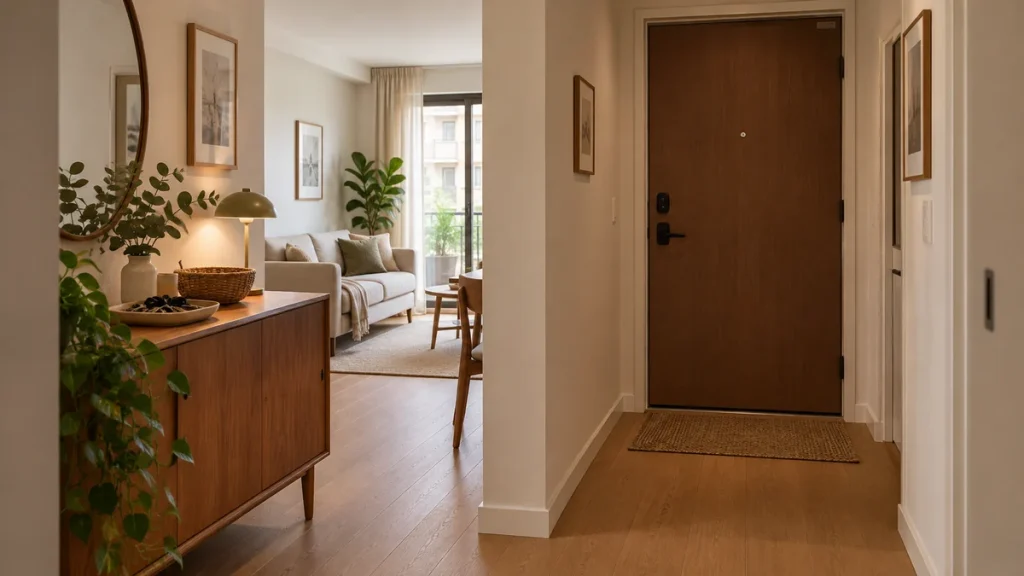
Sometimes the entryway looks best with almost nothing beside the door. In this layout, the narrow approach stays open, and a wooden sideboard a few steps toward the living room handles the small things that come home with you. A lamp, plants, and a shallow dish make it feel like ordinary living-room furniture, not a second foyer squeezed into a hallway.
If you already have a cabinet in that spot, keep it. Adding a small wooden catchall tray gives keys and loose change a visible place to land without creating another furniture footprint. It’s a particularly good solution when a console by the front door would make the entrance awkward to navigate.
FAQ
How do you decorate a small apartment entryway without a foyer?
Let the entrance borrow the style of the room around it. A separate mat, a slim surface for keys, or a compact shoe rack can establish an entry zone without a divider. Repeat one finish or color from the living room so the whole space feels connected.
What can I use instead of an entryway table?
A shallow tray on an existing sideboard can handle keys and mail, while an organizer on a nearby interior closet door can hold scarves and small bags. If shoes are the real problem, a narrow rack is likely to be more useful than a table. The best substitute depends on what you’re actually trying to put away.
Bottom Line
The most appealing small entryways aren’t necessarily the ones with the most furniture. They’re the ones where shoes, bags, and keys have an easy place to go—and the entrance still feels like part of the home. Choose the setup that looks right for your layout, then make it your own.