Vertical Blinds Letting In Too Much Light? Add Blackout Without Removing Them
Blackout curtains over vertical blinds can make a room much darker, but coverage matters more than fabric alone. Find the light leak before adding another layer.
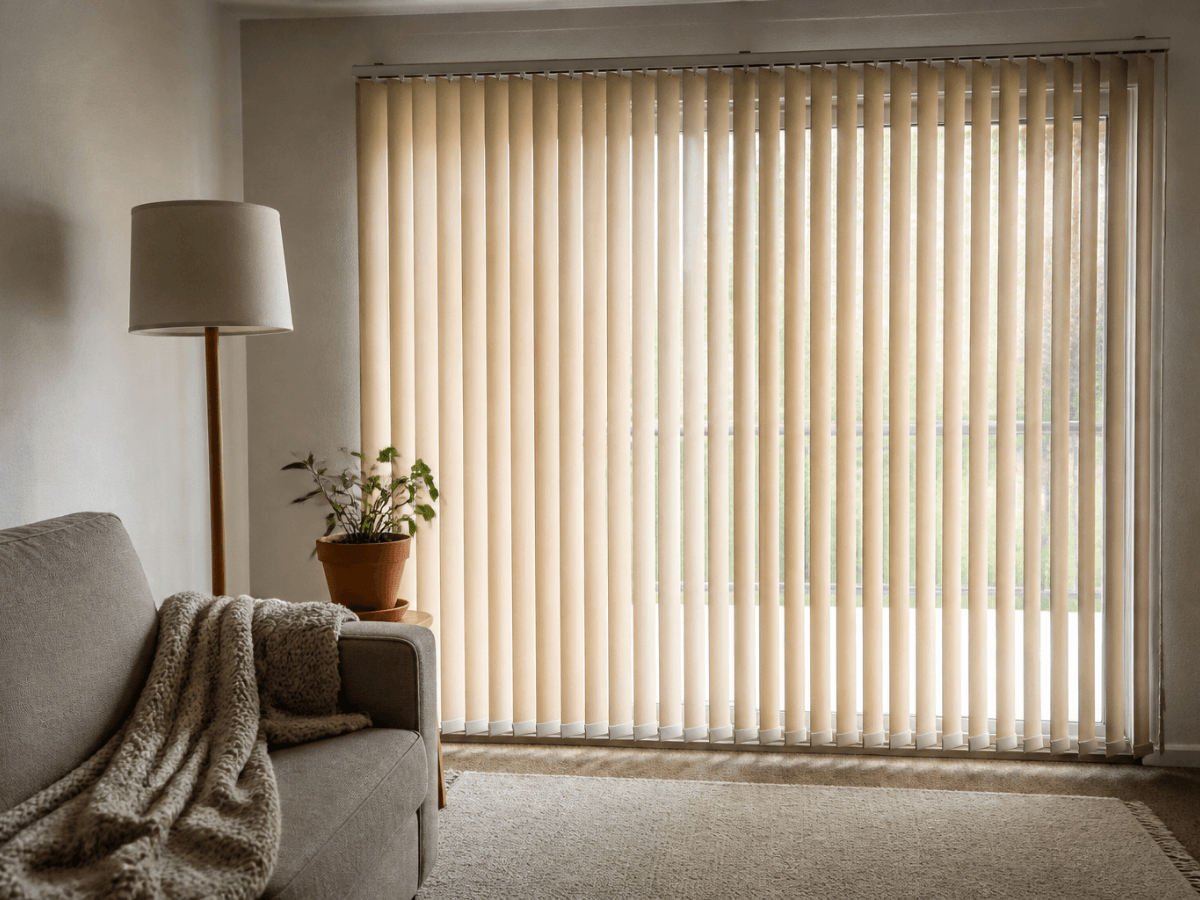
If vertical blinds still let in too much light, adding blackout curtains in front of them can make the room much darker without removing the blinds. But the curtain only works if it covers where the light is actually getting in.
First check whether the whole blind area still glows or whether light is mainly leaking around the sides or top.
That tells you whether you need another blackout layer—or simply better coverage.
Quick Take
First, Decide How Dark You Actually Need the Room
Not every bright bedroom needs full blackout.
Maybe morning sun wakes you earlier than you want. Maybe glare makes the room uncomfortable during the day. Or maybe you sleep during daylight hours and need the room as dark as possible.
Those are different targets.
If you only want softer morning light, you probably do not need to eliminate every thin line around the window. If you need the room much darker for daytime sleep, those same gaps may matter a lot.
Decide what “dark enough” means before you build the setup.
That alone can keep a simple renter fix from turning into layers of fabric and hardware you never really needed.
Then Find Where the Light Is Getting In
Close the vertical blinds during the brightest part of the day and look at the window from across the room.
| WHAT YOU SEE | WHAT IT USUALLY MEANS | NEXT MOVE |
|---|---|---|
| The whole blind or glass area still glows | The existing blinds are not blocking enough light | ADD A BLACKOUT LAYER |
| The center is dark but the sides or top are bright | The material is working; coverage is not | FIX THE GAPS |
| One area only becomes bright at a certain time of day | You may have a glare problem, not a blackout problem | SOLVE THAT AREA FIRST |
You are mainly looking for one of two things.
If most of the window or sliding door still looks bright, the blinds are not blocking enough light on their own. You probably need another opaque layer in front.
If the middle is already fairly dark but the sides or top stay bright, the problem is different. The light is finding a path around the existing coverage.
That distinction matters because the next step changes with it.
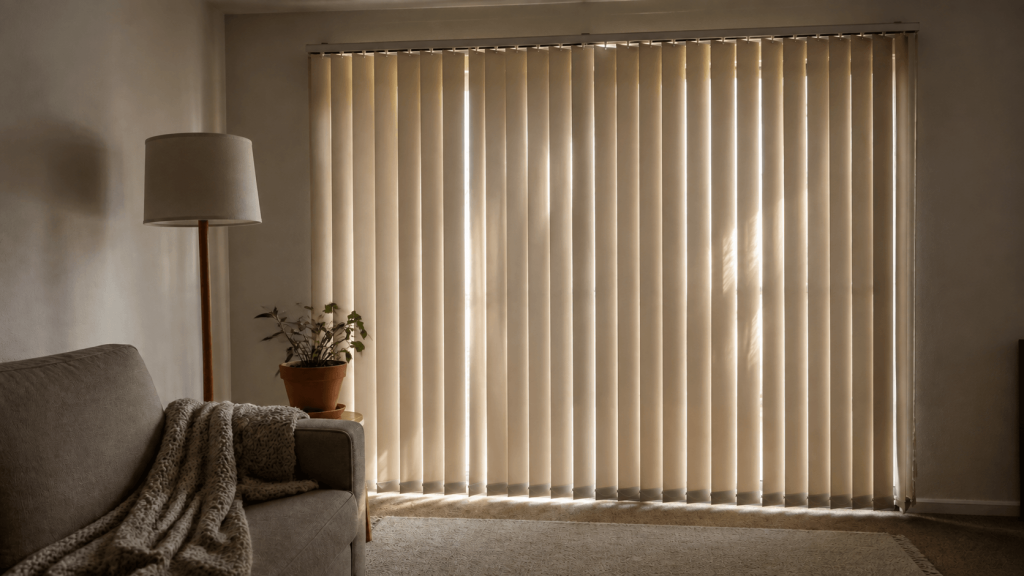
The brightest part of the closed window tells you what the next layer needs to cover.
Whole opening bright? Add another layer.
Edges bright? Fix the gaps.
If the Whole Window Is Bright, Add Blackout Curtains Over the Blinds
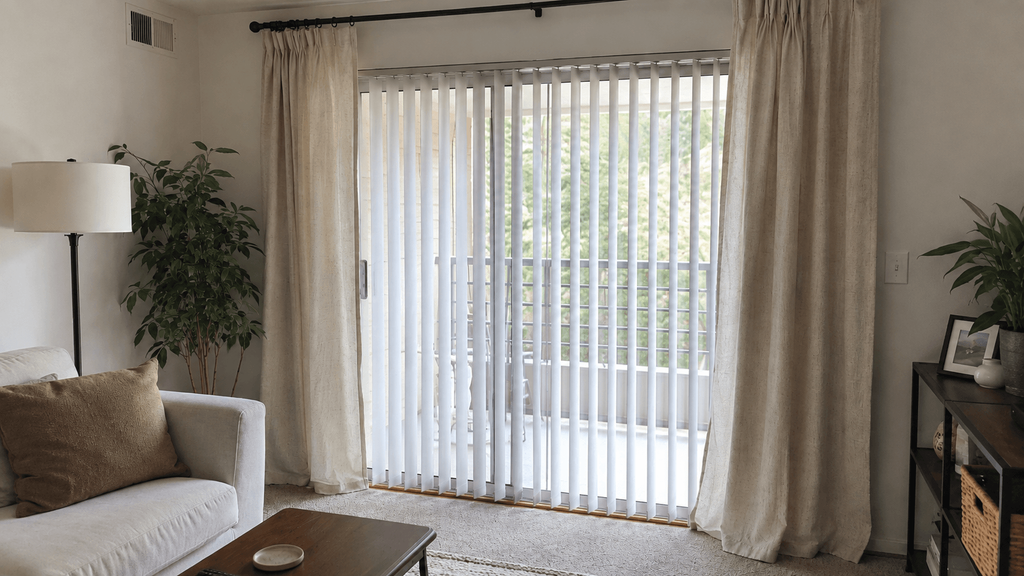
If the vertical blinds still glow when closed, adding an opaque blackout layer in front can make sense.
The blinds can stay exactly where they are. They can keep handling everyday privacy and light control, while the added layer does the heavier darkening when you need it.
The important part is coverage.
A blackout curtain that barely spans the blind headrail may still leave plenty of light around the opening. It also needs enough clearance that the vertical blinds can still rotate and stack normally.
If this is a sliding glass door, daily use matters too.
A setup that makes the bedroom beautifully dark at night but turns the patio door into an obstacle every morning is not especially useful.
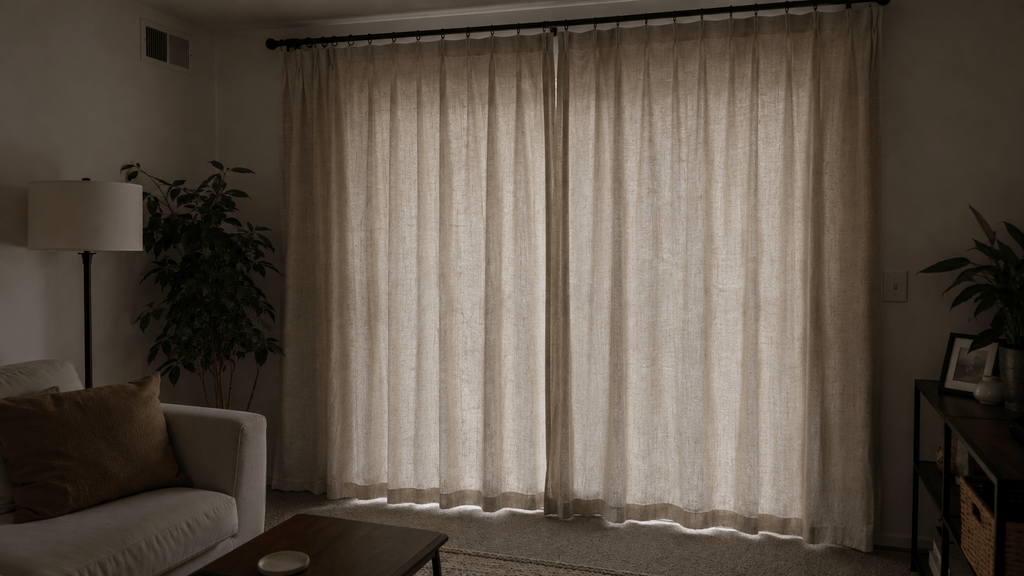
A blackout setup has to work when it is open as well as when it is closed.
If you have not figured out where the curtain can mount or how far it needs to sit in front of the headrail, start with how to hang curtains over vertical blinds in a rental first.
That solves the mounting problem. This one is about getting enough coverage once the curtain is there.
If the Edges Are Bright, Fix the Coverage—not the Fabric
Sometimes the blackout fabric is already doing its job.
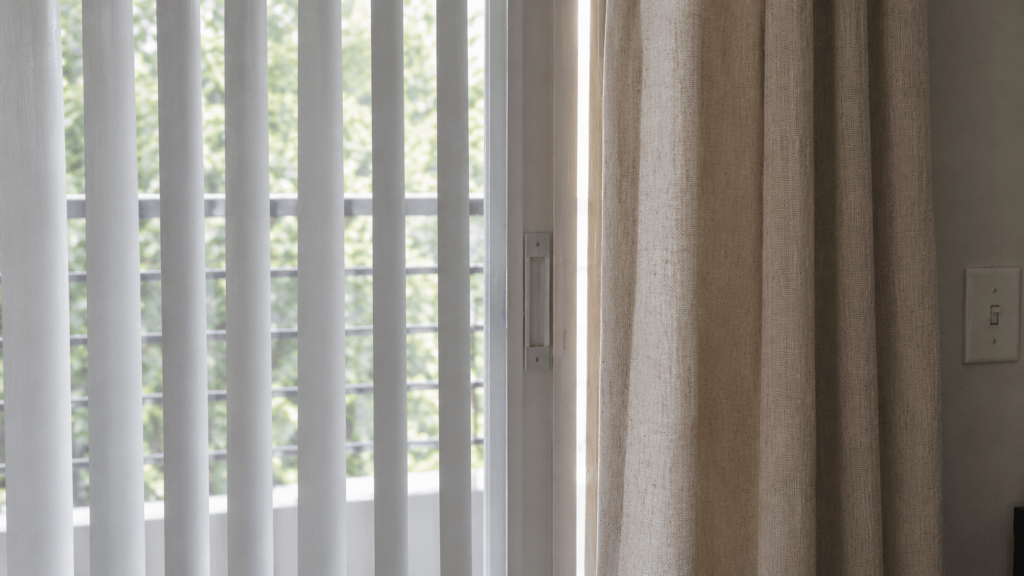
The center of the window looks dark, but there is a bright line along the sides or across the top.
In that case, replacing the curtain with “better blackout” fabric may change very little. The light is going around it, not through it.
A more opaque curtain that stops at the bright edge can perform worse than the same fabric with enough overlap to cover that edge.
Look at where the curtain ends relative to the bright opening.
Does it extend far enough past the glass? Do the sides still leave a clear light path? Is there a large gap above the curtain?
You do not need a complicated measuring formula to see what is happening.
Follow the light.
When the fabric is already blocking the light, fix the gap—not the fabric.
Stop Before Full Blackout if the Problem Is Smaller
There is a point where chasing the last bit of light stops being worth it.
Maybe the room is already noticeably darker and only a faint edge glow remains. Maybe you only wanted the morning sun out of your face. Or maybe the blinds cover a sliding door you use all day.
If getting from “dark enough” to “almost completely black” means adding more fabric, more hardware, or a setup you have to rearrange twice a day, ask whether that last improvement matters to you.
The last few light gaps may cost more effort than they are worth.
So, How Should You Black Out Vertical Blinds Without Removing Them?
If the whole window is still bright, add an opaque blackout layer in front.
If the center is dark but the sides or top still glow, improve the coverage instead of buying darker fabric.
If you only need less glare or a darker morning, stop once the room is comfortable enough.
If you want curtains but have not solved the mounting or clearance problem yet, go to Can You Hang Curtains Over Vertical Blinds? What Actually Works first.
And if the light is not really the problem—you simply hate how the landlord’s vertical blinds look—start with Ugly Vertical Blinds in a Rental? 5 Ways to Deal With Them instead.
Blackout is a coverage problem—not just a fabric problem.
Block the light that is actually bothering you, then stop.
FAQ
Can you make vertical blinds blackout without removing them?
You can make the room much darker by adding an opaque blackout layer in front of the vertical blinds. The result depends not only on the fabric, but also on how well the setup covers the sides, top, and other places where light can get around the blinds.
Will blackout curtains work over vertical blinds?
Yes, as long as the curtains sit far enough in front of the blinds to let the vanes rotate and stack normally. They also need enough coverage around the window or door opening to block the light rather than simply cover the blind headrail.
Why does light still come around my blackout curtains?
The fabric may already be blocking the light. Bright lines along the sides or top usually mean the curtain does not cover the full light path. In that case, improving the overlap or edge coverage matters more than buying darker fabric.
Can I blackout a sliding glass door in a rental?
Yes, but daily access matters. The blackout layer should still let the door open, the vertical blinds operate, and the curtain move out of the way without becoming a nuisance. The best setup is one that gets the room dark enough without making the door harder to use.
Do blackout curtains work better than blackout vertical blinds?
They solve a different problem. Replacing the existing vertical blinds with blackout blinds changes the blind system itself, while blackout curtains can add another opaque layer in front of blinds that need to stay. For renters, adding a curtain may be easier to reverse—but only if the mounting setup and coverage work for the window.