Ugly Rental Floors? What to Cover, What to Work With, and What to Ignore
Ugly rental floors? See when a rug is enough, when temporary flooring makes sense, and how much of the original floor is actually worth covering.
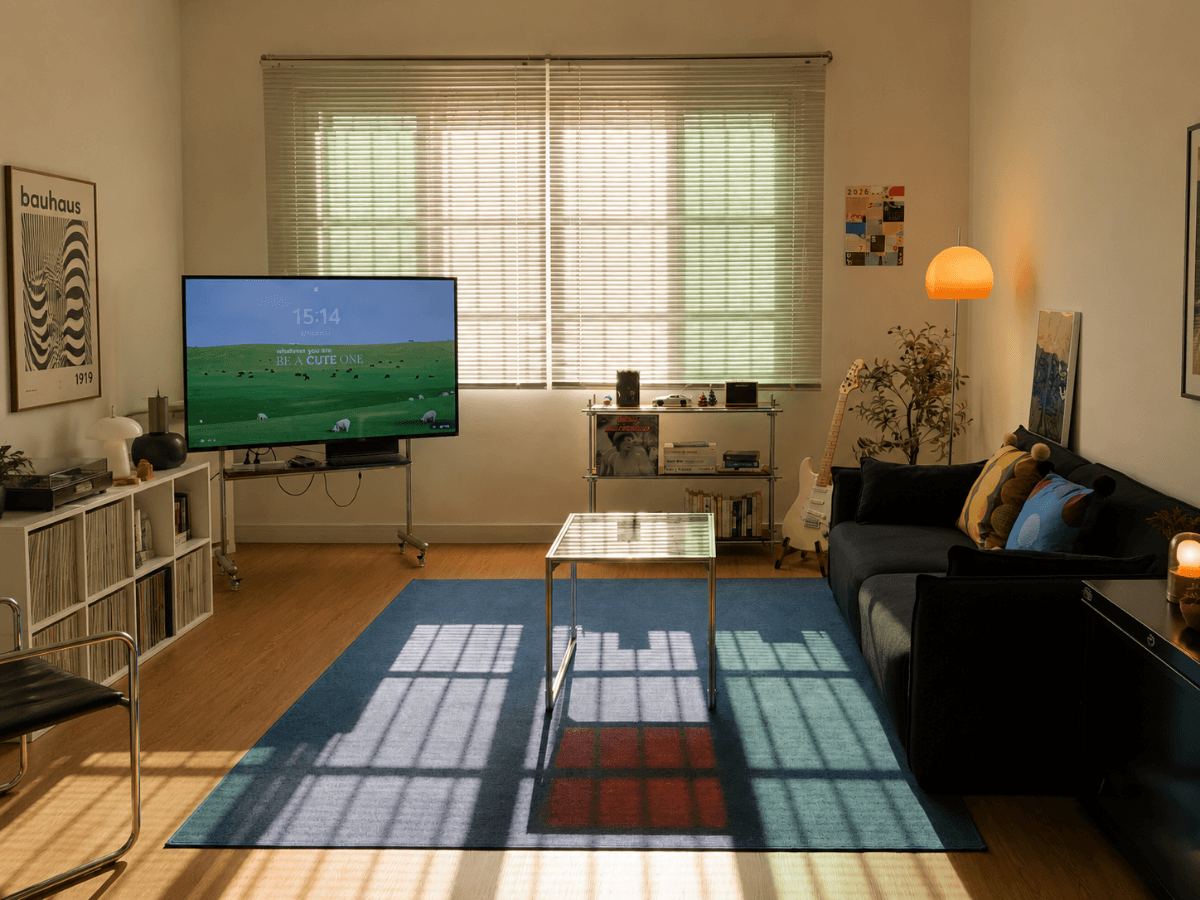
Ugly rental floors can make an entire room feel wrong because there’s so much of them.
Maybe it’s beige wall-to-wall carpet, orange-toned laminate, dated vinyl, or brown tile you would never have chosen yourself. Unlike an ugly light fixture or one awkward piece of furniture, the floor seems to be everywhere.
That can make replacing—or at least hiding—all of it feel like the obvious solution.
If you’re trying to cover ugly floors in a rental, though, the first question isn’t which flooring product to buy. It’s how much of the original floor actually needs to disappear.
But you don’t experience a furnished room as an empty rectangle of flooring. A bed, sofa, dining table, dresser, and rug all change how much floor you actually see.
So before you start looking at temporary flooring, ask a smaller question:
How much of this floor actually needs to disappear before the room feels better?
Quick Take
First, Separate Ugly From Damaged
There’s a difference between a floor you dislike and a floor that needs attention.
Beige carpet in good condition may feel dated. So can orange laminate, faux wood, old vinyl, or tile in a color you wouldn’t have picked.
Those are decorating problems.
Loose flooring, lifting edges, torn carpet, water damage, sharp broken tile, or damaged transitions are different. If something looks unsafe or appears to be deteriorating, document it and contact your landlord or property manager rather than hiding it under a rug or temporary flooring.
The same goes for significant damage or staining that was already there when you moved in.
Once you know the floor is functional, then it makes sense to decide how much of its appearance is actually worth changing.
Look at the Floor You’ll Actually See
An empty room makes the floor look like the entire problem.
A 12-by-15-foot room, for example, is 180 square feet of flooring. If you hate that flooring, it’s easy to start thinking in terms of fixing all 180 square feet.
But that isn’t how you’ll live in the room.
Put in a bed and nightstands, and a large part of a bedroom floor disappears naturally. Add a sofa, media console, coffee table, and other furniture to a living room, and the amount of uninterrupted flooring changes again.
So don’t judge the problem only by looking down at the floor.
Look at the room from the places where you actually experience it.
Stand in the doorway.
Sit on the sofa.
Look across the bedroom from the bed.
Where does the floor still catch your eye?
That exposed area is usually a more useful starting point than the room’s total square footage.
Find the Visual Center of the Problem
The answer will be different from room to room.
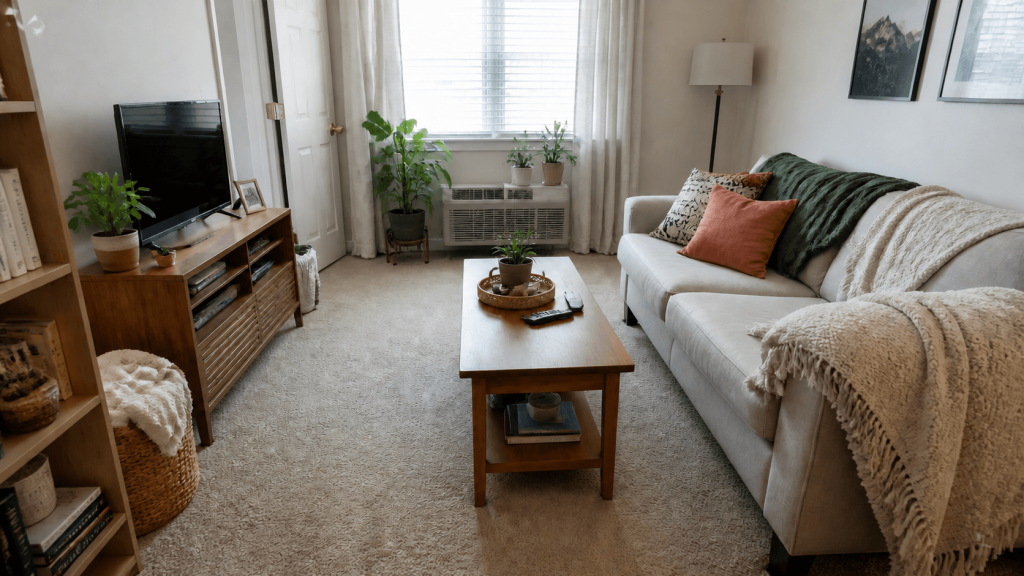
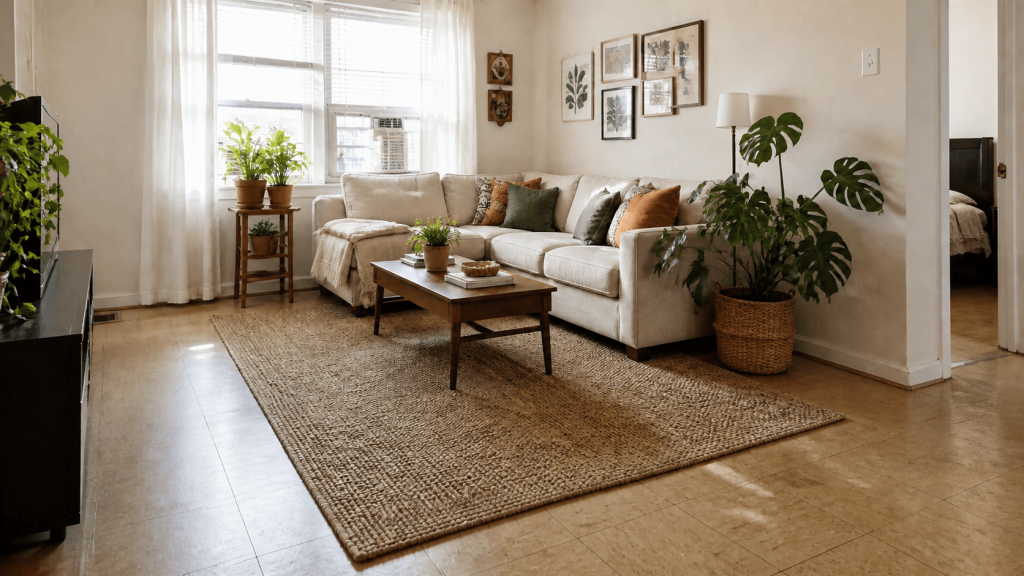
In a living room, the large exposed area around the sofa and coffee table may be what makes an ugly floor feel dominant. Cover that area well and the remaining floor around the edges may stop mattering much.
A bedroom is different. The bed already occupies a large portion of the room, so there may be surprisingly little floor left that needs visual attention.
A kitchen can be the opposite. Cabinets and appliances sit around the perimeter, leaving much of the walking area exposed. A large rug may not make sense there, so if the flooring still bothers you every day, a more involved temporary solution starts to become easier to justify.
The goal isn’t to calculate the exact percentage of floor you can hide.
It’s to stop treating every square foot as equally important.
Cover Less Before You Cover More
If the floor is functional, start with the solution that changes the room without turning the floor itself into a project.
For many living rooms and bedrooms, that means a rug.
Start With a Rug Where a Rug Actually Makes Sense
A rug works particularly well when the area you most want to change is somewhere a rug would naturally belong anyway.
Think about the main seating area in a living room or the exposed floor around a bed.
In those situations, you’re not inventing a flooring fix. You’re adding a normal piece of furnishing that happens to reduce how much of the original floor you see.
Size matters more than simply having a rug.
A rug that connects the main furniture grouping can turn a large stretch of flooring into background. A very small rug floating in the middle of the same space may do the opposite: it gives you one new surface while leaving most of the floor you dislike clearly visible around it.
And because the rug isn’t part of the apartment, it has a life beyond this lease.
Don’t Use Five Tiny Rugs to Solve One Big Floor
When you’re trying not to spend much on a rental, several small rugs can look like the cheaper solution.
But if the real problem is one large uninterrupted area of ugly flooring, breaking it into lots of little uncovered gaps can make the floor more noticeable.
You also end up designing the room around the attempt to hide the floor.
One appropriately sized rug will often do more than several small patches of coverage.
That doesn’t mean every inch outside the rug needs to look perfect. Once the main visual area is handled, look at what remains before deciding it needs another fix.
Sometimes the exposed floor feels less awkward once the room has other colors and materials that relate to it. An orange-toned laminate, for example, may be easier to live with when it isn’t the only warm surface in a room full of icy gray.
You don’t need to build the entire palette around the floor. You’re just seeing whether the part that remains visible still feels like a problem.
When Temporary Flooring Starts to Make More Sense
A rug won’t solve every floor problem.
Kitchens, entryways, and some bathrooms often leave much more flooring exposed. If that exposed surface still dominates the room after you’ve made the easier changes, temporary flooring may be worth considering.
Most renter-friendly flooring ideas fall into this broader category: something temporary that covers more of the original floor without permanently replacing it.
Peel-and-stick tiles, removable vinyl, and other temporary floor coverings can create a much bigger visual change.
They also turn an ugly floor into an actual project.
Before deciding, look at the whole project rather than the transformation in the middle of the room.
If peel-and-stick tile is the option you are seriously considering, the next question is whether the installation, daily payoff, and eventual removal are worth taking on in this rental. See Is Peel-and-Stick Floor Tile Worth It in a Rental?
Calculate the Whole Floor, Not One Tile
Temporary flooring can look inexpensive when you’re looking at the price of a single tile or one pack.
That isn’t the number you’ll actually pay.
You need enough material for the area you’re covering, plus extra for cuts, mistakes, and potentially matching a pattern. Depending on the product and installation, you may need additional tools or materials too.
Then there’s your time.
And eventually, there’s removal.
A better question than “How much does this tile cost?” is:
What will this entire floor cost me to install and later undo?
If you’re weighing a bigger flooring project against the time and money it will take, our Worth It? framework can help you make that call.
f you are deciding whether to stop with a large rug or cover the floor more completely, see Temporary Flooring vs a Large Rug: Which Is Worth It in a Rental?
For a small, highly visible area you’ll use for another two years, that calculation may still make sense.
For a large floor in an apartment you expect to leave soon, it can look very different.
Think About the Edges Before the Pretty Middle
The middle of a temporary floor is often the part that looks easiest in a makeover video.
Real rooms have edges.
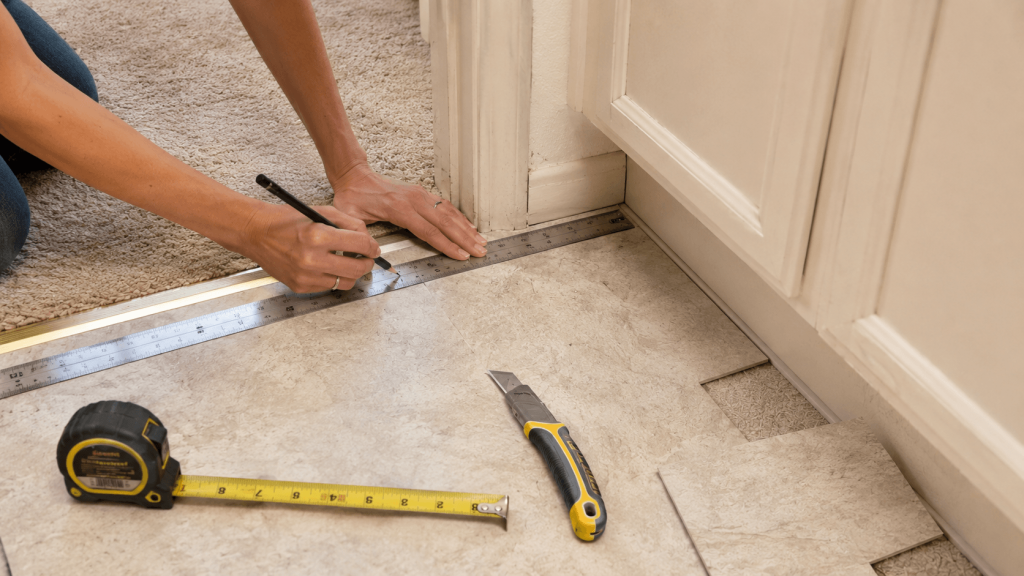
There are doorways, cabinets, corners, transitions between rooms, and sometimes toilets, pipes, or other awkward shapes to work around.
Those details matter because they’re where a simple-looking project starts requiring careful measuring and cutting.
Before buying enough material for the entire room, look around its perimeter.
If you’re already dreading the doorway, cabinet edge, and six awkward cuts you can see from where you’re standing, include that feeling in your effort calculation.
A temporary solution is still a project even if the finished material can eventually be removed.
What About Ugly Wall-to-Wall Carpet?
Wall-to-wall carpet is a special case because you usually can’t make it disappear without creating another layer on top of it.
A rug can still reduce how much visual weight the carpet carries, especially in a living room or bedroom. But the original carpet will remain visible around the perimeter.
That may be fine.
Once a bed, dresser, nightstands, or sofa are in the room, there may already be much less exposed carpet than there was when you first saw the empty apartment.
The question is whether adding a rug improves the room enough to justify another layer.
If it shifts, wrinkles, makes vacuuming harder, or constantly needs adjustment, you may have solved an aesthetic annoyance by creating a practical one.
If wall-to-wall carpet is the part you’re working around, it’s worth asking whether putting an area rug over rental carpet will actually improve the room—or just add another layer to manage.
Know When to Ignore the Floor
Some rental problems feel biggest before you’ve actually lived with them.
You walk into an empty bedroom for the first time and immediately notice the beige carpet.
Then you move in.
There’s a bed. A lamp. Nightstands. Bedding you like. Books on the dresser. Maybe a chair in the corner.
Three weeks later, the carpet is exactly the same.
But are you still noticing it?
That’s useful information.
If you mostly remember that you hate the floor when you start thinking about decorating, a full flooring project may not improve your everyday life very much.
On the other hand, maybe you walk into the kitchen every morning and the dated vinyl is still the first thing you see. Maybe the large exposed area affects how the whole room feels no matter what else you do.
Then the impact is real enough to put more effort into.
The floor didn’t get better in the first example.
The problem just got smaller.
You Probably Need to Fix Less Floor Than You Think
An ugly rental floor can feel like a whole-room problem because, technically, it is the whole floor.
But you don’t experience your home as an empty rectangle of flooring.
Cover the part that matters first. Furnish the room. Live with it for a while. Then see whether the remaining floor still deserves a bigger project.
You may find that the best rental flooring solution isn’t a new floor at all.
FAQs
How can I cover ugly floors in a rental?
Start with the area you actually see once the room is furnished. In a living room or bedroom, one well-sized rug may change enough of the floor without turning it into a project. If large exposed areas still dominate the room, temporary flooring may be worth considering.
What flooring is most renter-friendly?
The most renter-friendly option is usually the one that can be removed cleanly and does not require changing the original floor. A rug is easier to reverse and move than an adhered floor covering. If you’re considering peel-and-stick tile or another temporary material, check the existing surface and your lease before assuming it will remove without damage.
Can you put temporary flooring over existing rental floors?
Sometimes, but it depends on both the temporary product and the floor underneath. Adhesive products, floating materials, and mats interact differently with vinyl, laminate, tile, wood, and carpet. Check the manufacturer’s requirements, your lease, and a small test area before covering a large surface.
Is a large rug better than temporary flooring for a rental?
A rug is usually the simpler choice when the floor problem has a clear visual center, such as a living-room seating area or the exposed floor around a bed. Temporary flooring becomes more useful when the problem continues across areas a rug cannot naturally cover.
If you’re choosing between the two, see Temporary Flooring vs a Large Rug: Which Is Worth It in a Rental?