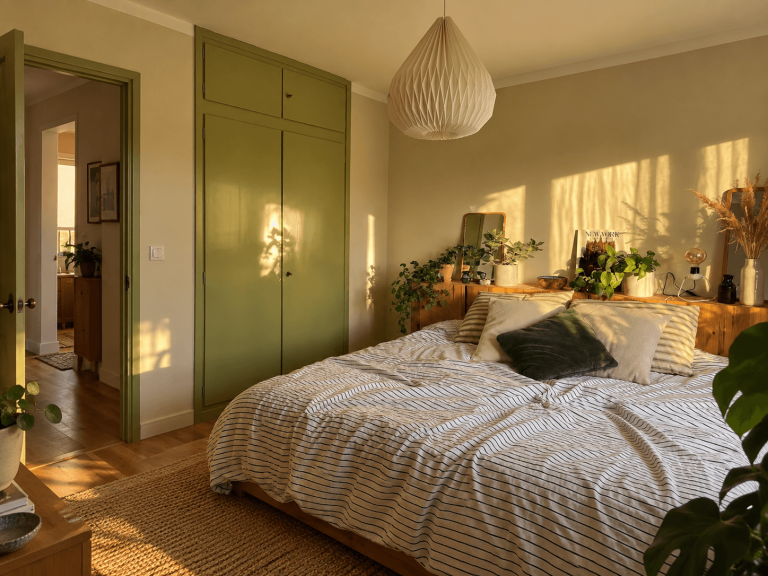
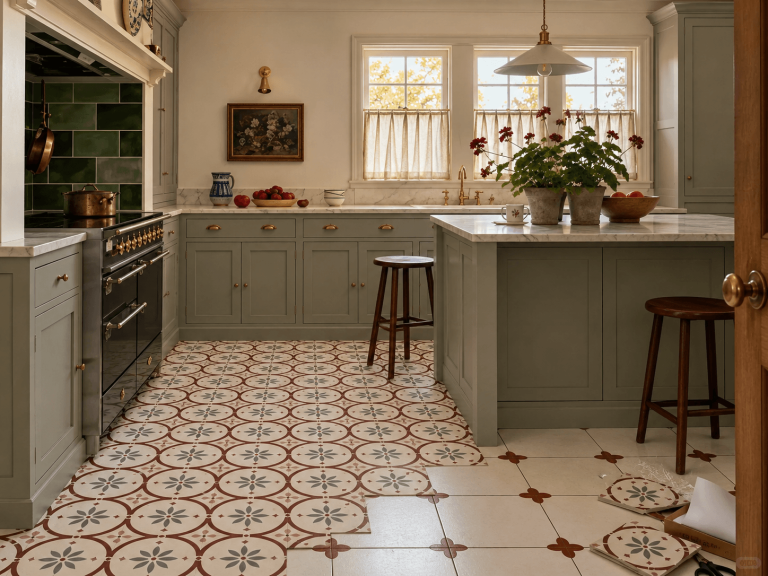
Temporary Flooring vs a Large Rug: Which Is Worth It in a Rental?
Considering temporary flooring for a rental? Compare the area you need to cover, installation and removal effort, and whether a large rug would solve enough instead.

Temporary flooring can make sense for renters when the part of the floor you dislike extends beyond what a large rug can cover naturally. But if the problem has a clear center, a rug may solve enough with far less installation and move-out work.
Before choosing a flooring product, look at how much of the original floor is actually visible—and whether the solution has a natural place to stop.
The better option is usually the one that fixes enough of the floor without turning the whole room into a project.
If you are still deciding how much of the floor actually needs treatment, start with Ugly Rental Floors? What to Cover, What to Work With, and What to Ignore.
Quick Take
Before Choosing Temporary Flooring, Look at How Much Floor Actually Bothers You
Before comparing prices or materials, look at the room from the doorway.
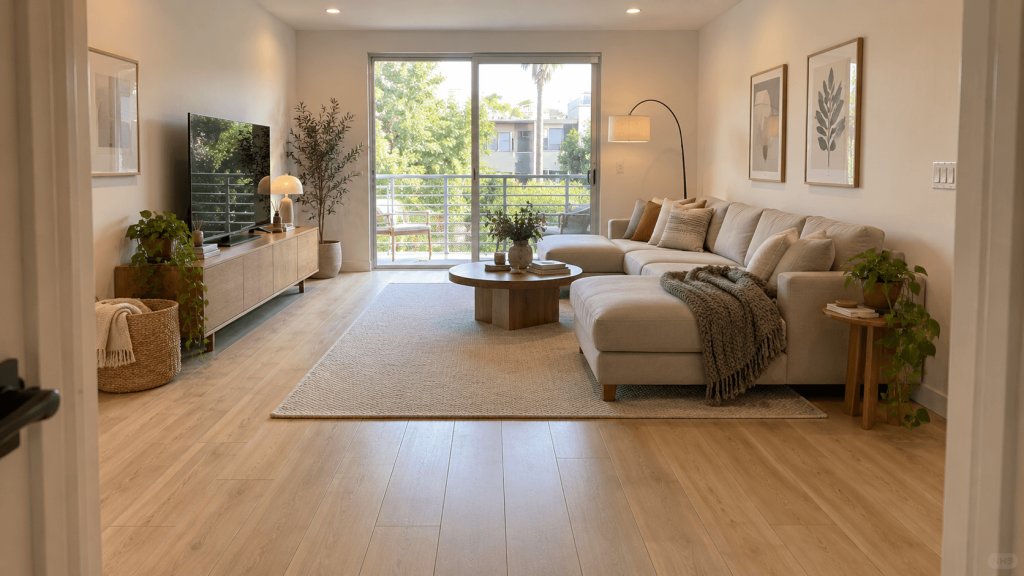
Then ask:
If a large rug changed the center of this room, would the remaining floor still bother me?
Sometimes the floor is most noticeable because it fills the main seating or sleeping zone. Once that area is visually redefined, the original surface can remain visible around the edges without controlling the room.
Other times, the floor keeps showing up at the entrance, through walking paths, between furniture, and across open areas.
In the first case, you may not need a new floor.
You may just need a new main zone.
In the second, the problem is still operating at room scale.
A Large Rug Wins When the Problem Has a Center
A large rug works best when the floor problem is concentrated around one part of the room.
In a living room, that may be the sofa, chairs, and coffee table. In a bedroom, it may be the area around the bed. Once that zone feels intentional, the surrounding floor often matters much less.
A rug does not need to hide the whole floor to replace it visually where it matters most.
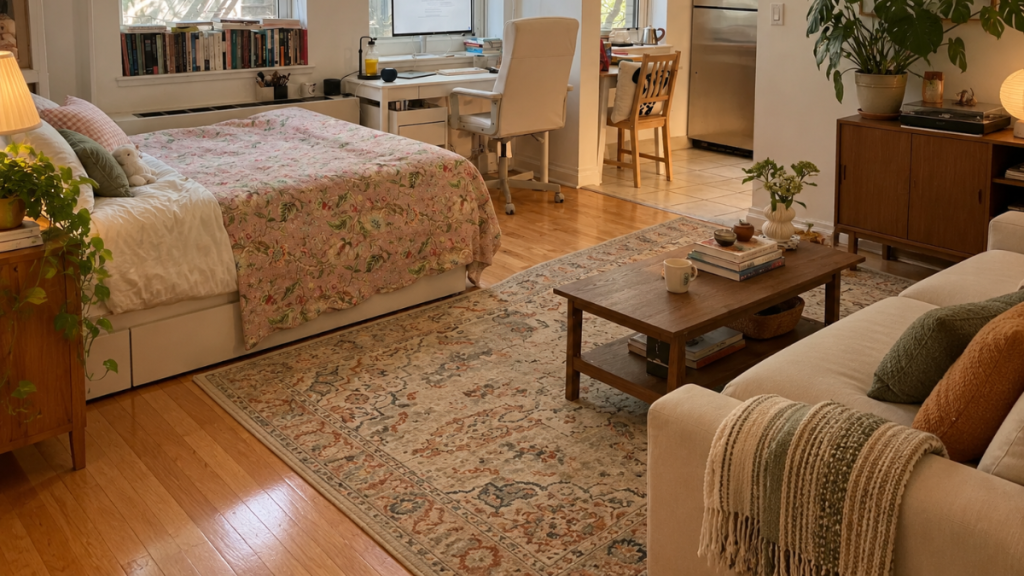
If your eye stops treating the original floor as the room’s main surface, the rug has already done its job.
There is also a renter advantage: the rug remains yours. If you genuinely like it and would use it again, the purchase can outlive the floor problem that caused you to buy it.
If you are deciding whether a rug itself is worth adding over existing rental carpet, Is It Worth Putting a Rug Over Rental Carpet? goes deeper into that question.
Temporary Flooring Wins When the Problem Has No Clear Edge
Some floor problems do not have a natural center.
The surface may run continuously through an open-plan space, dominate a long walkway, or stay visible across nearly the entire bathroom. A rug improves one island, but the original floor keeps reappearing where you actually use the room.
Sometimes the problem is physical as well as visual. You may dislike walking across the surface every day, not just seeing it.
That is when broader coverage starts solving something different.
Renter-friendly flooring is not simply flooring that can be installed without replacing the original floor. The amount of coverage, installation, removal, storage, and restoration still matter.
If the original floor keeps reappearing exactly where you use the room, temporary flooring may be solving a room-scale problem rather than simply covering more of the same one.

Compare Where Each Solution Naturally Stops
The middle of either solution is easy to imagine.
The edge is more useful.
Where would the rug naturally stop?
Where would the temporary flooring naturally stop?
If a rug ends cleanly with the furniture zone and the room already feels settled, that is a strong sign you may not need to go further.
If the rug has to stretch awkwardly toward a doorway, kitchen path, or cabinet run just to hide more floor, you may be asking it to do the job of flooring.
But the same test works in reverse.
If temporary flooring adds awkward transitions, threshold work, or extra edge treatment just to cover the last narrow border outside a good rug zone, the larger project may not be earning much.
And if the remaining strip of landlord flooring no longer changes how the room feels, do not upgrade just because it is still visible.

Price What You Can Take With You Differently
A $300 rug and a $300 temporary flooring project are not the same kind of $300.
If you genuinely like the rug and can use it in another home, some of its value travels with you. Temporary flooring is usually much more tied to the dimensions and edges of the current room.
But moveability only counts when it is real.
If you buy an oversized rug purely to hide this particular floor and would never choose it again, “you can take it with you” is not much of an advantage.
Portable only matters if you would actually want to move it.
That does not make temporary flooring a bad value. It simply means more of its value has to be earned inside this rental.

Choose Temporary Flooring Only When It Solves Something the Rug Cannot
I would move beyond a large rug when the remaining problem is clearly continuous rather than localized.
A naturally sized rug still leaves areas that genuinely bother you. Broader coverage would change how the room feels in daily use, not just make the before-and-after look more complete. And the rental is worth the extra installation and reversibility commitment.
That is enough reason to escalate.
Temporary flooring should earn its extra effort by solving a problem the rug leaves behind.
If the option you are considering is adhesive peel-and-stick tile, the next decision is separate. Is Peel-and-Stick Floor Tile Worth It in a Rental? looks specifically at installation, surface compatibility, and eventual removal.
So, Which Is Worth It?
Start with the large rug when the problem has a center.
Choose temporary flooring when the problem follows you beyond that center.
The goal is not to cover the most floor.
It is to stop at the first level of intervention that makes the floor stop feeling like a problem.
FAQ
Is temporary flooring better than an area rug for a rental?
Not automatically.
Temporary flooring earns the extra project only when the exposed original floor outside a rug-sized zone still affects how the room looks, feels, or functions.
Can a large rug really hide an ugly rental floor?
It does not need to hide every inch.
A sufficiently large rug can redefine the room’s main visual zone and make the remaining floor feel secondary.
When is a rug not enough for an ugly rental floor?
Usually when the floor problem continues through walking paths, open areas, transitions, or multiple functional zones that a naturally placed rug cannot cover.
Is temporary flooring worth the extra cost in a rental?
It can be, but only when broader coverage creates a meaningful improvement that a rug cannot provide.
The extra installation, removal, and rental-specific commitment should solve a real remaining problem—not simply make the room look more complete.