Is Painting a Rental Worth It If You Have to Paint It Back?
Can you paint apartment walls? Check permission first, then decide whether the color change is worth the cost, effort, and possibly painting the walls back later.
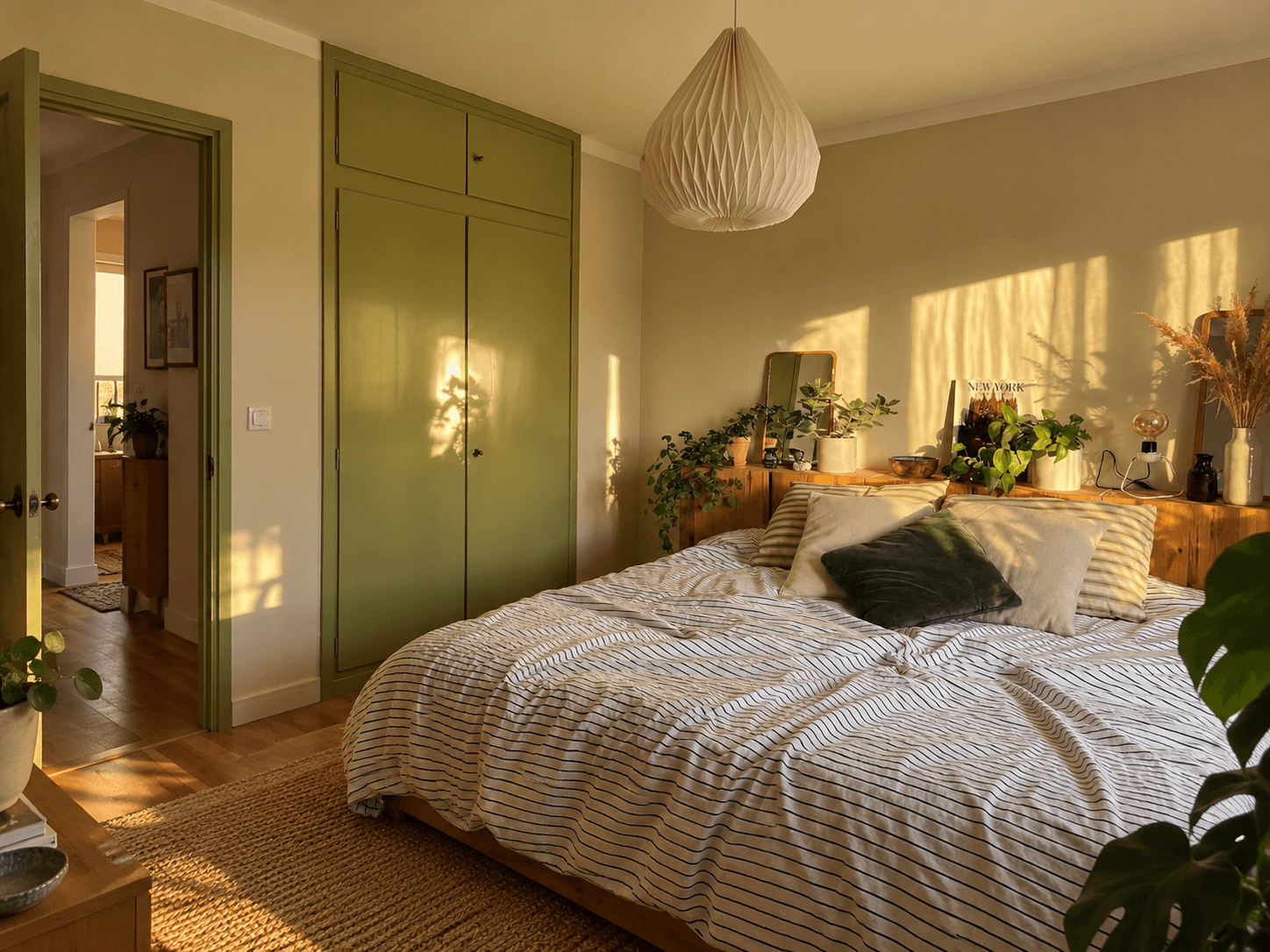
You may be able to paint apartment walls, but check your lease and get clear permission from your landlord or property manager before changing the existing finish. Approval may also come with rules about color or restoring the walls before move-out.
If you will have to paint them back, treat the decision as two painting projects, not one.
The question is whether living with the new color long enough will repay the cost, effort, and second round of work later.
If painting is not allowed at all, the decision changes completely—see How to Live With Gray Rental Walls You Can’t Paint.
Quick Take
Can You Paint Apartment Walls? Check Permission First
Whether you can paint depends on your lease and the rules for your specific rental. Before buying paint, check whether you need permission, whether there are limits on the colors or rooms you can change, and what you may be expected to restore before move-out.
If anything is unclear, ask your landlord or property manager before starting and keep any approval or restoration expectations in writing.
The useful question is not only “Can I paint?”
It is also:
What will I have to do to this wall when I leave?
Once you know that, the rest of the decision becomes much easier to judge.
If You Have to Paint It Back, Count the Project Twice
“Paint it back” sounds simple until you try to define it.
Does the room need to return to the original color? Does the finish matter? Are you allowed to paint every wall, or only certain rooms?
You do not need an elaborate checklist. You just need a clear restore target.
You cannot judge the second paint job if you do not know what counts as restored.
If that part is still vague, resolve it before deciding whether the project is worth doing.
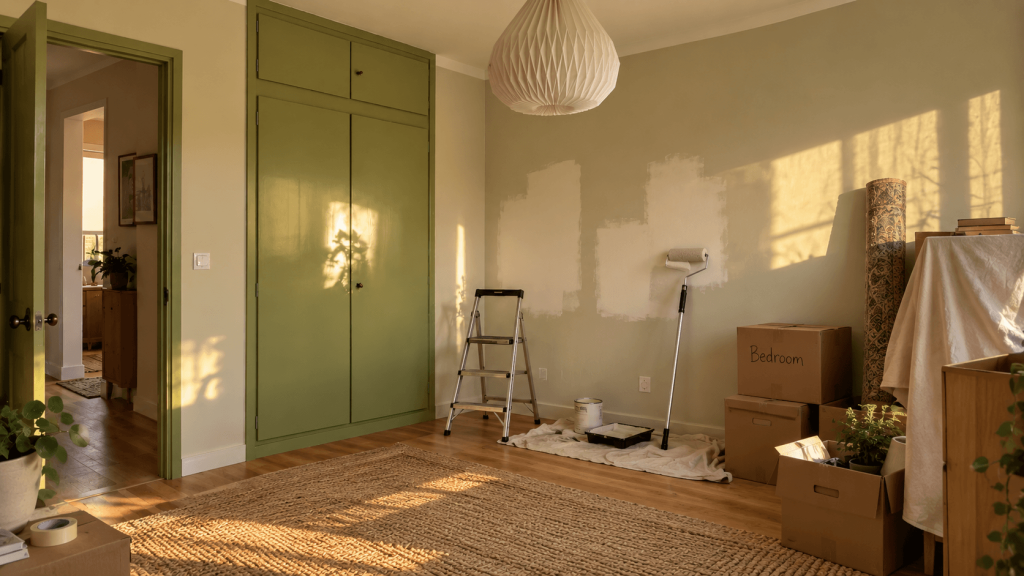
Count the Second Paint Job Now, Not at Move-Out
The first paint job is easy to picture.
You buy the supplies, move furniture, protect the floor, prep the walls, and spend an afternoon or weekend changing the room.
The second one is easier to shrink into a vague future promise: I’ll just paint it back when I move.
But that project is likely to land beside packing, cleaning, moving furniture, and everything else that comes with leaving a rental.
So ask:
Would I still choose this paint project if repainting it back landed on my moving-week checklist?
If the answer is still yes, keep going.
If the project suddenly feels much less worthwhile, that is useful information now. The timing of the second paint job is part of the commitment, not an inconvenience to calculate later.
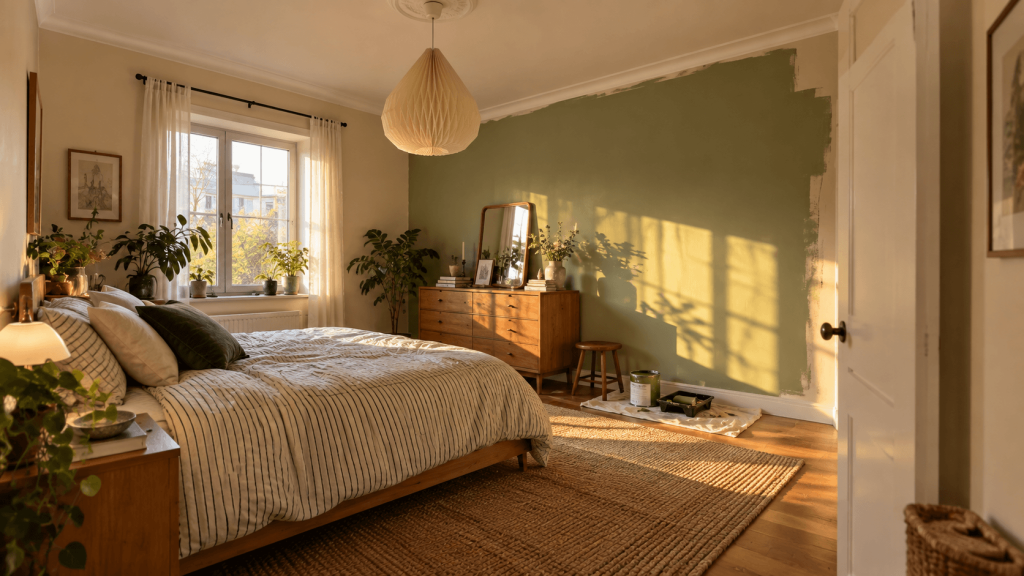
Count the Wall Area You Are Volunteering to Restore
“Painting is cheap” does not tell you much about the size of the project.
One bedroom wall is different from a bedroom, hallway, and living room. Every wall you change now is wall area you may be assigning to your future restore list.
Instead of asking only:
How much paint do I need?
Ask:
How much wall am I volunteering to restore later?
This is also where the project can get smaller without losing most of its value.
Maybe the whole apartment is beige, but the bedroom is the only place where that color bothers you every day. Maybe one wall is carrying most of the visual problem.
If a smaller paint project creates most of the improvement, there is little reason to expand it.
You do not have to choose between painting everything and painting nothing.
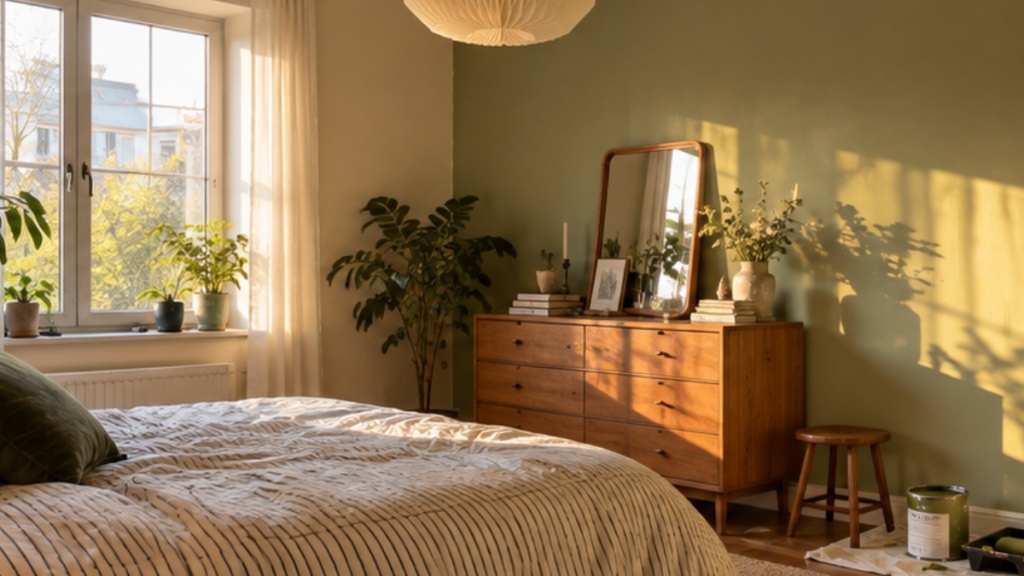
Count How Far You Are Moving From the Restore Color
Wall area is only one part of the return project.
The other is how far your new color moves from the finish you eventually need to recreate.
If the required restore color is a light off-white, moving to a slightly warmer neutral is one kind of commitment. Moving to deep navy or another saturated color is another.
That does not make dark paint a bad rental choice.
It means the choice affects more than the room you get now.
The more dramatic the color change, the less useful it is to think of repainting as a generic second coat of paint.
You do not need to predict the exact restoration process before choosing a color. You only need to recognize that some choices create a longer return trip than others.
In a rental, color is both an aesthetic decision and a restoration-distance decision.
Decide Whether the Wall Has Enough Daily Payoff
Now ask what painting actually changes.
A wall occupies a large part of the room. If its current color affects how the whole space feels every day, changing it can have much more payoff than changing a small decorative object.
The useful question is:
What becomes easier to live with once the wall changes?
Maybe the room stops feeling cold. Maybe your existing furniture and textiles finally sit comfortably against the wall instead of constantly fighting it. Maybe it is simply a room where you spend hours every day, and the current color has bothered you since move-in.
Those are meaningful returns on the work.
If the main benefit is that the room would photograph better or the new color feels more current, the payoff is weaker.
There is nothing wrong with preferring a nicer color. It just has to earn a project you may eventually do twice.
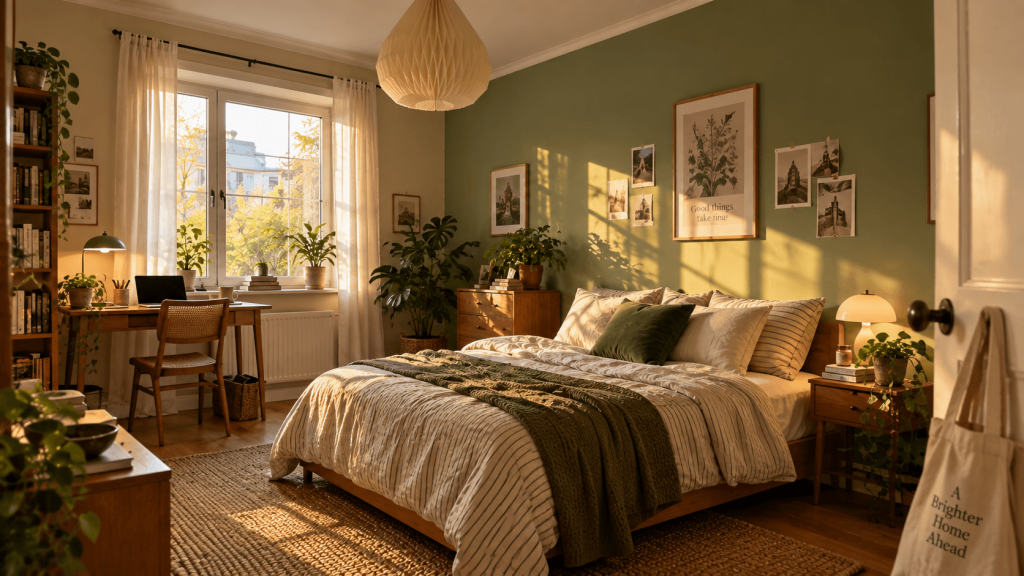
Let Time Multiply the Payoff, Not Decide It for You
There is no useful rule that says painting becomes worthwhile after exactly one year or two.
Eighteen months in a bedroom or home office you use every day is different from eighteen months in a room you barely enter.
What matters is the combination of:
how often you experience the room × how much the wall affects it × how much useful time remains
Then compare that with painting now and restoring later.
A longer tenancy gives the improvement more time to pay you back, but time cannot create value where there was little to begin with.
Time matters because it multiplies the payoff—not because twelve months magically makes paint worth it.
A wall you barely notice does not become worth repainting simply because the lease is long.
Know When I’d Skip It
I would skip painting when the permission or restore requirement is still unclear, or when the current wall is only a mild annoyance and the project is becoming large.
I would also hesitate when the useful middle is short or the color change creates a restoration job I already know I do not want to handle.
And I would take that last reaction seriously.
If picturing the repaint during move-out makes the first project feel like a poor trade, that belongs in the decision.
The second paint job is not a future technicality. It is part of the price of the first one.
So, Is Painting a Rental Worth It If You Have to Paint It Back?
Yes—when the walls have enough daily impact, the scope is controlled, you know what restoration requires, and the useful time between the two paint jobs is long enough to earn both.
Probably not when the first paint job only feels worthwhile because the second one has been pushed into an abstract future.
You are not deciding whether paint is cheap.
You are deciding whether this room is worth painting twice.
FAQ
Can you paint apartment walls?
Sometimes. Check your lease and get clear permission from your landlord or property manager before painting. Approval may include conditions about colors, rooms, or restoring the original finish before move-out.
Do you have to paint apartment walls back when you move out?
It depends on your lease, property rules, and the permission you received before painting. Confirm the restoration requirement before you start rather than assuming you will—or will not—need to repaint.
Is painting a rental worth it?
It is more likely to be worth it when the wall color significantly affects the room, you expect enough time to enjoy the change, and the full project—including any required restoration later—still feels reasonable.
Is removable wallpaper better than painting in a rental?
Not automatically. Painting may require restoration, while removable wallpaper creates its own questions about surface compatibility, adhesion, installation, and removal. Compare the actual wall and the work each option creates.