Is Peel-and-Stick Floor Tile Worth It in a Rental?
Peel-and-stick floor tile can transform a rental, but is it worth the project? Check the existing floor, room edges, daily wear, removal risk, and lease first.
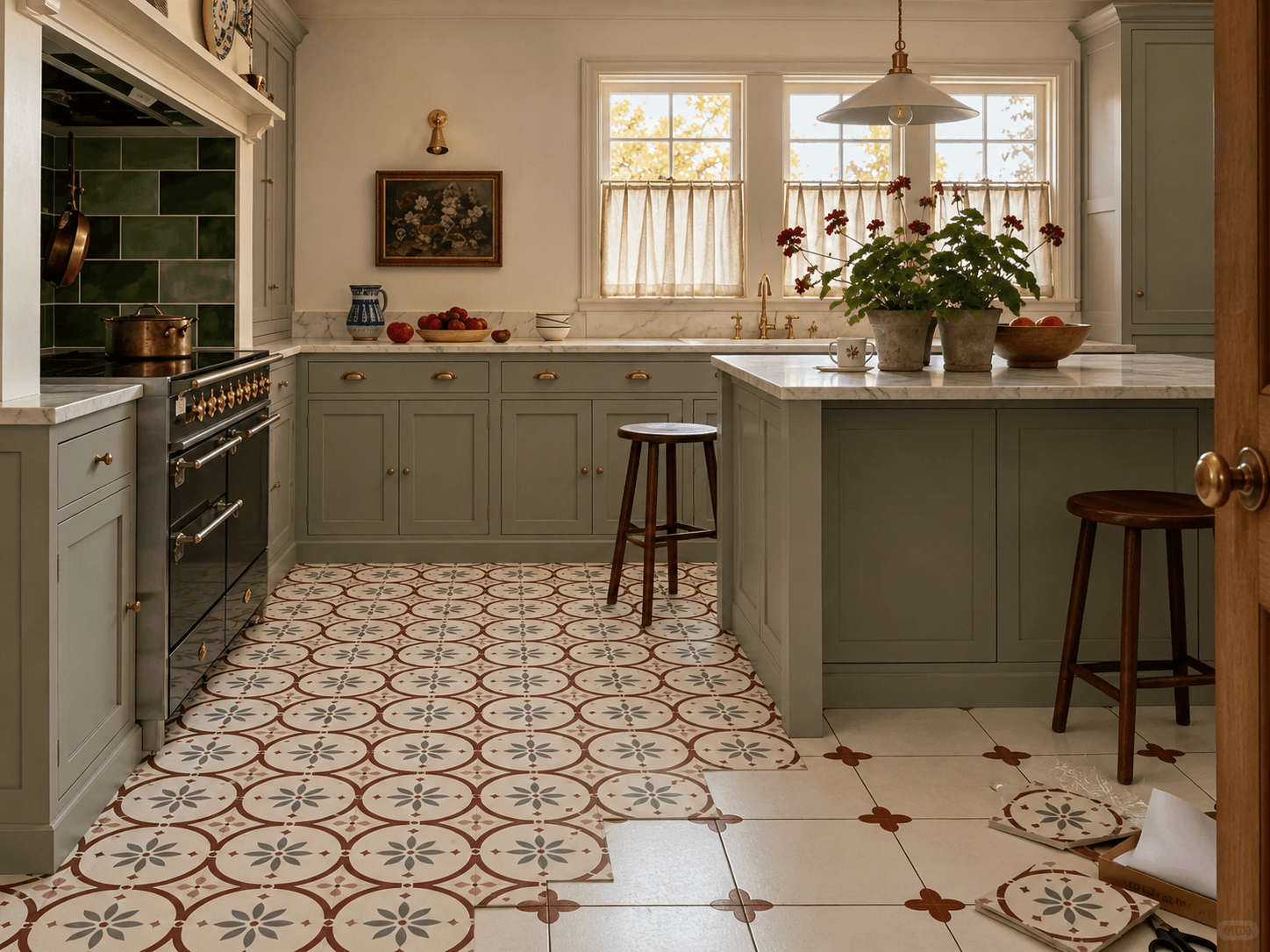
A dated rental floor can make peel-and-stick tile look like an unusually easy win.
The material seems affordable. The transformation is obvious. And if the room is small, it is easy to imagine finishing the whole thing in an afternoon and finally not having to look at that floor anymore.
But that calculation usually counts only the first half.
You are not only installing a temporary floor. At some point, you may also be removing one.
If you are still deciding whether the floor needs to be covered at all, start with Ugly Rental Floors? What to Cover, What to Work With, and What to Ignore.
If you already know the floor needs a bigger change but are not sure you need a full temporary floor, compare that project with a large rug first.
Here, assume the floor really is the problem and peel-and-stick tile is already one of the solutions you are seriously considering.
Quick Take
Already know your floor is a good candidate? See the tile types worth comparing →
Count the Project Twice
It is easy to judge peel-and-stick flooring by the part you can see now.
You measure the room, count the tiles, estimate the cost, and think about how long installation might take.
For a renter, the full project is closer to this:
installation + the time you live with it + removal or restoration
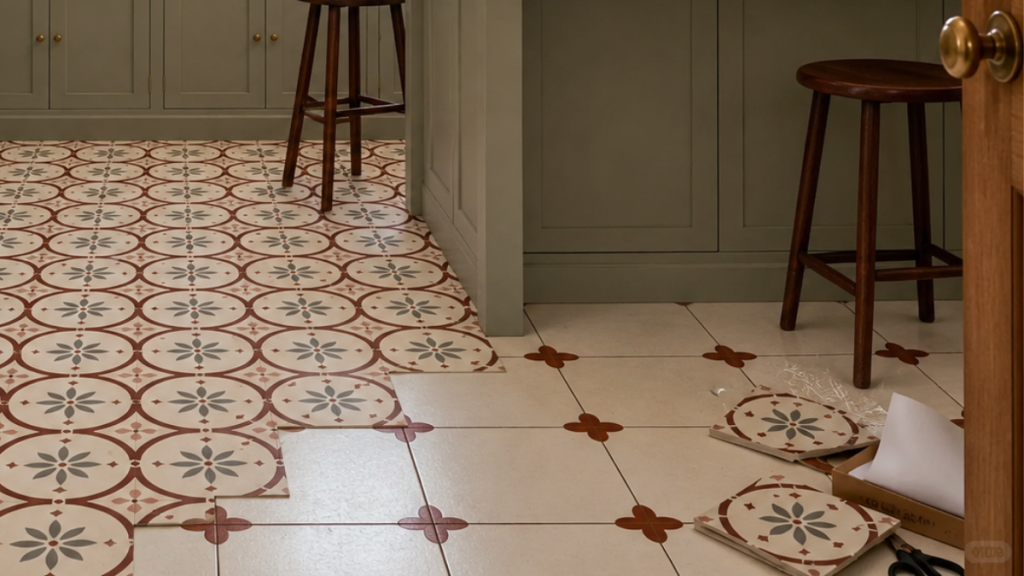
Removal is easy to leave out because it belongs to a future version of the room. But if this is meant to be temporary, that future work is still part of what you are choosing today.
A useful question is:
Would I still do this if removing it required real work too?
If the answer is still yes, the project may be worth considering.
If the idea becomes much less appealing as soon as removal enters the picture, that is useful information before the first tile goes down.
The Better It Stays Down, the Less You Should Assume About Removal
Peel-and-stick floor tile has a built-in tension that matters more in a rental than it does in an owned home.
A floor covering has to stay put.
It gets walked on, cleaned, stepped on at the edges, and used under furniture. A product that lifts easily during normal use would not be doing a very good job as flooring.
So strong adhesion is not automatically a flaw.
For a renter, it is part of the tradeoff.
That is why I would not treat the words peel-and-stick as proof that a product will later behave like a removable wall decal.
Some tiles may come up cleanly. Others may leave residue or behave differently depending on the floor underneath and how long they have been installed.
If reversibility matters, verify it as much as you reasonably can instead of assuming it comes with the product category.
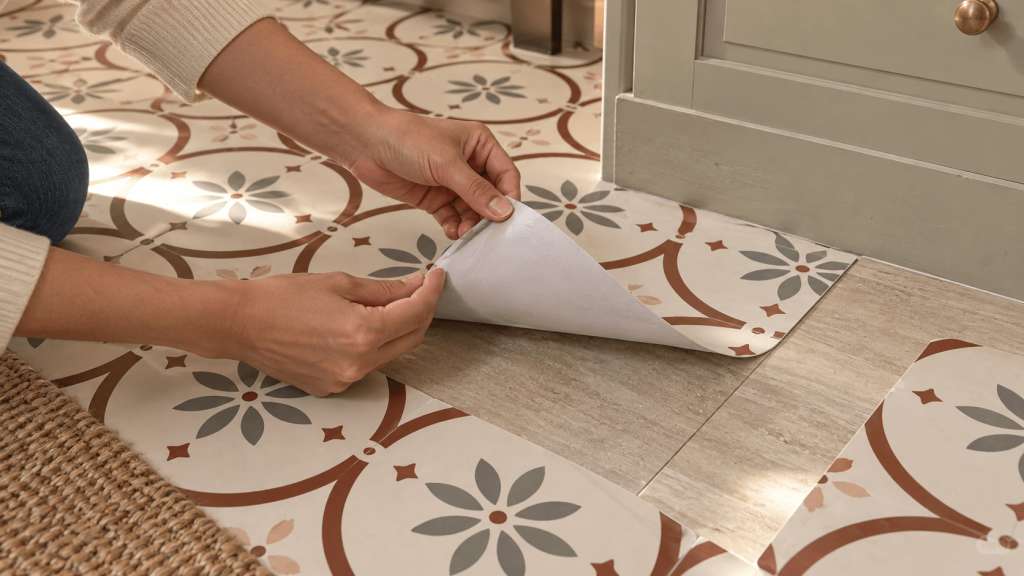
Start With the Floor Underneath, Not the Pattern on Top
It is more fun to compare checkerboard, marble, terrazzo, or stone-look patterns.
But the more important question comes first:
What exactly are you sticking this to?
A smooth, stable hard floor is a very different starting point from a loose, uneven, heavily textured, or deteriorating surface.
Grout lines may matter. Existing finishes may matter. Sometimes the biggest problem is simply not knowing what the current floor actually is.
Before choosing the pattern, check the surface requirements for the specific tile you are considering. If the product instructions and your rental situation allow it, test a small inconspicuous area before committing to the whole room.
You do not need to become a flooring expert.
You just need enough confidence that you are not treating an unknown surface like a guaranteed removable one.
If you cannot identify the existing floor well enough to judge compatibility, that uncertainty is part of the project cost.
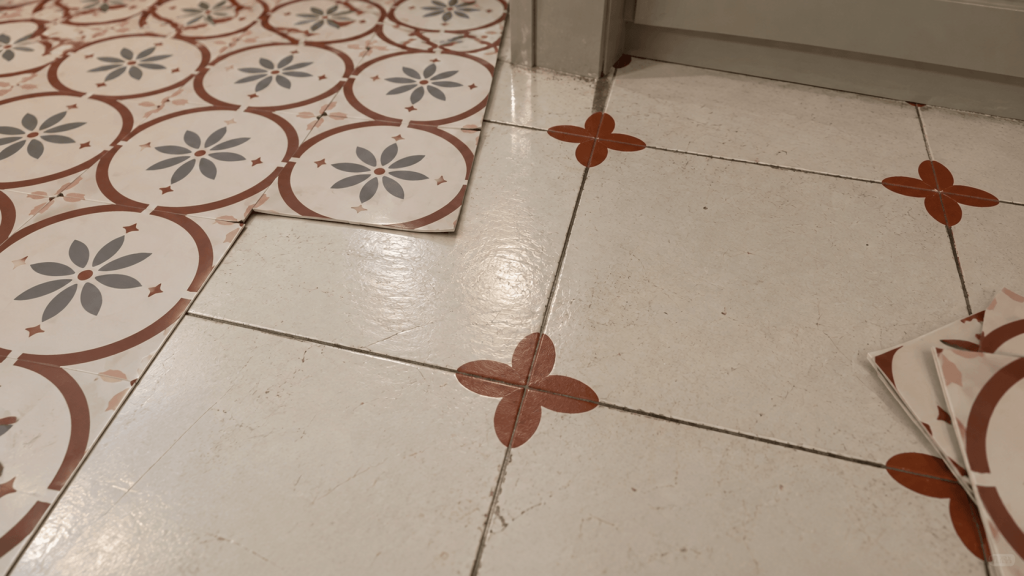
A Small Floor Can Still Be a Complicated Floor
Small bathrooms and kitchens often look ideal for peel-and-stick tile because the square footage is low.
But square footage only tells you how much material you need.
It does not tell you how much fitting the room creates.
Look at the perimeter: the toilet base, vanity, doorway, transition strip, pipes, narrow corners, and awkward edges.
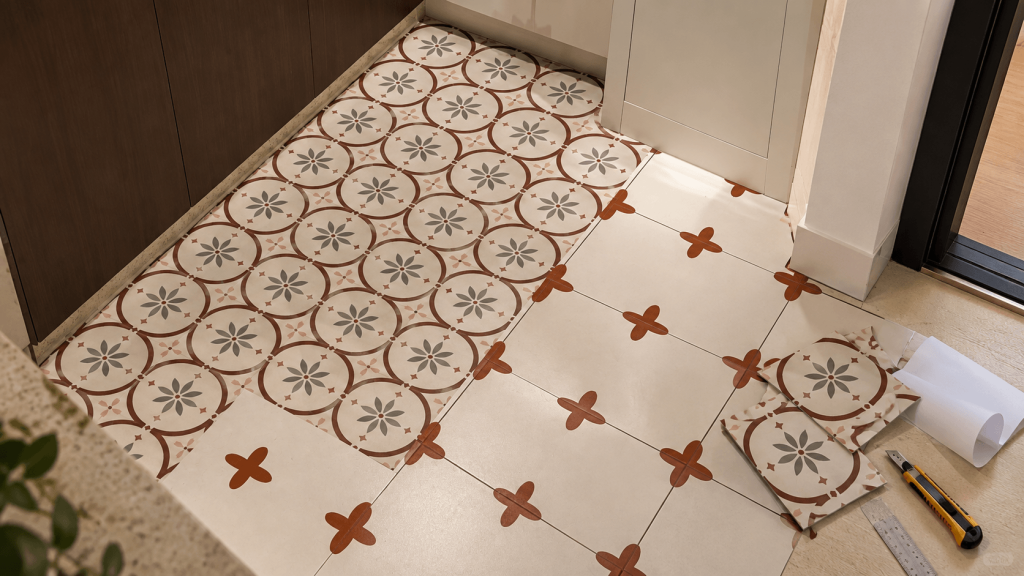
A 35-square-foot bathroom can be more annoying to work around than a larger simple rectangle.
Square footage tells you how much tile you need. The perimeter tells you how much project you are taking on.
That does not mean every irregular room is a bad candidate.
It just means “small” and “easy” are not the same decision.
Decide Whether the Payoff Justifies the Project
Peel-and-stick tile makes the most sense when the floor has enough daily visual impact to earn the work.
A highly exposed kitchen or bathroom floor that you notice every day has a stronger payoff than one that is mostly hidden by furniture, cabinetry, or rugs.
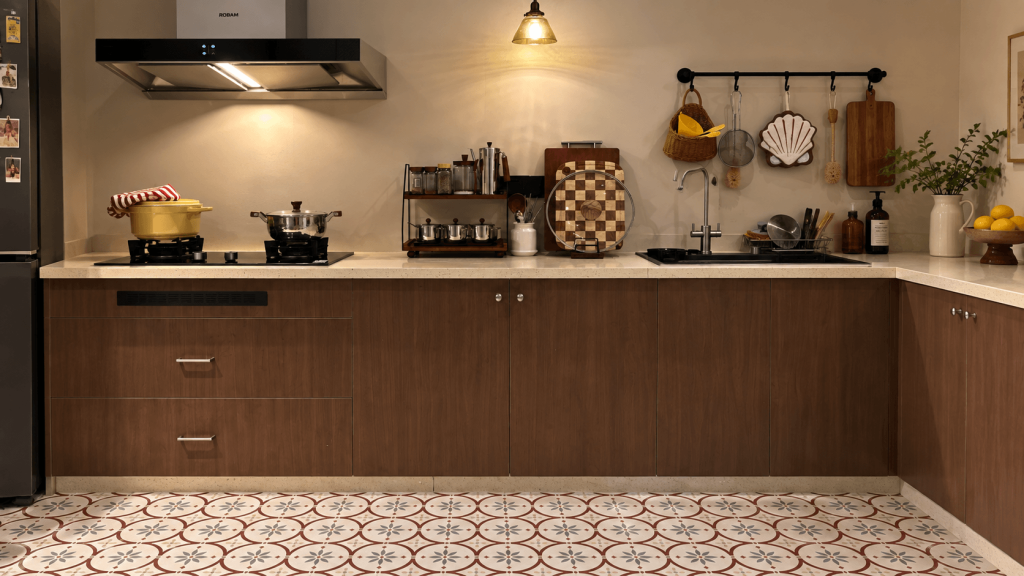
How long you expect to live with the change matters too.
If you have a long stretch between installation and move-out, the project has more time to pay you back. If you may move soon, installation and removal start sitting uncomfortably close together.
There is no useful universal minimum number of months.
Ask instead:
How long will I actually get to enjoy this improvement before I have to undo it?
The shorter that useful middle becomes, the harder the project is to justify.
And do not let a makeover photo decide the scale of the project for you.
If you are still unsure whether the whole floor needs treatment, go back to Ugly Rental Floors? What to Cover, What to Work With, and What to Ignore.
A bigger transformation is only better when the bigger transformation solves a problem you actually have.
Know When I’d Skip It
I would be cautious about peel-and-stick floor tile if the existing floor is loose, damaged, deteriorating, or difficult to identify.
I would also skip it if the lease or landlord clearly does not allow adhesive flooring changes.
A complicated room becomes harder to justify when the remaining rental period is short. And if residue or restoration at move-out would create a problem you are not willing to accept, that matters more than how good the finished floor might look.
None of that makes peel-and-stick tile a bad product.
It means the renter is carrying too much downside for the visual payoff.
If Peel-and-Stick Still Makes Sense, Compare the Tile Before the Pattern
If the floor underneath looks suitable, the room is manageable, and the project still feels worth doing, then it makes sense to start comparing actual tiles.
But I would not begin with the pattern.
Two tiles can look almost identical in a product photo and still create very different projects.
1. Check what the tile is designed to stick to
Start with the manufacturer’s surface requirements.
Some products list vinyl, wood, concrete, or other smooth hard surfaces. Others are more restrictive. Existing ceramic tile, deep grout lines, textured flooring, or an unknown finish can change the situation.
The important question is not whether peel-and-stick flooring works over a certain surface in general.
It is whether this specific tile is intended for the floor you actually have.
2. Look at the construction, not only the design
Peel-and-stick floor tile ranges from relatively thin vinyl squares to thicker, more rigid products.
That difference can affect how the finished floor feels, how easily the tile follows imperfections underneath, how difficult it is to cut around edges, and how much material you are adding to transitions and doorways.
Thicker is not automatically better for a rental.
It is simply a different project.
3. Be skeptical of “removable” as a complete promise
If a listing describes the tile as renter-friendly or removable, still look for the actual installation and removal guidance.
A product has to stick well enough to function as flooring. That same adhesion is one reason I would never treat the word “removable” as a guarantee that every original floor will look exactly the same afterward.
If restoration risk matters to you, the floor underneath still matters more than the marketing label.
4. Calculate boxes from the real room—not the clean rectangle
Coverage per box is useful, but it is only the starting number.
Cuts around a toilet, vanity, doorway, cabinets, or an irregular perimeter create waste. A directional or repeating pattern can create more.
Before comparing prices, estimate the actual amount you would need for your room and leave some margin for cuts and mistakes.
A cheap tile stops being cheap if the project needs substantially more material than the product photo makes obvious.
Once those four things make sense, then compare the colors and patterns you actually want to live with.
Two Tile Types Worth Comparing Before You Choose a Pattern
These are not two versions of the same project. One is a traditional thin vinyl square. The other is a much thicker SPC tile. The better fit depends on the floor underneath, the cuts you need to make, and how much flooring project you actually want to take on.
Affiliate disclosure: We may earn a commission if you buy through links in this section, at no extra cost to you.
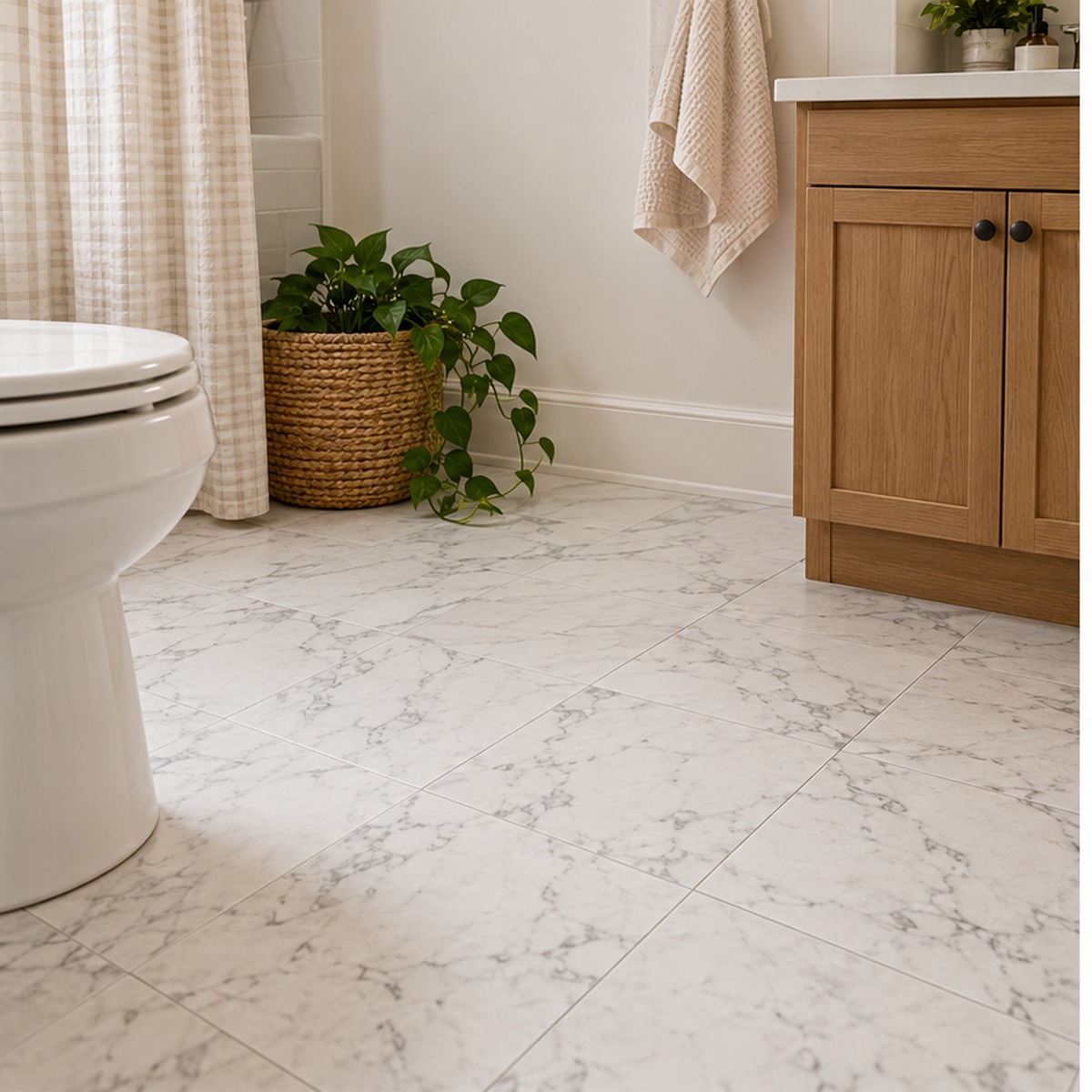
ACHIM Nexus Carrera Marble Peel-and-Stick Vinyl Tiles
This is the more traditional peel-and-stick floor tile format: 12-inch vinyl squares with a relatively thin profile and simple peel-and-stick installation.
Good fit: a small, straightforward room where you want a familiar square tile format and do not need the floor to feel especially thick or substantial.
What to watch: thin tile does not make the condition of the original floor irrelevant. The surface still needs to be flat and dry, and seams, texture, or uneven areas underneath can affect the finished result.
Each box covers 20 square feet, so calculate the real room perimeter and cutting waste before comparing the box price with another product.
Check current details on Amazon →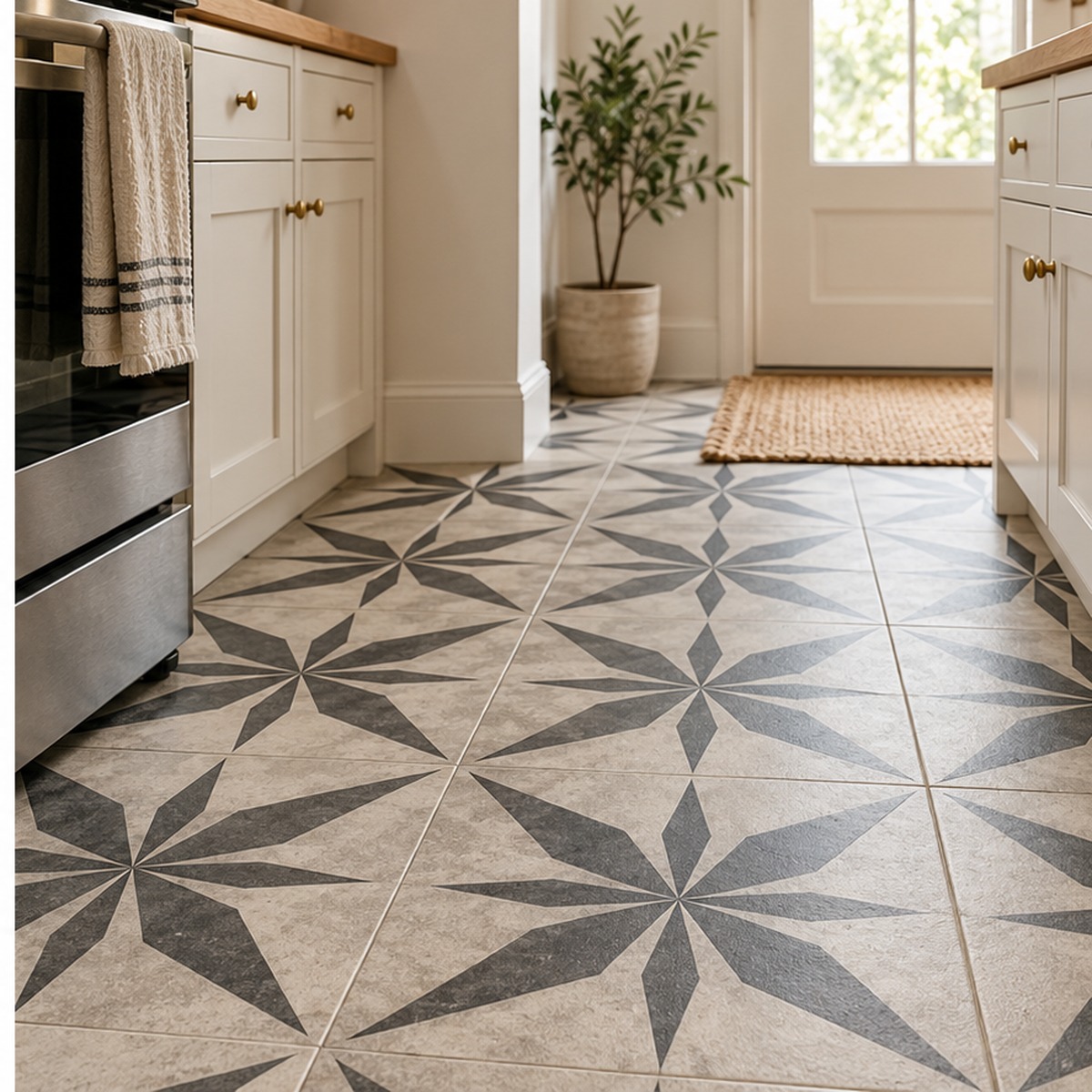
INNO STICKERS 4mm SPC Peel-and-Stick Floor Tiles
This is a different kind of peel-and-stick project. The tile uses a 4mm rigid SPC core rather than a thin vinyl sheet, so you are adding noticeably more material to the floor.
Good fit: a small kitchen or bathroom where you specifically want a more substantial tile feel and are comfortable treating the project more like flooring than a decorative surface layer.
What to watch: thicker does not mean safer for the original rental floor. The current product guidance calls for a clean, smooth, level, non-porous surface. The extra thickness also deserves more attention around door clearance, thresholds, and detailed cuts.
One box covers 12 square feet, so the number of boxes can rise quickly once you include perimeter cuts and pattern waste.
Check current details on Amazon →If the adhesive risk is the part you cannot accept: do not keep shopping for a supposedly more removable tile. Compare the whole flooring project with a large rug instead.
Compare temporary flooring with a large rug →So, Is Peel-and-Stick Floor Tile Worth It?
Yes—when the floor has high daily visual impact, the project is reasonably contained, the existing surface gives you enough confidence, and you are willing to treat removal as part of the job.
Probably not when the project only feels easy because you are counting installation and ignoring the day you have to undo it.
A temporary floor can still be a real flooring project.
The question is whether this one earns that effort in this rental.
FAQ
Is peel-and-stick floor tile renter-friendly?
It can be, but the adhesive, original floor, installation time, and removal plan all matter. “Peel-and-stick” does not guarantee clean removal from every surface, so check the specific product, existing floor condition, and rental rules before covering a full room.
Does peel-and-stick floor tile damage the floor underneath?
It can leave residue or affect some finishes, while other installations may remove much more cleanly. The result depends on the tile, adhesive, original floor, condition, time installed, and removal method. Test and follow product guidance rather than assuming the result will be damage-free.
Can you put peel-and-stick floor tile over existing tile?
Some products can work over compatible existing flooring, but grout lines, uneven surfaces, loose tile, texture, and product requirements can affect both adhesion and the finished result. Check the specific flooring instructions first.
Is peel-and-stick flooring good for bathrooms?
Some products are designed for suitable bathroom conditions, but moisture, seams, the floor underneath, and product specifications matter. Do not assume every peel-and-stick tile is suitable for every bathroom.
Is peel-and-stick floor tile worth it for a rental?
It is more likely to be worth it when the floor is a suitable surface, the exposed area bothers you enough to justify broad coverage, the room is manageable to cut around, and you expect enough daily payoff before move-out to justify installation and eventual removal.