Can Peel-and-Stick Wallpaper Work on Textured Rental Walls?
Can peel-and-stick wallpaper work on textured walls? Check the texture, test adhesion and appearance, and know when wall prep makes the project not worth it.
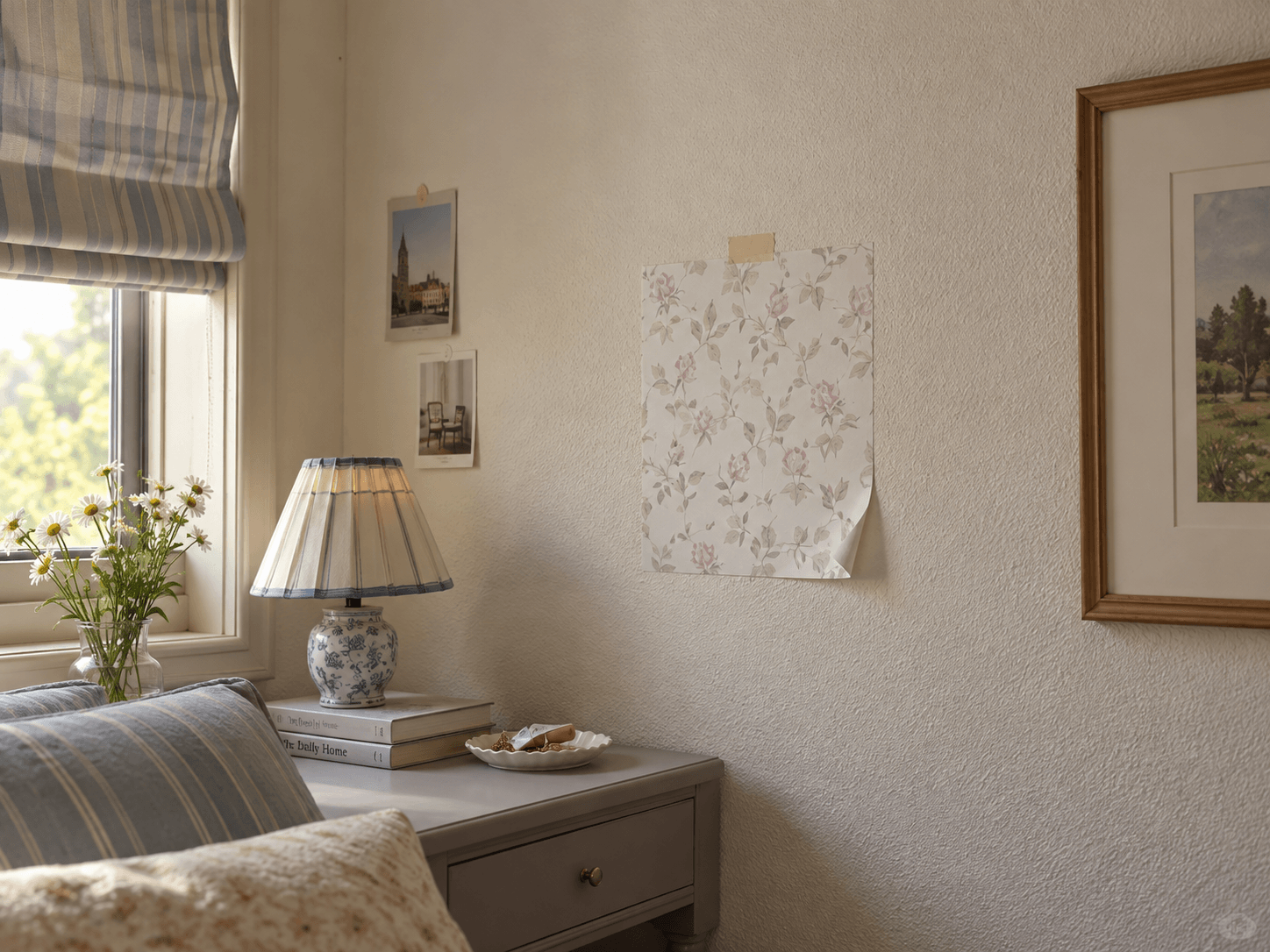
Peel-and-stick wallpaper can sometimes work on lightly textured walls, including some orange-peel finishes. But not every textured wall is a good candidate, and even a wallpaper that sticks may leave you with a finish you don’t like.
The first thing to check isn’t the wallpaper pattern. It’s the wall underneath it.
A light, barely noticeable texture may be worth testing. Deeper ridges, rough patches, or a surface that needs extensive smoothing are different problems. And in a rental, anything you do to prepare the wall matters just as much as whether the wallpaper stays up.
Before buying enough wallpaper for the room, find out what your wall—and the specific product you’re considering—will actually allow.
Quick Take
First, Check How Textured the Wall Actually Is
You don’t need to identify your wall texture perfectly. You do need to understand how uneven the surface is.
Peel-and-stick wallpaper relies on contact between its adhesive backing and the wall. Raised areas make contact more easily than recessed ones, leaving less surface for the adhesive to hold onto. That can affect both how securely the wallpaper stays attached and how smooth it looks.
Here is a practical way to separate the common textures.
| WALL SURFACE | WHAT TO EXPECT |
|---|---|
| Smooth or nearly smooth painted wall | Generally the best starting point, provided the paint and surface meet the manufacturer’s requirements. |
| Light orange-peel texture | A possible sample-test candidate with some products. Adhesion and visible texture remain uncertain. |
| Pronounced orange peel or knockdown | Higher risk of uneven adhesion, visible bumps, and lifting edges. Do not assume thicker wallpaper will solve it. |
| Deep knockdown, rough stucco, or popcorn-like texture | A poor candidate for direct application of standard peel-and-stick wallpaper. Significant preparation may be required. |
These are practical risk categories, not manufacturer-approved compatibility ratings. The product’s installation instructions take priority.
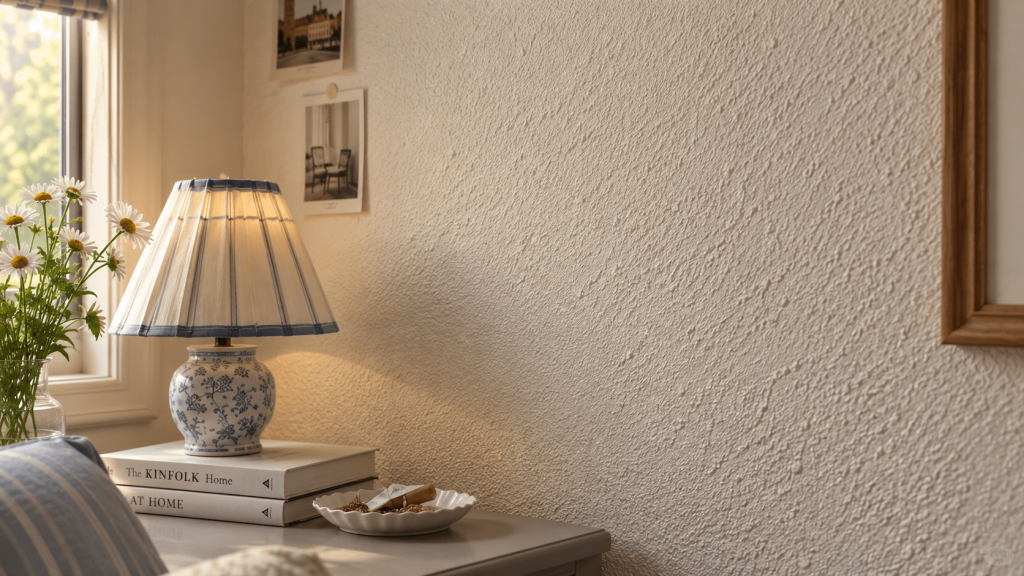
Look at the wall from the side, preferably when daylight catches its surface. Then run your fingertips lightly across an inconspicuous area.
If you can see shallow, closely spaced bumps but the surface still feels relatively even, a sample may be worth considering.
If you see distinct raised patches separated by deeper grooves, there is more for the wallpaper to bridge. A pattern that looks smooth in a product photo may look very different on your wall.
Also check the condition of the painted surface. Flaking paint, powdery residue, damp spots, or loose texture are reasons to address the underlying wall problem rather than cover it.
Texture depth is only part of the decision. The paint condition and the wallpaper brand matter too.
A Sample Needs to Pass Three Tests, Not One
Before ordering multiple rolls, read the installation requirements for the exact wallpaper you want.
Some products are intended only for smooth painted walls. Others describe limited success on lightly textured surfaces while still recommending a sample first.
A sample test is useful when the manufacturer permits or advises it. It isn’t a way to override an explicit incompatibility warning.
Choose a small, inconspicuous area with the same texture and paint finish as the wall you want to cover. Avoid a recently repaired patch if it doesn’t represent the rest of the wall.
Clean and prepare the spot as the manufacturer instructs. Apply the sample without extra glue, unapproved primer, or other products intended to force a bond.
Then check three separate things.
| TEST | WHAT YOU’RE LOOKING FOR |
|---|---|
| ADHESION | Does the sample stay flat, especially around the edges? |
| APPEARANCE | Another detailCan you see or feel the wall texture through it in normal room light? |
| WALL RESPONSE | When tested according to the product’s instructions, does the wall surface still look sound? |
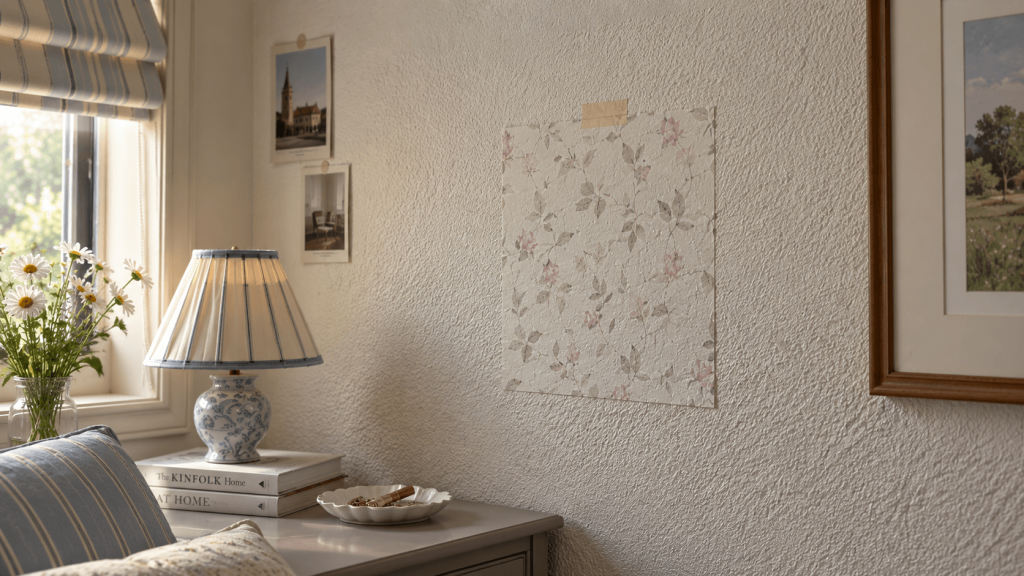
Check the sample after installation and again over the period recommended by the manufacturer. Pay attention to edges, corners, and any areas where the wall texture is more pronounced.
A sample that stays attached overnight is encouraging, but it doesn’t prove the wallpaper will remain secure for months. Likewise, a small removal test cannot guarantee damage-free removal from the entire wall at move-out.
Check the sample after installation and again over the period recommended by the manufacturer. Pay attention to edges, corners, and any areas where the wall texture is more pronounced.
A sample that stays attached overnight is encouraging, but it doesn’t prove the wallpaper will remain secure for months. Likewise, a small removal test cannot guarantee damage-free removal from the entire wall at move-out.
What do wallpaper manufacturers actually say?
This is where the specific product makes a difference.
| BRAND / PRODUCT | OFFICIAL GUIDANCE |
|---|---|
| Tempaper peel-and-stick wallpaper | Generally recommends smooth, properly prepared walls and does not recommend textured surfaces as a standard installation. Some customers have reported success on lightly textured orange-peel walls, so Tempaper advises testing a sample if considering that use. |
| NuWallpaper by WallPops | Performs best on smooth, flat surfaces. The manufacturer says most textured surfaces are too uneven or porous, although some customers have succeeded on lightly textured walls. Installation on those surfaces is at the customer’s risk. |
Sources: Tempaper textured-wall guidance and NuWallpaper’s official FAQ.
Neither statement means that every light orange-peel wall will work. Nor does it mean one of these brands is automatically safer for your rental.
Check the instructions for the specific wallpaper material and collection you’re buying. A different backing or adhesive can change the result, even within the broader peel-and-stick category.
If the manufacturer doesn’t recommend your wall type, don’t turn a few positive customer photos into a guarantee.
If the Texture Shows Through, Decide Whether You Can Live With the Finish
Sometimes the sample sticks just fine.
Then you step back and notice the wall texture showing through the pattern.
This doesn’t necessarily mean the installation has failed. It means you have a different decision to make.
Look at the sample from where you normally sit or stand in the room. Check it in daylight and under the lighting you use at night. Pay particular attention to the edges of the sample and to areas where light falls across the surface.
A slightly uneven finish may be unnoticeable in a small, busy pattern. A plain, light-colored wallpaper may reveal the same texture more clearly. That is a visual consideration, though—not a reason to assume a darker or thicker product will adhere better.
If the bumps bother you on a small sample, imagine them across the entire wall.
You don’t need a perfectly smooth finish. But you should like what you’re actually going to see, not just how the wallpaper looks in the product listing.
If the Edges Lift, Let the Test Tell You No
Corners pulling away, recurring bubbles, or sections that won’t stay flat can indicate that the wall and wallpaper aren’t a good match.
First, check whether the sample was installed under the manufacturer’s recommended conditions. An unclean surface, uncured paint, or incorrect installation can affect the result even on a smooth wall.
But if you followed the instructions and the same lifting keeps happening, don’t assume the solution is stronger adhesive.
Adding glue, using an unapproved primer, or repeatedly forcing the material down may create a larger removal problem later.
In a rental, that tradeoff matters. The original appeal of peel-and-stick wallpaper is that you can change the appearance without committing to a major wall alteration.
If getting it to stay up means abandoning that advantage, the project may no longer be worth doing.
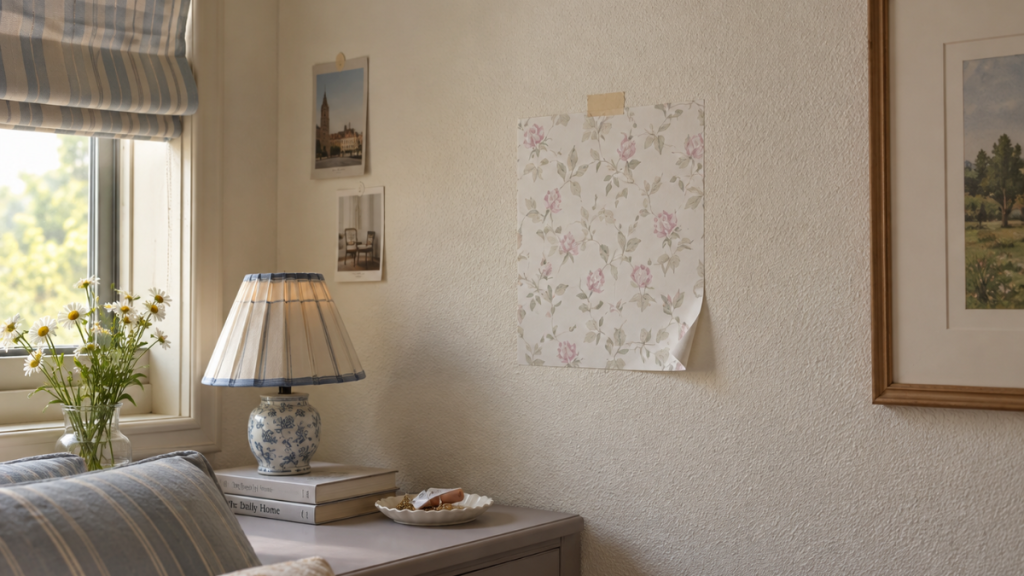
Stop When the Wall Prep Becomes the Bigger Project
Sanding, skim coating, filling deep texture, and repainting can all create a smoother wall.
They also turn a simple removable-wallpaper idea into a wall-finishing project.
That distinction matters more in a rental than in a home you own.
Before considering substantial preparation, find out whether your lease allows it and what the landlord expects when you move out. Even if an alteration is permitted, restoring the original finish may require more time and money than you expected.
Don’t sand, scrape, or disturb unknown or older wall finishes without first checking what materials may be present and what precautions are appropriate.
There is a difference between cleaning a sound painted surface as instructed and modifying the surface to make an incompatible product work.
If your plan now depends on making the entire wall smooth, step away from the installation question and consider the bigger decision.
Our guide to whether removable wallpaper is worth it in a rental looks at the cost, effort, time left in your lease, and what you might have to undo later.
The wall may be fixable. That doesn’t automatically make it a worthwhile wallpaper project.
If the Wall Fails the Test, Work With It Instead
A failed sample doesn’t mean you need to find a stronger adhesive or a more complicated wall covering.
Sometimes the best answer is to leave the surface alone and change what sits around it.
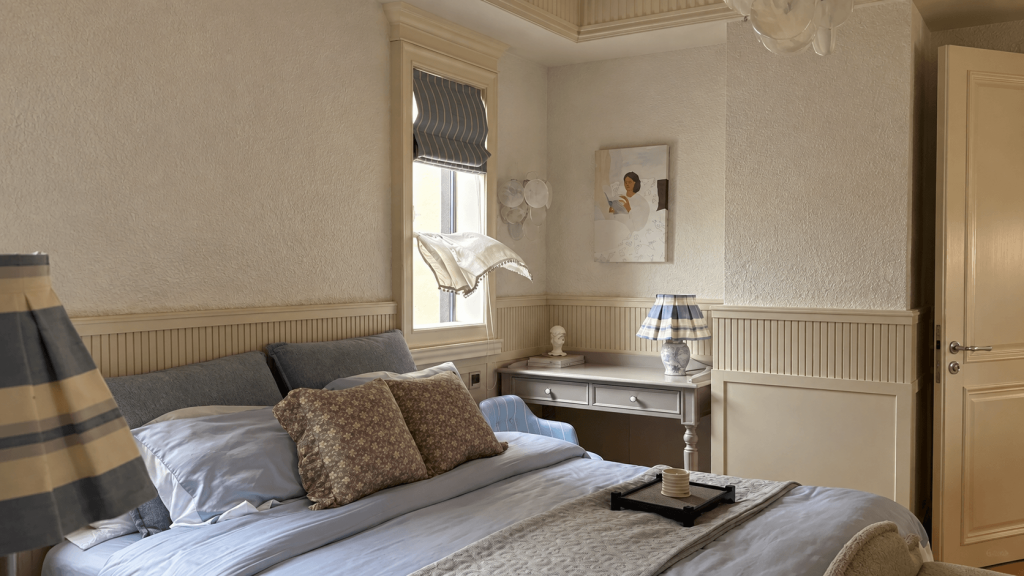
For example, if the texture itself isn’t the biggest problem and you’re mainly tired of the room feeling beige or flat, furniture, art, lighting, and contrasting colors may make more of a difference than covering the whole wall.
You can also bring pattern into the room through curtains, bedding, or textiles instead of attaching it to a surface that won’t cooperate.
If the wall color is what bothers you most, see How to Make Beige Rental Walls Feel Intentional Without Painting for ways to work around the existing finish.
Not every permanent feature needs to become a DIY project.
So, Can Peel-and-Stick Wallpaper Work on Textured Rental Walls?
Yes, sometimes—but a lightly textured wall is a test candidate, not a promise.
The best starting point is a sound, properly prepared surface that the wallpaper manufacturer actually supports.
If your wall has mild texture, the product guidance allows a sample test, and the sample performs well in adhesion, appearance, and wall response, you have a reasonable basis for considering a limited installation.
Deep texture, unstable paint, persistent lifting, or the need for extensive wall preparation are stronger reasons to walk away.
The point of testing is to make a smaller decision before committing to a much bigger one.
FAQ
Does peel-and-stick wallpaper work on orange-peel textured walls?
It can work on some lightly textured orange-peel walls, but the result depends on the texture depth, paint condition, and specific wallpaper. Manufacturers generally prefer smooth, flat surfaces. Check the product’s guidance and test a sample when permitted rather than treating all orange-peel walls as compatible.
Can you put peel-and-stick wallpaper on knockdown walls?
Pronounced knockdown texture is generally a poor surface for direct application. Raised sections and deeper recessed areas can create uneven adhesive contact and a visibly irregular finish. If the wall needs extensive smoothing first, consider whether that preparation is appropriate for your rental.
Will wall texture show through peel-and-stick wallpaper?
Yes, it can. Thin materials, solid colors, and light falling across the wall may make bumps and ridges more noticeable. Thicker materials or busier patterns may make some texture less obvious, but they don’t guarantee better adhesion. Judge the actual sample on your wall before buying more.
Is there a peel-and-stick wallpaper specifically guaranteed to work on textured walls?
Don’t assume there is a universal textured-wall-safe option. Some manufacturers discuss limited success on certain lightly textured surfaces, while others advise against textured walls entirely. Check the installation and warranty terms for the specific product instead of relying on broad claims such as renter-friendly or removable.
Can I smooth a textured rental wall before applying wallpaper?
Technically, wall texture can be smoothed, but sanding, skim coating, priming, or repainting may require landlord approval and later restoration. If significant preparation is necessary, the project may no longer offer the simplicity that made peel-and-stick wallpaper appealing.
How long should I test peel-and-stick wallpaper before covering the wall?
Use the testing period and method recommended by the wallpaper manufacturer. Check for lifting, bubbling, and visible texture during that period. A successful short test doesn’t guarantee long-term adhesion or damage-free removal when your lease ends.