How to Make Landlord Furniture Feel Less Dominant
Stuck with furniture you don’t like in a furnished apartment? Use layout, visual weight, and your own movable pieces to make the room feel more like yours.
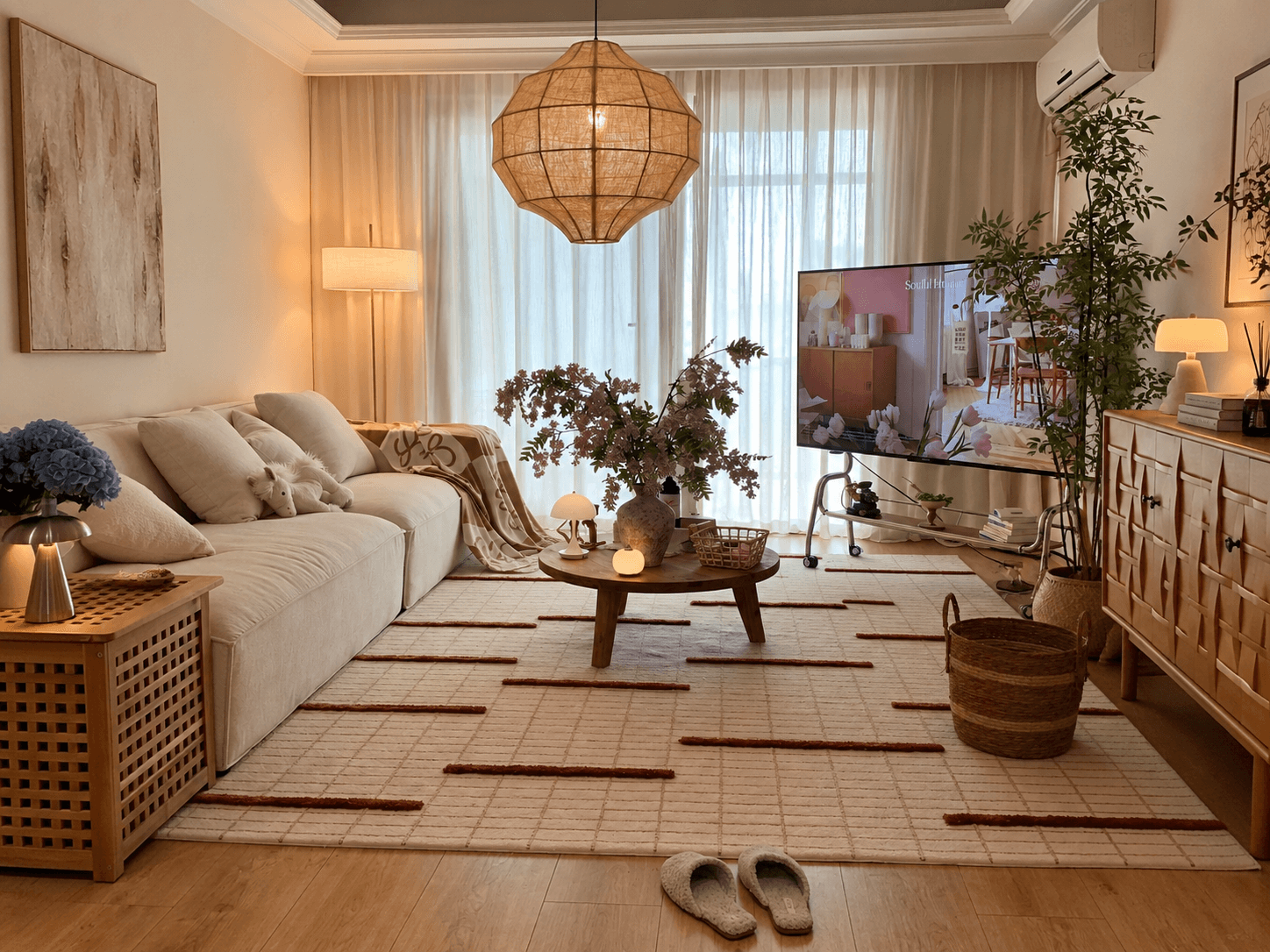
Decorating a furnished apartment is harder when the furniture you did not choose already controls most of the room. You may not be able to replace the sofa, table, bed, or storage—but you also do not have to decorate every one of those pieces.
Start by finding which landlord-owned furniture carries the most visual weight, then use the things you can move with you to change what the room is organized around.
The goal is not to make every piece feel like yours. It is to stop the landlord’s furniture from making every decision.
Quick Take
Find the Furniture That Is Actually Controlling the Room
Do not start by listing everything you dislike.
Look at the room from the doorway, then from the place where you normally sit. What do you notice first in both views?
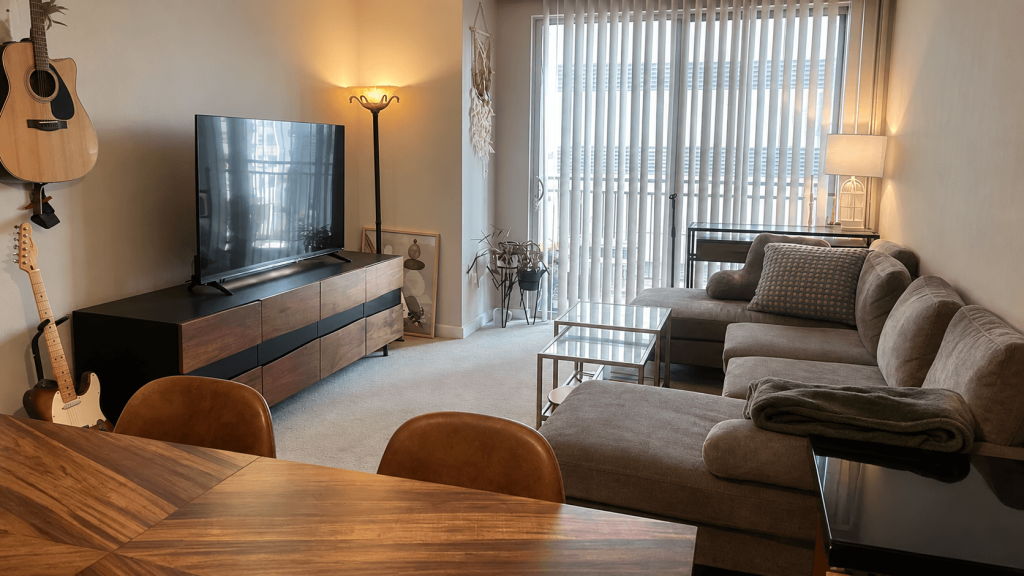
It may be one oversized sofa. It may be a dining table and six chairs that read as one large shape. It may be several medium-sized pieces in the same dark wood finish that feel heavier together than they do separately.
Ask:
If the smaller styling problems disappeared, what landlord-owned element would still control what I see?
Start there.
Trying to improve the sofa, table, chairs, cabinet, and side tables at the same time usually turns one furnished-rental problem into five decorating projects.
Remove What Is Making It Look Heavier Before You Add Anything
The usual reaction to a room you do not like is to add something.
A throw. A basket. A tray. A lamp. A plant. A rug.
Before you do that, remove a few things instead.
A bulky sofa beside a heavy side table and a full coffee table can read as one dense block. Temporarily clear or move two or three nearby movable objects, then look at the room again.
If the furniture feels quieter, part of the problem was cumulative visual weight. You may not need another fix.
If it simply looks more exposed, that is useful too. You have ruled out clutter as the main problem.
Either result tells you more than another purchase would.
Break Up the Visual Block
Several ordinary pieces can become much more dominant when they sit close together.
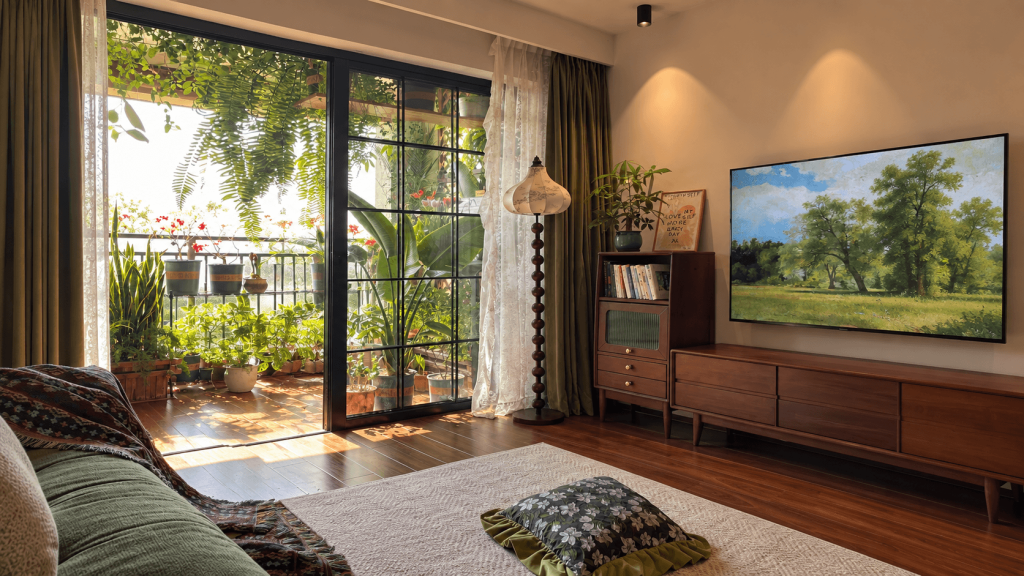
Dark finishes, thick silhouettes, large upholstered surfaces, and repeated wood tones can merge into one heavy zone. Instead of seeing a sofa, coffee table, and side table, you see the whole group at once.
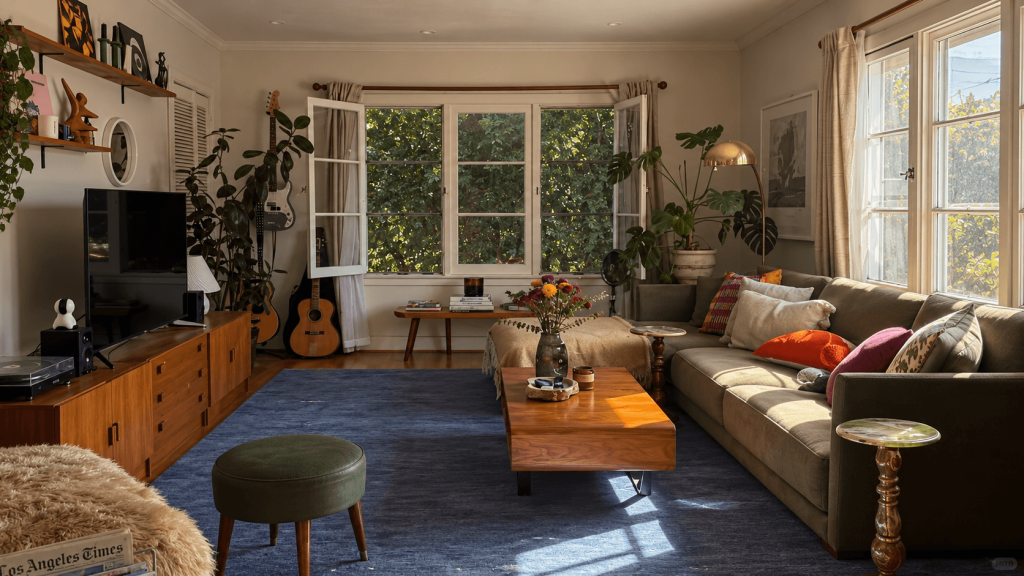
The instinct is often to style every piece: pillows on the sofa, a tray on the table, a lamp and objects on the side table.
That can make the cluster feel even more deliberate—and harder to ignore.
Try giving the group less visual support instead. Let one surface stay relatively empty. Avoid putting another heavy-looking object directly beside it. If the layout allows it, keep some visible floor, wall, or air between larger forms rather than filling every gap.
You are not trying to make the room sparse.
You are trying to stop several landlord-owned pieces from acting like one oversized piece.
Give One Thing You Own a Bigger Job Than “Decoration”
Once the room feels less crowded around the landlord furniture, then consider adding something stronger.
There is a difference between personalizing a room and changing what the room is visually about.
Small objects can make a rental feel more like yours without changing what dominates it. Books, candles, pillows, and framed prints may all reflect your taste while the landlord’s sofa still wins the room.
One stronger movable element can do more.
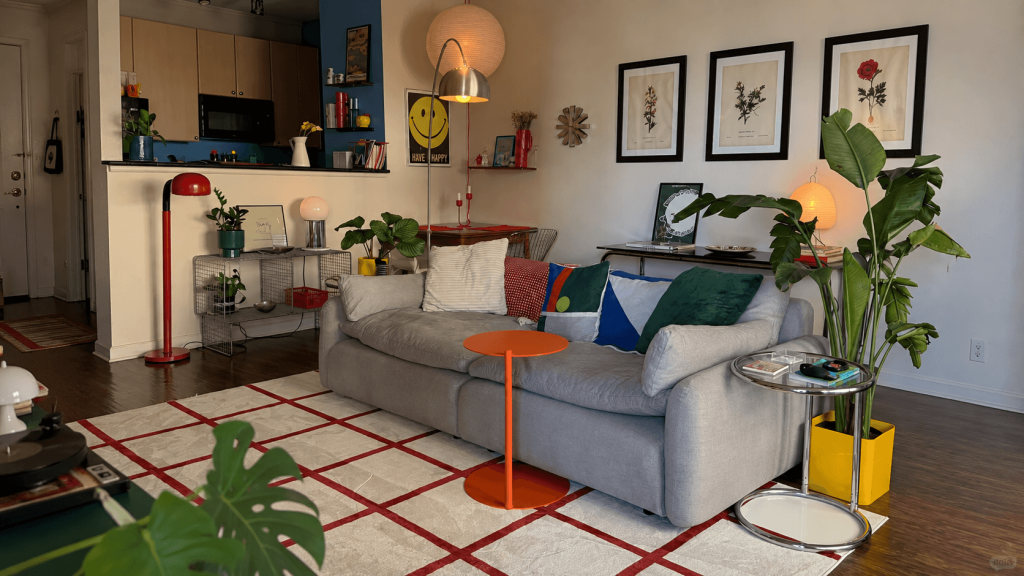
A rug might define the seating area rather than simply cover the floor. A floor lamp can pull attention upward. One larger piece of art can give the eye somewhere to land before it settles on the furniture.
The exact item matters less than whether it changes the hierarchy.
If you are considering a rug, Is It Worth Putting a Rug Over Rental Carpet? looks at a similar decision: the value is not always how much surface you cover, but whether the rug changes what bothers you about the room.
A useful rule here is simple:
One strong movable anchor usually does more than six small attempts to distract from landlord furniture.
And because it belongs to you, it can still make sense after this rental.
Stop Trying to Make Every Landlord Piece Match Your Style
Another common instinct is to make the landlord furniture feel intentional by repeating it elsewhere.
A brown cabinet gets brown baskets. A dark dining table gets matching frames. A beige sofa starts determining the pillows, curtains, and accessories around it.
Sometimes that helps.
Sometimes it gives the furniture even more control.
Every repeated color, finish, or shape creates another connection back to the thing you did not choose.
A landlord-owned cabinet does not need matching accents scattered around the room to justify its existence. A dining set does not need to become the starting point for your entire palette.
Sometimes an awkward piece becomes less noticeable when you stop trying to make everything agree with it.
Let it be slightly separate.
Your own things can relate to one another without constantly referring back to the landlord’s furniture.
Watch for the Point Where the Workaround Becomes the Bigger Commitment
Working around furnished-rental furniture can quietly turn into its own makeover.
You buy a rug because of the sofa. Then pillows because of the rug. Then a throw because the sofa still feels heavy. Then baskets, curtains, and another lamp because the rest of the room still does not quite come together.
None of those purchases is necessarily bad.
The better question is:
If the landlord furniture disappeared tomorrow, would I still want most of these things?
If yes, they probably belong to your own home style.
If no, you may be building a room around a temporary constraint.
That does not mean every rental purchase needs to work forever. But the less useful something becomes without the landlord furniture, the more carefully it deserves to be judged.
Know When Styling Is No Longer the Decision
Not every landlord-furniture problem is a styling problem.
If the furniture is damaged, badly stained, unstable, or genuinely uncomfortable, making it visually quieter does not solve what matters.
The same is true when it prevents the room from functioning. An oversized dining table that blocks circulation or a sofa that makes every workable layout impossible may be a removal, storage, or landlord-conversation problem instead.
If the landlord is willing to take the piece away, resolve that before buying several things to work around it.
And sometimes the furniture simply remains noticeable.
You may reduce clutter, create more separation, add one stronger element of your own, and still see the landlord furniture first when you walk into the room.
That is a valid stopping point.
You do not have to keep adding décor until every rental constraint disappears. Some things are worth changing, some are worth working around, and some are easier to live with once you stop asking the room to hide them.
FAQ
How do you decorate around ugly furniture in a furnished rental?
Start by identifying which piece or group is actually dominating the room instead of trying to improve everything at once. Remove nearby objects that may be reinforcing its visual weight, create more separation if several pieces read as one block, and only then consider adding one stronger movable element of your own.
The goal is not to decorate every landlord-owned piece. It is to make the room less dependent on them.
How can I make dark landlord furniture feel less heavy?
Start with what is around it. Several dark or bulky objects grouped together can feel much heavier than one piece alone.
Reduce nearby visual weight, leave more breathing room where possible, and avoid automatically repeating the same dark finish throughout your own décor just to make it match.
Should I cover landlord furniture with throws or slipcovers?
Sometimes, but covering the furniture is a separate decision from making the whole room feel less dominated by it.
If the sofa itself is the main problem, read Ugly Sofa in a Furnished Rental? What to Do Before You Buy a Slipcover first. If you already know you want a slipcover and are deciding whether the purchase makes sense, see Is a Sofa Slipcover Worth It for a Furnished Rental?
Can I ask my landlord to remove furniture from a furnished rental?
Yes. Whether the furniture can actually be removed, stored, or replaced depends on your landlord and your rental agreement.
If removal is a realistic option, settle that question before buying several things specifically to make unwanted furniture easier to live with.