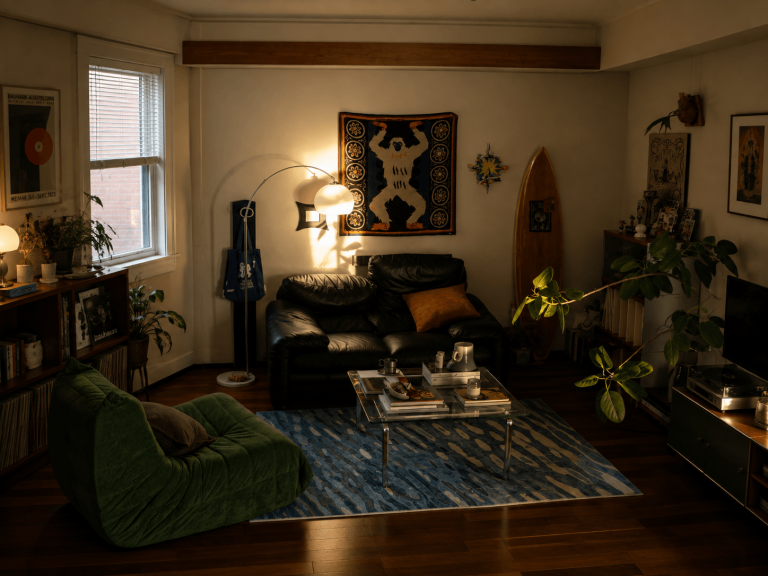
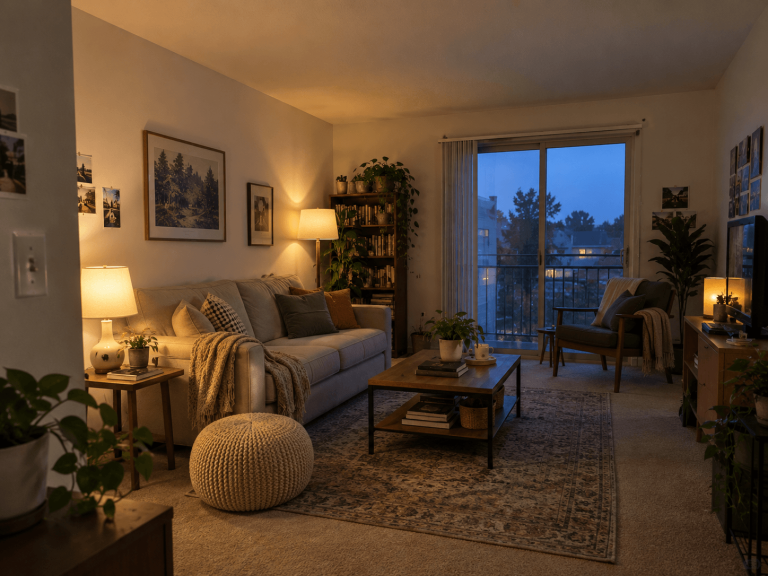
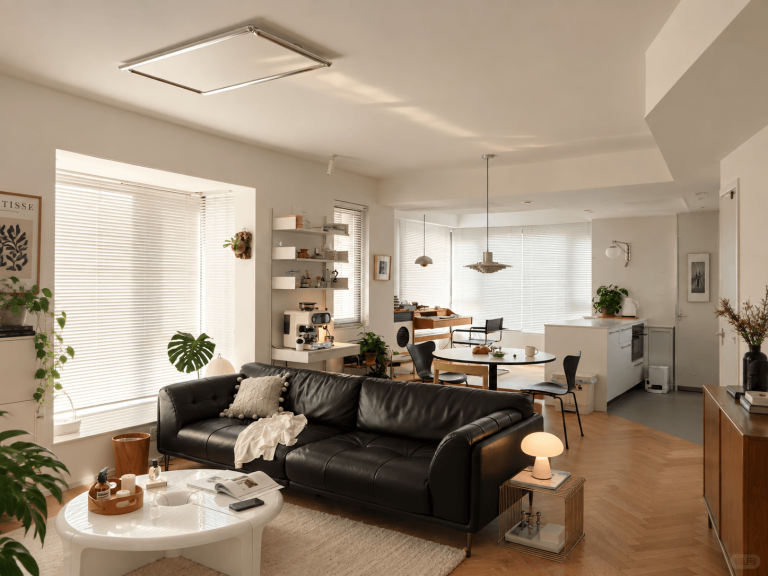
Apartment Lighting Ideas for Renters: A Room-by-Room Plan
Better apartment lighting starts with the rooms you actually use. Map dark spots, work around fixed outlets, and decide which lighting upgrades are worth buying for your rental.
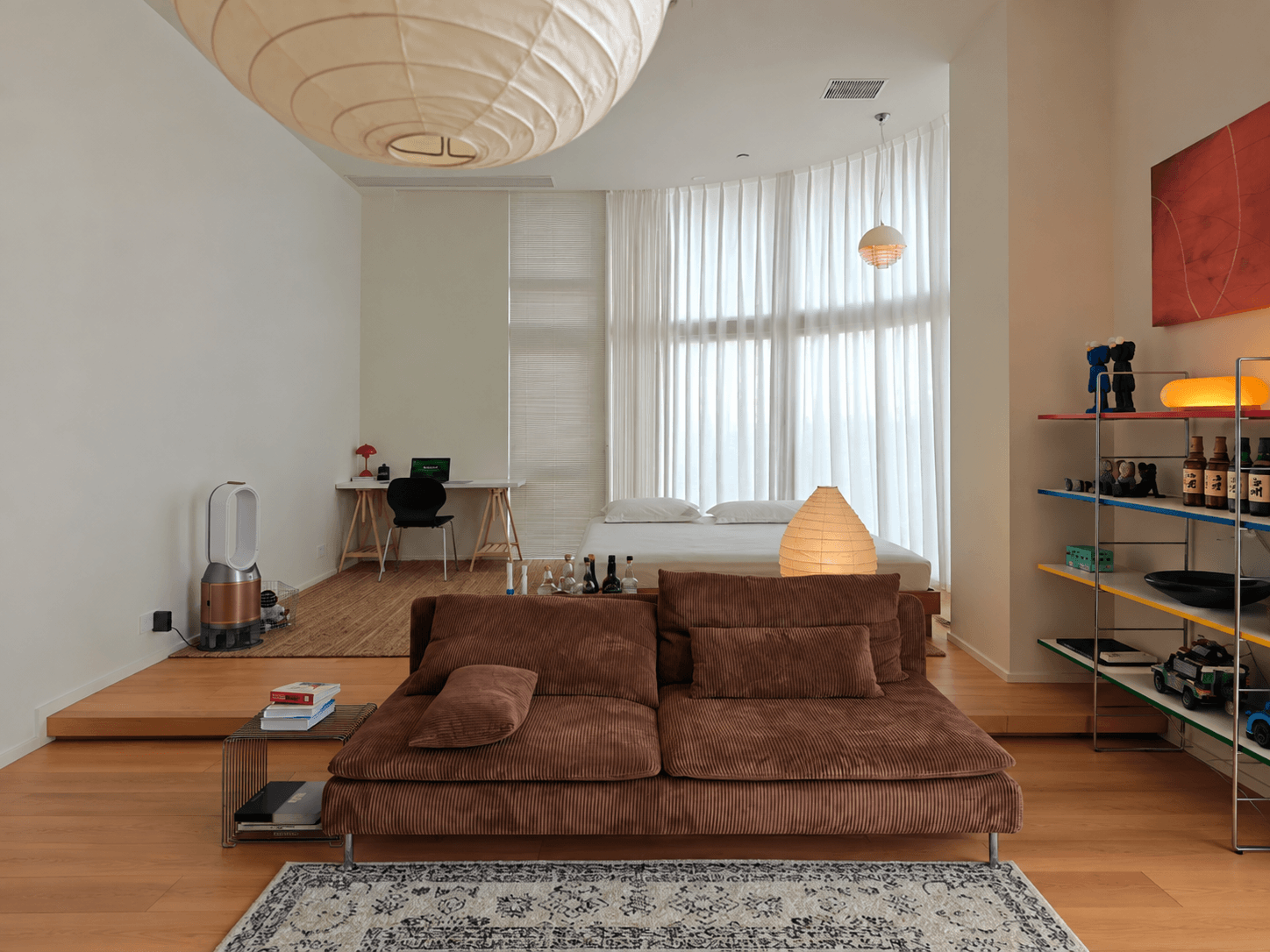
A rental apartment can have several working lights and still feel poorly lit.
Your living room might be bright enough near the sofa but uncomfortable at the dining table. The bedroom lamp works for reading, yet the closet is hard to see into. In the kitchen, a ceiling light illuminates the room while your body casts a shadow over the counter.
Buying another lamp for each dark spot sounds simple. But in a rental, every new light also needs somewhere to sit, a workable power source, and a place for its cord.
Before buying more apartment lighting, map the problems across your home, check where lighting can realistically go, and decide which changes are worth making.
The result should be a shorter, more useful shopping list—not a lamp for every corner.
Quick Take
A good lighting plan should tell you where to spend money, what to reuse, and which problems can wait.
Already know which room needs better light? Compare lighting options for that job ↓
Start With a Lighting Map of Your Apartment
Begin after dark, when you can see how the apartment works without daylight.
Walk through the spaces you actually use in the evening. Think about what you’re doing in each one rather than whether the room looks attractively lit.
Then record the main problem.
| ROOM | WHAT YOU DO THERE | WHAT ISN’T WORKING | POSSIBLE NEXT STEP |
|---|---|---|---|
| Living room | Read and relax on the sofa | Seating area is comfortable, but the dining corner is dark | Check whether the dining corner needs its own light |
| Bedroom | Read in bed and get dressed | Bedside lamp doesn’t reach the closet | Look for lighting closer to the storage area |
| Kitchen | Prepare dinner | Your body blocks the overhead light | Evaluate task lighting at the counter |
| Entryway | Put on shoes and find keys | The entrance is dim at night | Check the existing fixture before adding anything |
This is a sample map. Your actual list may contain only two problems, and that’s useful information.
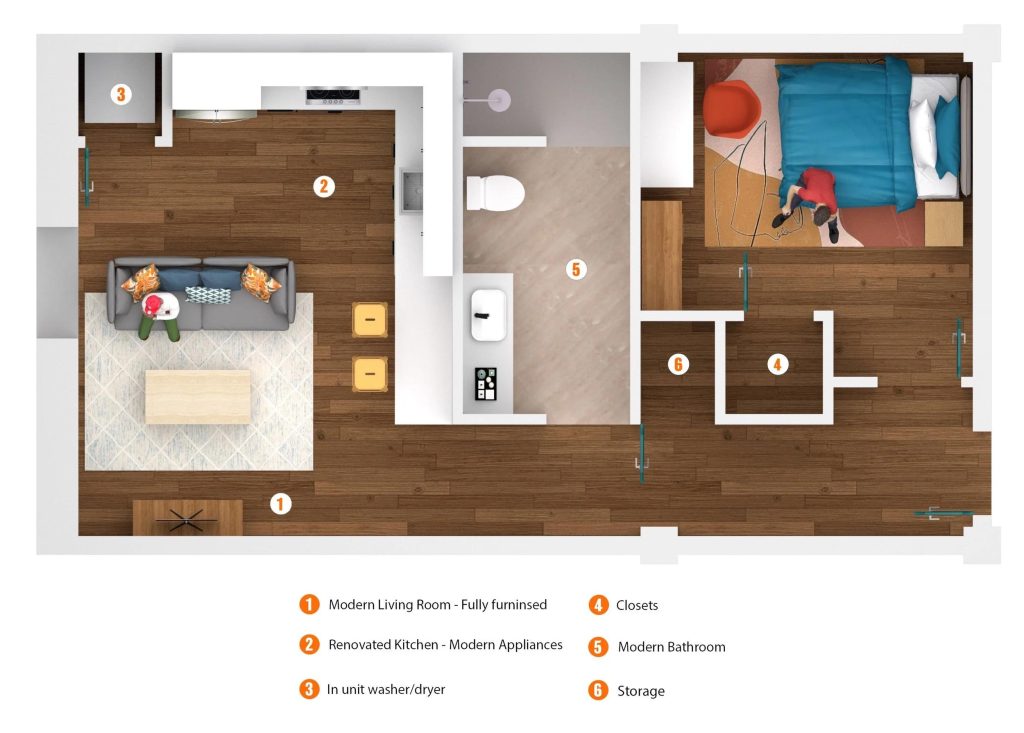
Use two photos to identify the problem
For the rooms you’re most concerned about, take two photos after dark with the lights in their usual positions.
Photo A: From the room entrance. Capture the existing fixtures, furniture arrangement, and areas that appear brighter or darker.
Photo B: From where the activity happens. Take the photo from your normal reading chair, desk, kitchen counter, or other problem location. This can reveal a shadow or placement issue that isn’t obvious from the doorway.
Keep the original photos. When you try a different arrangement, photograph the same positions again under comparable conditions.
Phone cameras may automatically brighten dark scenes, so photographs are useful for comparing the arrangement, but they aren’t reliable measurements of actual light levels. If your camera allows exposure to be locked, use consistent settings when comparing two arrangements.
The goal is to identify something specific enough to act on: a shadowed worktop, a dim closet opening, an unlit dining corner, or an inconveniently placed lamp.
Choose the two problems that matter most
A dark entryway you pass through briefly may be less urgent than a kitchen counter you struggle to use every evening.
Give priority to lighting problems that affect frequent activities, create discomfort, or make a space difficult to use. If the issue is a failed fixture or inadequate lighting in a safety-critical area, report it rather than treating it as a decorating project.
By the end of this check, you should have two priority locations and a clear reason each needs attention.
That is your starting point for the rest of the apartment lighting plan.
Check Where New Lighting Can Actually Go
Your lighting map tells you where better light is needed. Now you need to find out whether a practical light source can go there.
In a rental, the important constraints often have very little to do with decor. The existing outlets, furniture, switches, traffic paths, and mounting surfaces may determine which options are worth considering.
Before shopping, record these details for each priority location:
| CHECK | WHAT TO RECORD | WHY IT MATTERS |
|---|---|---|
| Outlet access | Which nearby outlet is available and how far it is from the intended location | Helps determine whether a plug-in light is practical |
| Available spacem | Space on the floor, table, shelf, or wall where the fixture might go | Rules out lamps that would crowd the room |
| Cord route | Where the supplied power cord would run | Reveals obstacles, doorways, and unsuitable placements |
| Existing fixtures | Which usable lights already serve the area | Helps avoid buying a duplicate |
| Installation restrictions | Whether mounting would affect landlord-owned walls or fixtures | Determines whether permission or restoration may be involved |
You don’t need a detailed floor plan, but a few actual measurements help.
For example, if you’re considering a floor lamp beside the sofa, measure the usable floor space and the distance along a safe route to the intended outlet. Compare those measurements with the lamp’s footprint and its manufacturer’s listed cord length.
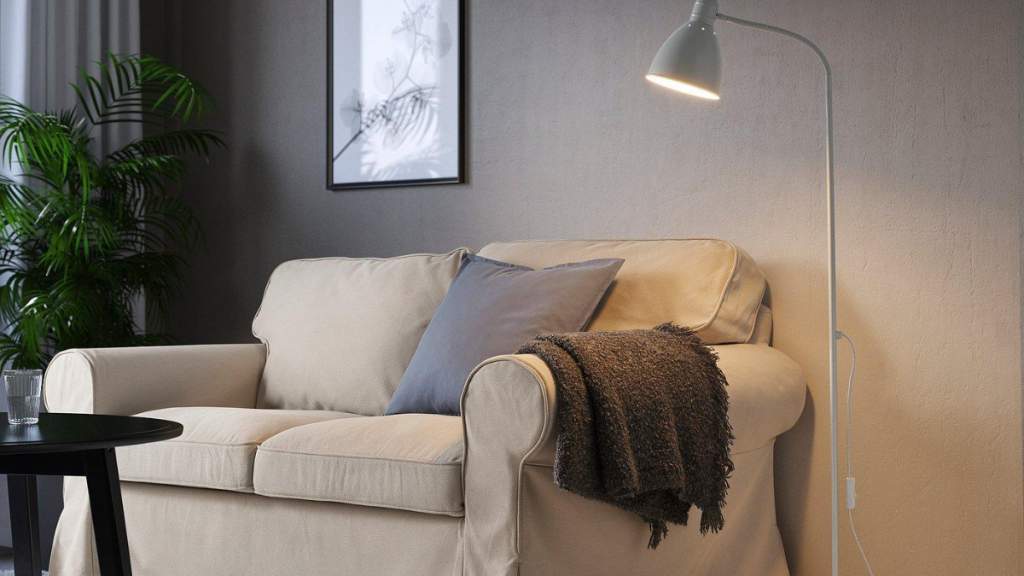
Don’t assume a product will work because an online photograph shows it in a similar-looking room.
When the ideal position is not practical
Imagine you want a reading light beside an armchair. There’s enough space for a floor lamp, but the nearest outlet is across the only walkway.
That location may be attractive from a lighting perspective, yet unsuitable for a permanent corded arrangement.
Before choosing rechargeable lighting, check whether the chair or another existing lamp can be positioned closer to an accessible outlet. You might also be able to use a suitable table lamp on nearby furniture.
If no practical location exists, you have identified a real constraint. Buying a lamp with the wrong power arrangement will not remove it.
Electrical Safety Foundation International advises against running cords beneath rugs or through high-traffic areas and treating extension cords as permanent wiring.
Your plan should work without introducing those problems.
Choose the Lighting Type After You Know the Constraints
At this point, you should know both what the light needs to accomplish and where a fixture can realistically be placed.
That makes the product comparison more useful.
| OPTION | WHEN TO CONSIDER IT | WHAT TO CHECK BEFORE BUYING |
|---|---|---|
| Floor lamp or uplight | You need broader light in a living area | Footprint, light distribution, outlet access, cord length |
| Table lamp | You have a suitable surface near the activity | Surface space, height, shade, light direction |
| Adjustable task lamp | You need focused light for reading or work | Reach, adjustment range, stable placement |
| Plug-in wall light | You want light without occupying a table or floor | Permission, mounting surface, outlet and cord route |
| Rechargeable light | The area needs occasional light and lacks convenient power | Expected usage time, charging routine, attachment |
| Under-cabinet or LED task light | A particular work surface needs illumination | Intended use, mounting conditions, power and surrounding environment |
The important differences are often practical rather than decorative.
A floor lamp that distributes light across the living room may help with general coverage. A desk lamp provides more controlled light for a specific activity. A small rechargeable light may be appropriate inside a storage area but inconvenient as the main light for a room used every evening.
For regular, extended use, a properly located plug-in fixture can avoid the burden of repeated charging. Rechargeable lighting can make more sense when use is brief or occasional.
If you’re considering cordless wall lighting, our guide to battery-operated wall sconces for renters examines that tradeoff in more detail.
Don’t choose the most temporary product automatically. Choose the least complicated option that can reliably serve the intended activity.
A Room-by-Room Apartment Lighting Plan
The following examples show how the same basic lighting choices can lead to different answers depending on your existing room.
They’re illustrative scenarios, not results from a product test. Use them to compare your own constraints rather than copying a fixed lamp arrangement.
Original rental apartment photographs
Real Apartment Example: The Same Space in Different Lighting Conditions
These photographs show the same rental space under different visible lighting conditions. The numbered markers highlight lighting locations. Use the comparison to notice how illumination reaches the seating, sleeping, and work areas—not as a claim about measured brightness.
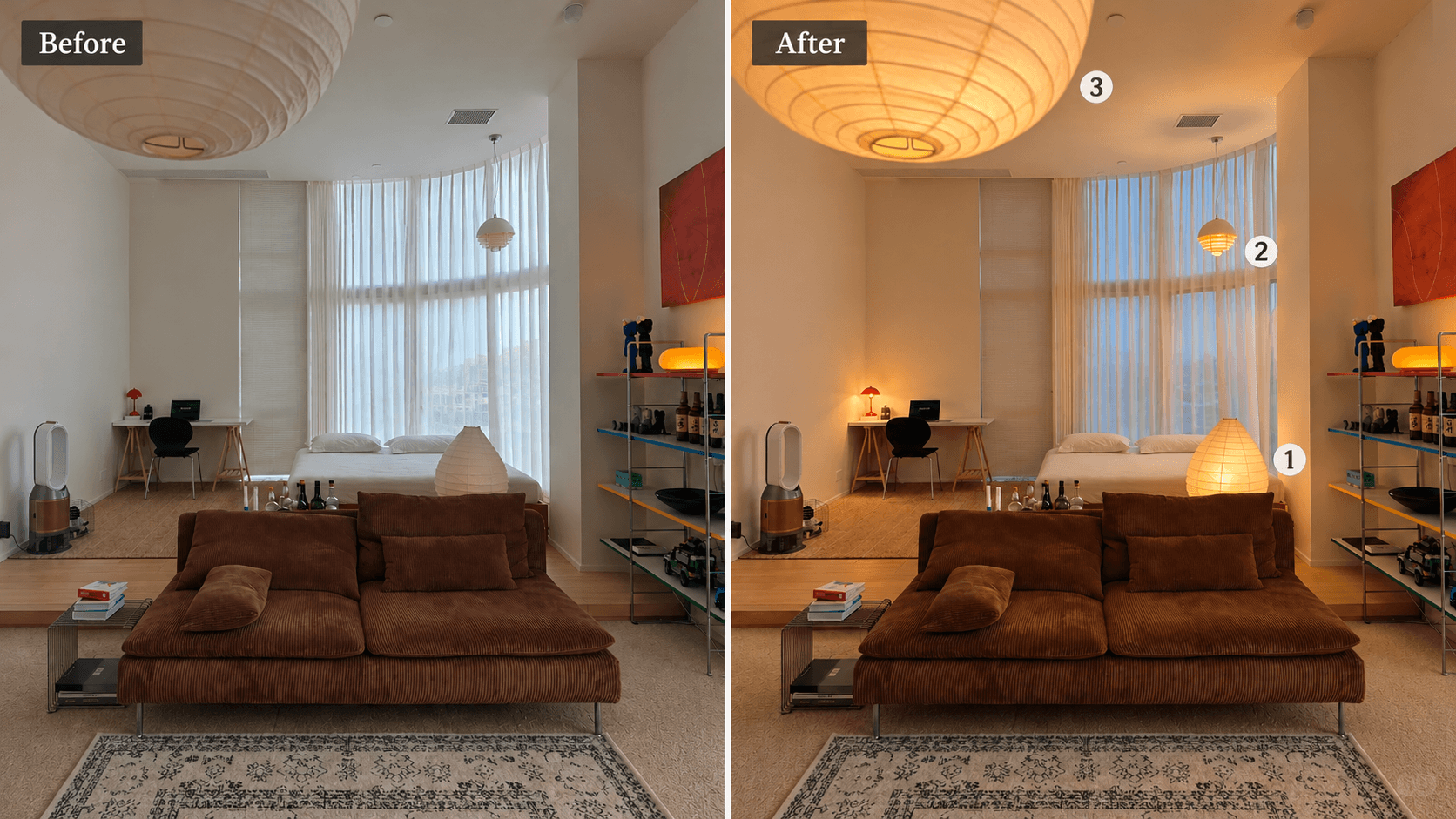
- What to look for: light around the sofa, sleeping area, and desk, rather than overall color alone.
- Before copying this setup: check where the existing outlets, switches, and fixtures are in your own apartment.
- Photo limits: exact fixture changes, measured light output, and bulb specifications have not been documented here.
Living Room: A Dark Dining Corner in an Otherwise Comfortable Room
Imagine a small rental living room that also accommodates a dining table.
There’s a ceiling fixture near the middle of the room and a table lamp beside the sofa. Watching television and relaxing are comfortable, but the dining table sits beyond the main pool of light.
A general apartment lighting guide might recommend additional floor lamps and accent lighting.
But the useful question here is whether you need to brighten the entire living room or just the table.
If an outlet and suitable furniture are close to the dining area, a compact lamp that directs enough light onto the table may address the problem without changing the sofa area.
If the table is narrow and floor space is limited, adding a floor lamp may create more clutter than the lighting improvement justifies. Look at whether an existing nearby light can serve the dining activity before purchasing.
If there is no safe place for a corded fixture, a conventional lamp in the ideal position may not be viable. Don’t assume a rechargeable light is a good replacement without checking how long you would need it each evening.
The same dark dining corner can lead to three different decisions because the constraints are different.
You also don’t need to buy a new lamp simply because the living room looks uneven in a photograph. If the dining table is rarely used after dark, that issue may belong lower on your priority list.
For a room that lacks any usable overhead lighting, the decisions become more specific. Our no-overhead-light guide covers lamp placement and coverage within a single room.
For your apartment-wide plan, record whether the living room needs a new fixture, a different location for an existing one, or no immediate purchase.
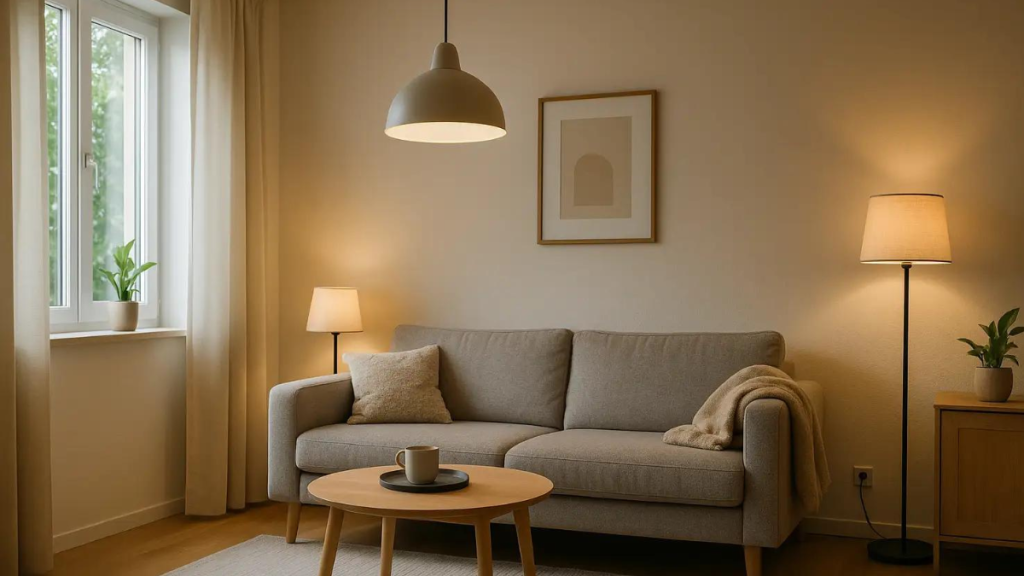
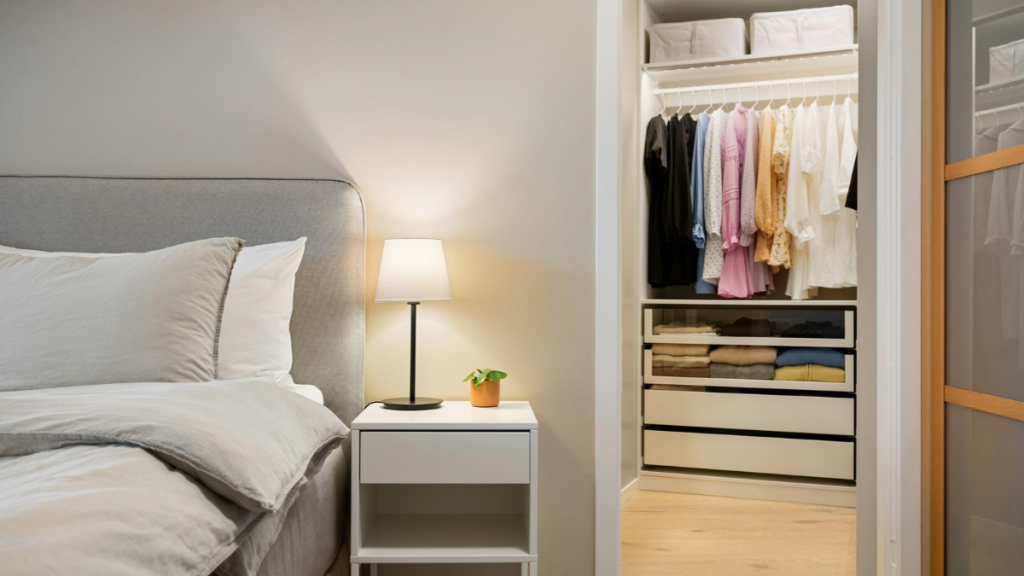
Bedroom: Good Bedside Lighting, Poor Closet Visibility
Now consider a bedroom with two bedside lamps.
The bed is comfortable for evening reading, and the atmosphere is exactly what you want. But when you open the closet, the clothes at the back are difficult to see.
Adding another bedside lamp won’t help much.
Instead, look at the closet opening and nearby storage area. Is the existing ceiling fixture poorly directed? Does the closet door block available light? Is there a suitable location for a small task or storage light?
If the closet is used only briefly, a suitable rechargeable or motion-activated light could be worth investigating, provided its mounting and charging requirements fit the space.
If you spend longer periods sorting clothes, organizing storage, or dressing there, a more dependable light source may be preferable.
Also consider whether the problem is specific to the inside of the closet or affects the whole dressing area. Those are different lighting jobs.
A useful bedroom test: Stand where you normally choose clothes and note where the shadow falls. Then look at where the light would need to come from to illuminate that area without obstructing storage access.
The result might be a compact light inside the closet, a different position for an existing fixture, or a request to address inadequate fixed lighting.
It probably isn’t another decorative lamp beside the bed.
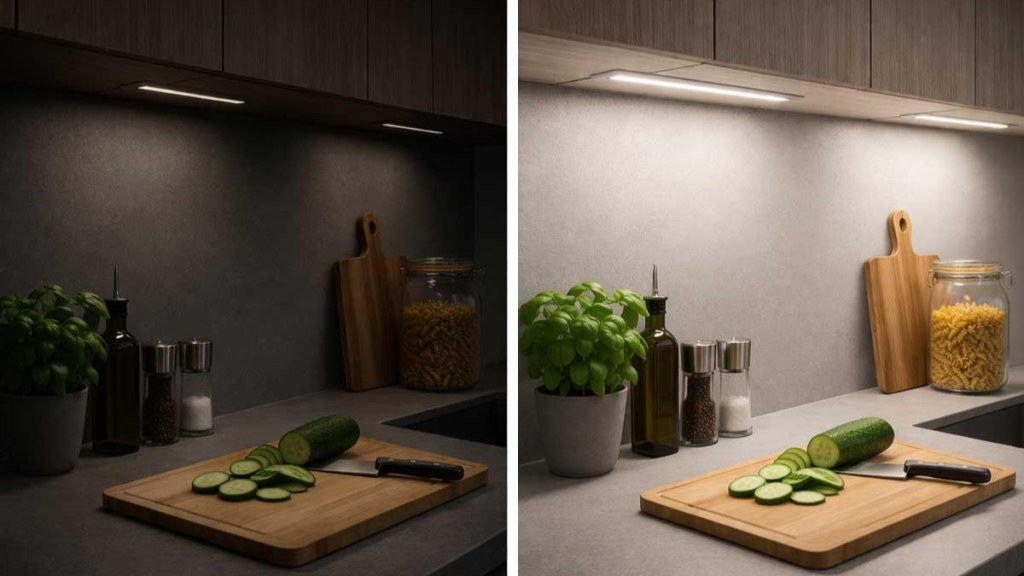
Kitchen: A Bright Ceiling but a Shadowed Countertop
Consider a rental kitchen with one central ceiling light.
The kitchen looks bright when you stand near the doorway. But when you prepare food at the counter, your body blocks the overhead light.
Here, the location of the light matters more than making the whole room brighter.
Take your activity-position photo with the lights on and the counter arranged as you normally use it. Notice where shadows fall when you’re standing in front of the work surface.
A task light located closer to the counter may help. But its mounting and power requirements still need to fit the kitchen.
Situation A: The counter has an appropriate nearby power source and usable mounting space.
An under-cabinet task-lighting option may be worth comparing. Check the exact product’s mounting method, intended environment, and whether the power cord can be routed appropriately.
Situation B: The only outlet is awkwardly positioned near a sink or cooking area.
Don’t plan around a loosely routed cord or a product that isn’t suitable for the location. The installation constraint matters more than getting the light into an attractive position.
Situation C: The existing fixture is malfunctioning or the kitchen’s provided lighting is genuinely inadequate.
That belongs in a landlord or property-manager conversation rather than an improvised lighting project.
If the problem is simply a shadowed worktop, consider the smallest practical change that improves that particular surface. If the fixed lighting itself needs attention, don’t disguise it with temporary accessories.
Entryway: A Narrow Passage With Almost No Room for a Lamp
The entryway is where an ordinary lighting idea can quickly become impractical.
Imagine a narrow entrance with a shoe cabinet, a coat area, and a short walkway into the living room. The light is slightly dim, but the space has almost no free floor area.
A decorative floor lamp might improve the appearance of the entryway while making it harder to move through.
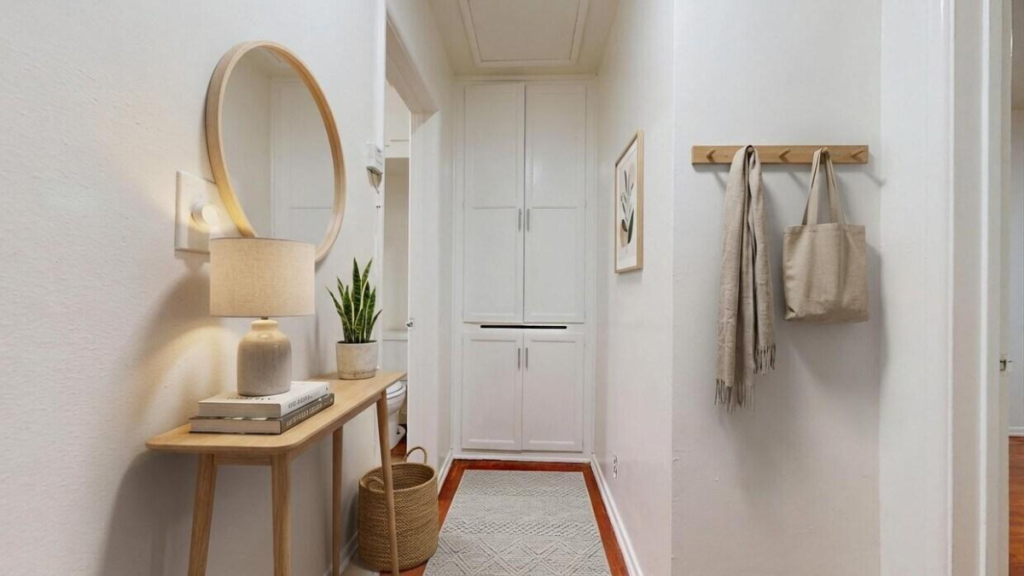
Instead, check the existing ceiling or wall fixture first. If it works and accepts a replaceable bulb, an appropriate compatible bulb may be worth considering before adding hardware.
If the problem is inside a shoe or coat cabinet, a small light intended for that storage location may be more appropriate than another source illuminating the entire entryway.
If the entrance is already usable, you may not need to change anything.
Avoid portable lighting that blocks access, interferes with doors, or compromises safe movement. In shared passages, stairways, and other safety-critical areas, failed or inadequate building lighting should be reported to the responsible property manager.
For narrow spaces, preserving the usable walkway may matter more than adding a decorative light source.
Lighting Options Worth Checking for Your Apartment
These are starting points for different needs—not tested recommendations or a ranked shopping list. Check your available space, outlet location, and the exact product requirements before buying.
Freestanding Uplight or Floor Lamp
Worth considering when a whole seating area needs more usable light rather than another focused pool beside a table.
Check: light distribution, base footprint, cord length, outlet access, and room clearance.
Browse floor-lamp options →Adjustable Plug-In Task Lamp
For a shadowed work surface, reading chair, or desk when you have somewhere stable to position a directional light.
Check: reach, adjustability, clamp or base dimensions, light output, and cord routing.
Browse task-lamp options →Smart Plug: Kasa EP10 as an Example
If your current lamps are bright enough but inconvenient to switch, compare a compatible on/off control before buying another fixture.
Check: lamp on/off behavior, 2.4 GHz Wi-Fi, electrical rating, and whether dimming is actually required. This plug is for on/off control, not universal dimming.
Read manufacturer specs →Nothing to buy yet? If repositioning a lamp or changing an approved bulb solves the problem, that is a perfectly good result.
Make the Whole Setup Easy to Use Every Day
After identifying suitable light locations, consider how the arrangement will work during an ordinary evening.
Suppose your living room uses two lamps and the dining area has one more. If all three already provide enough light, adding a fourth won’t make the routine of turning them on any easier.
This is where compatible control devices may be worth considering.
A switched outlet, remote-controlled plug, or smart plug may simplify operation of certain plug-in lights. Smart bulbs may offer brightness adjustments or scheduled control, depending on their features and compatibility.
Check the actual devices before buying. A smart plug that controls power isn’t necessarily a dimmer, and not every bulb or lamp works with every dimming system.
Check brightness before changing color temperature
If the light is too dim for a task, changing it from warm white to cool white isn’t necessarily the solution.
When choosing an appropriate replacement bulb, compare lumens for light output and Kelvin for light appearance. Also confirm the fixture’s bulb-base, wattage, enclosure, and dimmer requirements where applicable.
A warm, softly lit living area and a well-illuminated work surface can coexist in the same apartment. There is no reason to force every room to use the same lighting arrangement.
Once a room has useful light in the right place, control and comfort are often more valuable than additional fixtures.
Is the Upgrade Worth It for This Rental?
Now return to the choices on your lighting map.
Not every solution has the same cost, effort, or value after you move.
A freestanding floor lamp can usually move with you. A wall-mounted light may require permission, mounting hardware, and eventual removal. An adhesive light may avoid holes but still involve surface restrictions, replacement parts, or removal concerns.
Before committing to an upgrade, compare four things:
| FACTOR | QUESTION TO ASK |
|---|---|
| Daily payoff | How often will this actually improve something I do? |
| Total cost | What will the fixture, compatible bulb, mounting hardware, and other required parts cost? |
| Moveability | Can I use the product in another home, or is it specific to this room? |
| Reversibility | What permission, removal, repair, or restoration might be required? |
A cheaper fixture isn’t always the cheaper decision
Consider a hypothetical choice between a $45 movable task lamp and a $30 adhesive-mounted lighting kit. These are illustrative amounts, not product price quotes.
The $30 option may be the better fit if it safely illuminates the exact work surface, meets the manufacturer’s surface requirements, and doesn’t create difficult removal work.
The $45 lamp could be more useful if it can serve several rooms, move with you, and avoid an apartment-specific installation.
Now add the remaining lease.
If you’re leaving in a few months, a fixture that requires special mounting and removal work needs a stronger reason to justify itself. If you expect to stay longer and use that light every evening, the installation effort may be easier to justify.
You can divide the purchase cost by the months you expect to use it in this rental as a rough comparison, but that number doesn’t account for future use, repairs, replacement parts, or removal.
Don’t confuse the lowest sticker price with the lowest overall commitment.
The more specific the installation is to your current rental, the more carefully you should examine its usefulness and reversibility.
When the landlord-owned fixture is the problem
If the existing fixture itself is causing the problem, buying portable lamps may not be the best use of your money.
There is a difference between working around an unattractive fixture and dealing with one that is defective or unsuitable for its intended use.
For a purely cosmetic or preference-based change, our guide to replacing a rental light fixture covers permission, installation, and restoration considerations.
If the fixture appears unsafe or is malfunctioning, report it to the landlord or property manager rather than attempting an improvised repair.
What Should You Upgrade First?
By now, you should be able to narrow your apartment lighting plan to a few specific actions.
You have identified which activities need better light, where fixtures can realistically go, and which changes are worth the money and effort.
Use this final decision table to turn that information into a shopping order.
| IF YOUR AUDIT SHOWS… | YOUR NEXT STEP |
|---|---|
| The existing light is sufficient but badly directed | Test a better position or appropriate adjustment |
| One frequent task still lacks useful light | Prioritize a fixture designed for that activity |
| The needed location has no practical power or mounting option | Reconsider the location or the type of solution |
| Light levels are adequate but controls are inconvenient | Evaluate compatible control options |
| The proposed upgrade is expensive, difficult to undo, or rarely used | Leave it for later unless the payoff justifies the work |
| A landlord-owned fixture is defective | Report the issue before buying a workaround |
Compare the result before buying another light
After making your first change, return to the two photo positions you recorded earlier.
Look at the same activity and ask whether the original problem has improved. Keep lighting and camera conditions as consistent as practical, and judge the activity itself rather than relying on how bright the phone image looks.
Can you see the kitchen worktop more clearly? Read more comfortably? Find clothing without struggling? Use the entryway without an additional obstacle?
If the answer is yes, cross that problem off your lighting map.
You don’t need to complete every possible lighting upgrade in the same month. A good room-by-room plan also tells you where to stop.
Give each part of the apartment the light it needs, without making the rest of your home accommodate unnecessary fixtures, cords, costs, or installation work.
FAQ
How can I improve apartment lighting without rewiring?
Start with the activities that need better light, then look for suitable locations for movable floor lamps, table lamps, task lamps, or plug-in fixtures. Check outlet access, cord routing, and placement before purchasing. Compatible bulb replacements and lighting controls may improve an existing arrangement without changing wiring.
What lighting works best in a small apartment?
Lighting that performs a specific job without taking up unnecessary space is often the most practical. A suitable task lamp, compact table lamp, or floor lamp may help, depending on the room. Choose according to usable space, outlet locations, and the activities you need to illuminate.
How do you make a room-by-room lighting plan?
Record each room’s main evening activities, what isn’t working, and which light sources and outlets are available. Photograph priority areas from the entrance and activity position, then choose the two problems that affect daily life most. Compare practical mounting and power conditions before deciding what to buy.
Are plug-in wall lights renter-friendly?
They can be, but plugging in doesn’t remove all installation concerns. Check how the fixture attaches, whether your rental permits that mounting method, where its cord will run, and what removal will require. A plug-in sconce is useful only when it fits the space and intended lighting job.
Can smart bulbs improve apartment lighting?
Compatible smart bulbs can offer adjustable brightness, light appearance, or convenient control. They may improve an existing fixture when its location and light output are already suitable. Check bulb and switch compatibility, and don’t expect smart features to correct a poorly positioned light source.
What should I upgrade first if my rental has poor lighting?
Prioritize the activity most affected by insufficient or badly placed light, such as food preparation or reading. See whether an existing light can be used more effectively, then choose a practical fixture if the problem remains. Consider cost, installation limits, and whether the purchase can move with you before spending.