Are Battery-Operated Wall Sconces Worth It for Renters?
Battery-operated wall sconces can work well for renters, but brightness, mounting, charging, and daily use matter. See when battery beats a plug-in sconce.
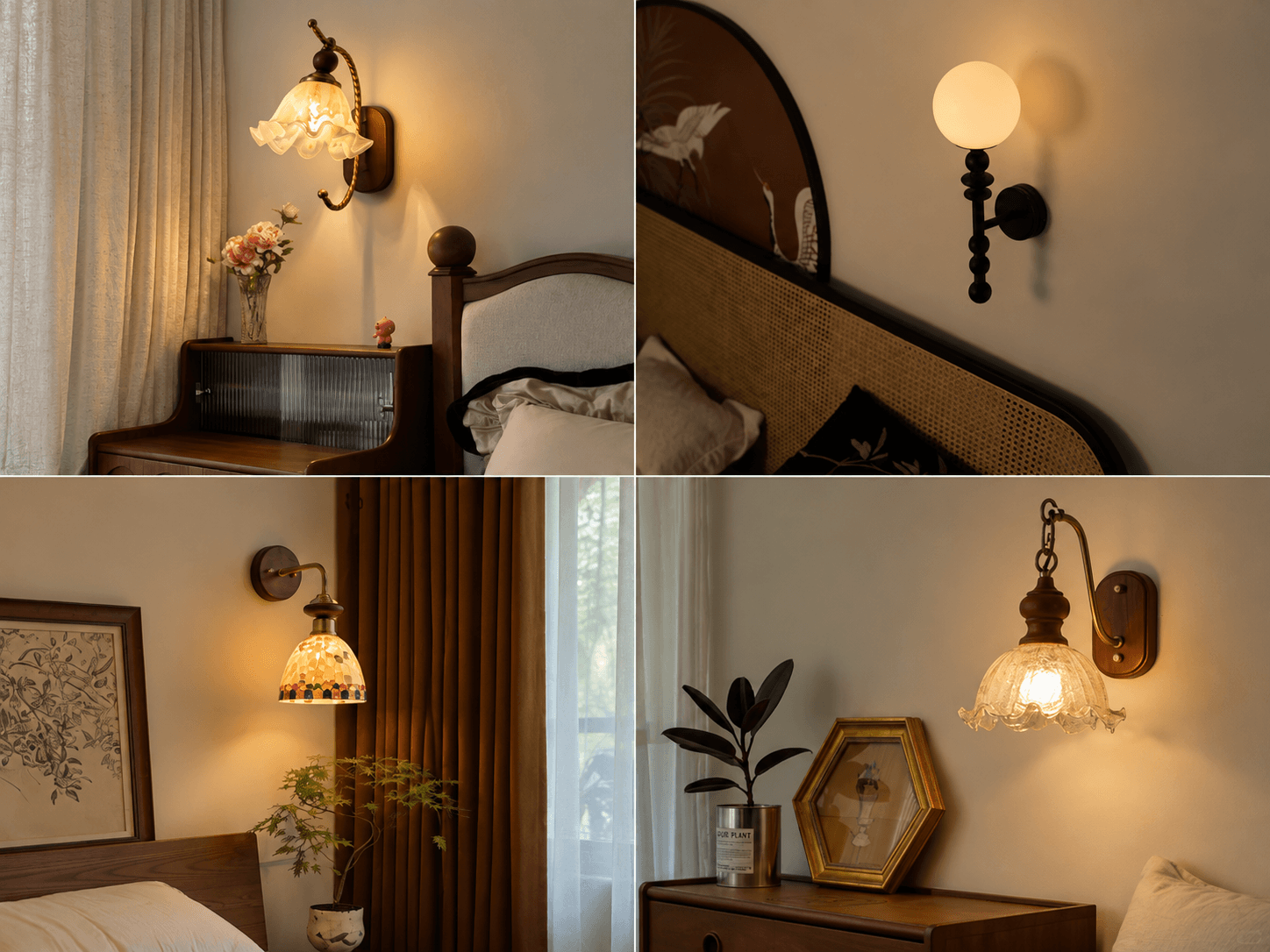
Battery-operated wall sconces can be worth it for renters when you need light in a specific spot without wiring or depending on a nearby outlet. But they work best as targeted lighting—not automatically as a replacement for a lamp or hardwired fixture.
Before buying one, check how much light you actually need, how often you will use it, how it mounts, and how often you are willing to recharge or replace the battery.
The more you depend on the sconce, the more those small inconveniences matter.
Quick Take
Already know battery power fits your spot? See renter-friendly options →
First, Decide What Job the Sconce Needs to Do
A battery sconce can look like any other wall light when it is on. That does not mean it can do the same job.
A little light beside the bed before sleep is one job. Regular reading is another. A light you expect to turn on every evening and leave on for hours is another still.
The more essential the job becomes, the more battery power matters.
The same battery sconce can be a good accent light and a frustrating primary light.
So before thinking about style or the appeal of a cord-free wall, decide what would happen if that light were unavailable tonight.
Battery-Operated Does Not Automatically Mean No-Drill
A battery-operated sconce avoids electrical wiring, but it still has to stay on the wall somehow.
Some models use screws and a mounting plate. Others use adhesive, hooks, or a removable magnetic light attached to a fixed base.
For a renter, check the mounting method separately from the power source. A cordless fixture that still requires drilling may be completely workable—but it is a different rental decision from a lightweight adhesive-mounted light.
Also check the wall surface and the fixture’s actual mounting instructions rather than assuming anything marketed as “renter-friendly” will remove cleanly from every wall.
Battery Works Best When a Dead Light Would Be Annoying, Not Disruptive
Imagine the battery is dead.
If your response would be, “Fine, I’ll use the other bedside light tonight,” battery power probably fits that spot.
The same can be true for a hallway sconce you switch on occasionally, a little evening light in a dark corner, or a pair of sconces that mostly make the wall around a bed feel more finished.
Now put that same fixture above the only desk where you work at night, or make it your main reading light.
The fixture has not changed. The inconvenience has.
The Dead Battery Test
| IF THE SCONCE IS DEAD TONIGHT… | BATTERY FIT |
|---|---|
| You use another light and barely care | GOOD FIT |
| You lose a nice layer of light, but the room still works | PROBABLY FINE |
| You cannot comfortably read or work where you need to | THINK TWICE |
| The room loses one of its main usable lights | CHECK PLUG-IN FIRST |
Battery sconces can still be useful lights. They just make more sense when missing one charging cycle does not leave you without something you actually need.

The Charging Routine Is Part of the Sconce
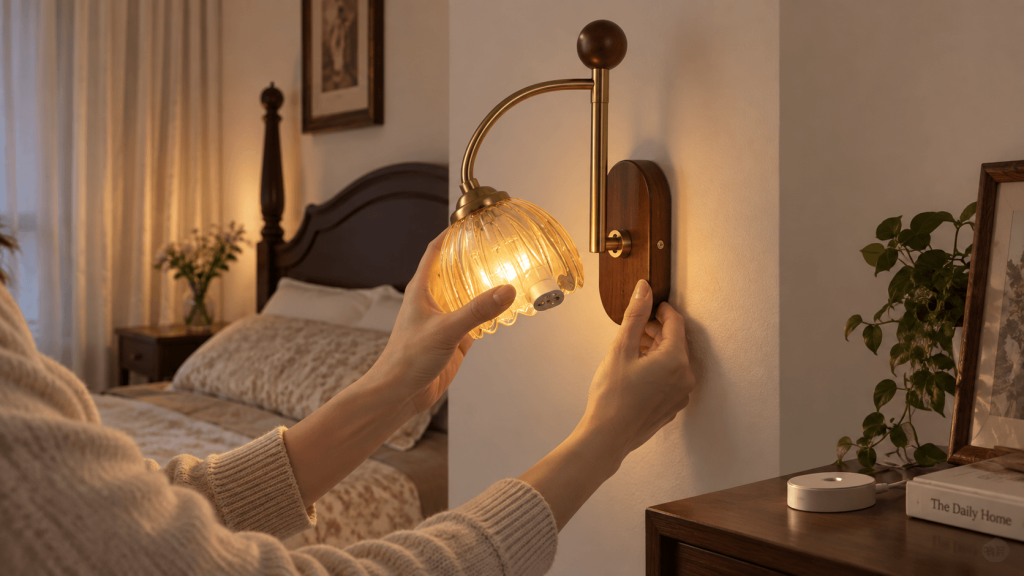
Rechargeable sconces remove one kind of hassle, but they create another: the light still has to come off the wall, reach a charger, and go back when it is ready.
How annoying that feels depends partly on the design.
Some sconces require you to remove most of the fixture. Others let you detach only the light or battery module. A matching pair also means two lights to keep charged.
That is easy to ignore in a product photo because the cord-free wall is what you see.
The charging routine is what you live with.
A sconce used for 20 minutes before bed may make that routine feel trivial. One left on for several hours every evening may turn the same routine into regular maintenance.
If you already dislike charging small devices, count that friction before you buy.
If You Will Use It for Hours, Check the Outlet First
Before choosing battery power for a light you expect to use heavily, look for an outlet.
If there is a convenient one nearby, a plug-in sconce may solve almost the same placement problem without adding another charging routine.
The tradeoff is obvious: you have to live with a cord.
But for a light you use every night, that may be easier to live with than wondering whether the battery is ready.
A visible cord may be less elegant. A dead light is less useful.
Battery still wins when placement or a clean wall matters more. Frequent use simply makes the plug-in option harder to dismiss.

If the Whole Room Is Dark, This Is a Bigger Lighting Problem
Battery sconces are especially tempting in rentals with poor lighting.
But if the entire bedroom or living room feels dark, one wall fixture may be solving too small a piece of the problem.
A wall sconce can fill a lighting gap. It should not have to carry the whole room.
If your rental has no usable ceiling light and the room never feels properly lit, start with No Overhead Light in Your Rental? What to Do Before Buying More Lamps instead.
Then come back to the sconce as a light for a particular spot, not as the thing expected to rescue the room.

If Battery Power Still Fits, Check Four Things Before You Buy
If you have reached this point and battery power still makes sense, the next step is not choosing a style.
It is choosing the kind of sconce that creates the least friction for the way you will actually use it.
1. Check the mounting method
Cordless does not mean no-drill.
Look at whether the fixture uses screws, adhesive, a mounting plate, or a removable magnetic base. If avoiding holes matters, confirm the actual installation method rather than relying on words like “wireless” or “renter-friendly.”
2. Check what has to come off the wall to charge
This can make a bigger difference than it sounds.
A removable light module is easier to carry to a charger than a fixture that has to be taken down more completely. If the sconce will sit somewhere awkward to reach, the charging design matters even more.
3. Match the light to the job
A decorative glow beside the bed, a directional reading light, and a light expected to brighten a larger area are different jobs.
Do not choose only from the room photo. Look at how the light is aimed, what brightness controls it offers, and whether that setup fits the spot you are trying to light.
4. Remember that a pair doubles the routine
Two sconces beside a bed can look more intentional than one.
They also give you two fixtures to charge, two mounts to deal with, and potentially another remote or control routine to keep track of.
That may still be completely worth it.
Just make the decision based on the pair you will maintain—not only the pair you like in the product photo.
If one type of sconce clearly reduces the friction you care about most, that is the type worth comparing.
If every option still creates a routine you already know you will dislike, check the plug-in alternative before worrying about brands.
Battery Sconces That Fit Different Routines
There is no single battery sconce that makes sense for every rental. The useful difference is usually not the finish or the shape—it is how the fixture mounts, charges, and fits the job you need it to do.
Affiliate disclosure: We may earn a commission if you buy through links in this section, at no extra cost to you.
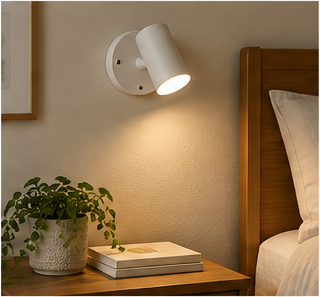
KOOPALA Rechargeable Magnetic Wall Lights — 2 Pack
This style makes the most sense when you want a small, directional light and do not want charging to become a project. The light can be removed from its magnetic base, which makes it easier to carry to a charger than taking down a larger fixture.
Good fit: a bedside spot, reading chair, or dark corner where the light will be used for shorter periods rather than left on all evening.
What to watch: the current version can be mounted with adhesive or screws. Adhesive is not automatically safe for every painted wall, so check the surface and your lease before treating it as a no-damage option.
Check current details on Amazon →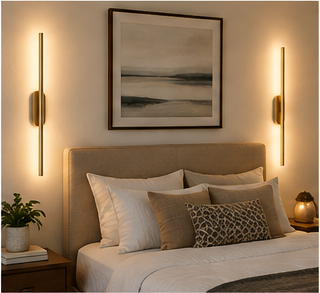
NIORSUN 27.6-Inch Battery Operated Wall Sconces — Set of 2
This style is a better match when the sconces are part of the room design, not just a small task light. The longer fixtures come as a pair and offer dimming and adjustable color temperature, so they read more like conventional wall sconces once installed.
Good fit: two sides of a bed, a larger wall, or a room where symmetry matters as much as putting light in the right place.
What to watch: wireless tells you how the light gets power—not how it attaches to the wall. Check the current mounting hardware before buying, especially if your lease limits holes. A pair also means two fixtures to keep charged.
Check current details on Amazon →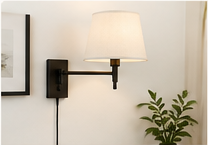
If charging already sounds annoying: a plug-in wall sconce may be easier to live with if there is a usable outlet nearby. You keep the wall-mounted look without adding another device to your charging routine.
Compare a plug-in option on Amazon →So, Are Battery-Operated Wall Sconces Worth It?
Yes—when the location matters more than having a light that is always ready.
The strongest case is a specific spot where wall-mounted light would genuinely help, a visible cord would bother you, and missing one charging cycle would be inconvenient rather than disruptive.
They can also make sense when the sconce itself solves something you care about: freeing up a nightstand, creating symmetry beside the bed, or putting light where there is no useful outlet.
The case gets weaker when the fixture will be used for hours every night. At that point, a nearby outlet may give you a less elegant setup but an easier light to live with.
And if the whole room is still dark, solve that problem before asking one battery sconce to do too much.
Choose the power source that fits the routine you will still have six months after the room stops looking new.
FAQ
Are battery-operated wall sconces bright enough for reading?
Some are, but battery-powered does not automatically mean suitable for reading. Light output, placement, beam direction, and how long you read all matter. If it will be your main reading light every night, consider whether you also want that job to depend on regular charging.
How often do battery wall sconces need to be charged?
There is no useful single charging interval. It depends on the fixture, brightness setting, battery capacity, and how long you use it. A sconce switched on briefly before bed will have a very different charging routine from one used for several hours every evening.
Are battery-operated wall sconces renter-friendly?
They can be. Battery power avoids hardwiring and gives you more placement flexibility, but the mounting method still matters. Some sconces require screws or anchors, while others use adhesive or removable brackets. Check the wall, mounting instructions, lease, and removal plan separately from the fact that the light itself is cordless.
Are plug-in sconces better than battery-operated sconces?
Not always. Battery sconces make more sense when placement flexibility and avoiding a visible cord matter most. Plug-in sconces have an advantage when the light needs to be dependable, used frequently, and there is already a convenient outlet nearby.