Contact Paper for Countertops: Is It Actually Worth It in a Rental?
Contact paper for countertops can transform a rental kitchen, but is it worth it? Check the surface, sink, seams, daily use, removal risk, and effort first.
Contact paper for countertops can create a dramatic change in a rental kitchen without replacing the counter itself. But a product being inexpensive or removable does not automatically make the project worth doing.
The real question is whether your countertop is a good candidate: the surface underneath, edges and seams, sink area, daily use, removal risk, and how much the visual change would actually improve the kitchen.
Quick Take
A tiny countertop you hate every morning might be worth covering even if you won’t be there forever. A complicated countertop you only mildly dislike might not be worth touching even if you have years left on the lease.
Already know your countertop is a good candidate? See the two wrap types worth comparing →
Is the Countertop Actually the Problem?
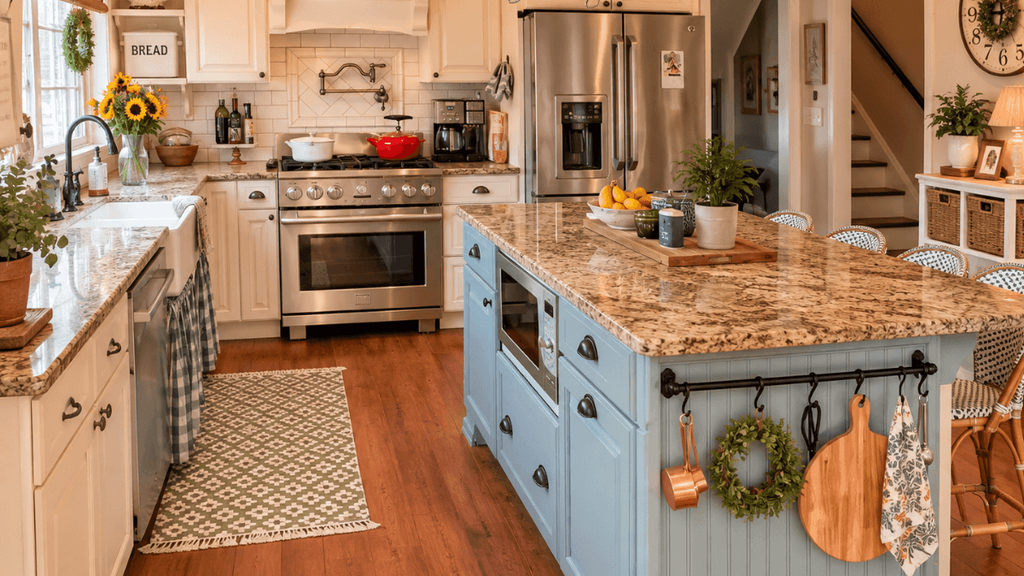
Before ordering anything, clear the countertop and look at the kitchen as a whole.
If the surface still grabs your attention after the clutter is gone and the lighting is reasonably good, that is useful evidence that the countertop itself is carrying the problem.
If your eye goes somewhere else—to the cabinets, backsplash, lighting, or the lack of usable space—covering the counter may improve one surface without changing how the kitchen actually feels.
Contact paper can change color, pattern, and visual weight.
It cannot create more counter space, repair damaged edges, or solve poor lighting.
If you are still unsure, live with the cleared counter for a few days before deciding. A surface you keep noticing is a much stronger candidate than one you only dislike when you start thinking about makeovers.
When Does Contact Paper Work Best on Countertops?
The easiest candidate is a smooth, stable counter with simple edges and enough uninterrupted surface to avoid a maze of seams.
A sound laminate counter is very different from one that is already swollen, cracked, peeling, or lifting.
Shape matters too.
Long flat runs are easier than rounded edges, narrow strips, integrated backsplashes, and complicated sink cutouts.
If you already feel hesitant about attaching adhesive to the existing finish, treat that hesitation as information—not something to talk yourself out of because the pattern looks good.
The Part Pinterest Photos Don’t Show You
Most contact paper makeovers are photographed at exactly the right moment: the surface is clean, the styling is finished and the project has just been completed.
That’s useful for seeing what’s possible.
It tells you much less about what the project will be like in your kitchen—or what it will feel like to live with six months later.
Countertop Seams and Corners Make Contact Paper Harder
The simplest countertop for contact paper is basically a large, flat rectangle.
Unfortunately, many countertops aren’t large, flat rectangles.
There may be inside corners, outside corners, rounded edges, a short built-in backsplash or sections that are wider than the roll you’re using. A long counter may need multiple pieces, which means deciding where the seams will go and how noticeable they’ll be.
None of that makes the project impossible.
It does change what “easy rental makeover” means.
A seam that disappears in a bright before-and-after photo may be more obvious when you’re standing two feet away making coffee. A slightly imperfect corner probably won’t ruin your kitchen, but if visible joins and small imperfections tend to bother you, the finished result may not feel as effortless as the inspiration photo suggested.
Before deciding based on the pattern you like, look at the shape of the countertop you actually have.
That will tell you much more about the project.
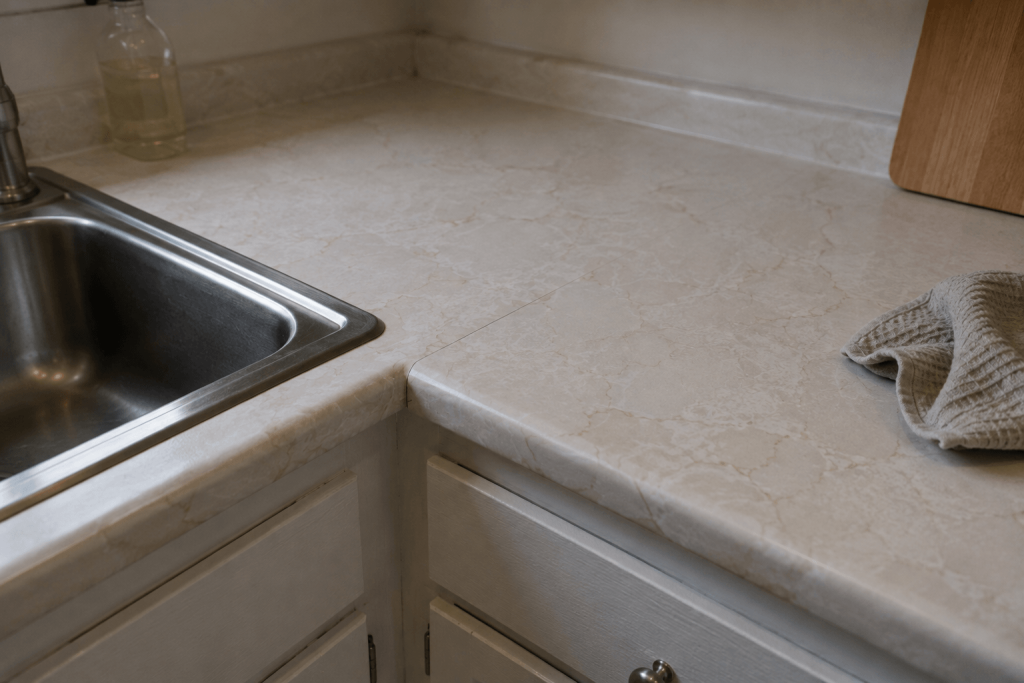
Contact Paper Around the Sink Is Usually the Hardest Part
A countertop without a sink would be considerably easier to cover.
Most kitchens are not that cooperative.
Around the sink, the material has to be cut accurately enough to look intentional while dealing with one of the wettest areas of the counter. Edges that are slightly awkward elsewhere become more important when they’re repeatedly exposed to splashes and wiping.
This is one of the places where two kitchens of roughly the same size can turn into completely different projects.
A small counter with a straightforward drop-in sink and generous flat space around it may still be manageable. A sink with awkward edges, very narrow strips of countertop or complicated caulk lines can make the same idea much less appealing.
You don’t need to know exactly how you’ll install everything yet.
You do need to look at the sink and ask whether you’re comfortable making that part look good.
You still have to use the countertop every day
This is the part I’d think about more than the reveal photo.
Your countertop isn’t a wall accent. It’s a work surface.
You’ll put a coffee maker on it. Water will splash onto it. You’ll wipe it down. Things will slide across it. Small spills will sit there longer than you intended. You’ll also need to pay attention to the heat limits of the specific film you choose rather than treating the covered counter like the original surface.
The exact durability depends on the material you use, how well it was installed and how you use the kitchen. But any surface covering adds another layer that you now have to live with and notice.
That doesn’t automatically make it a bad idea.
It just means the better question is not:
Can I get this to look good when I finish it?
It’s:
Will I still be happy living with this surface after the makeover photo is taken?
If you’re comfortable treating it a little more carefully and making an occasional repair, that may be a perfectly reasonable trade.
If the thought of watching an edge every time you wipe the counter already sounds irritating, that belongs in the decision too.
The Real Cost Is More Than the Contact Paper
Contact paper is inexpensive compared with replacing a countertop, but the material price is only one part of the project.
You may need extra material for pattern matching or mistakes, plus a smoothing tool, a sharp knife, and fresh blades if you do not already own them.
More importantly, the project costs time. There is measuring, cleaning, planning seams, cutting, smoothing, and sometimes redoing the section that looked fine until you saw it from across the room.
So I would not evaluate this as a “cheap roll of contact paper.” I would evaluate it as material + tools you actually need + installation effort + removal later.
That can still be a very good trade. It just means the visual payoff should be large enough to justify the whole project.
The Rental Risk Matters More Than the Price
“Removable” is a useful description.
It is not a guarantee that every adhesive will come off every countertop perfectly.
The condition of the surface underneath matters. So does its material, age, existing damage and how the adhesive interacts with the finish over time.
A stable laminate surface in good condition is a very different starting point from a countertop that already has lifting edges, peeling finish or damaged areas.
That’s why I would be particularly cautious about covering a surface that is already deteriorating.
You’re not only asking whether the contact paper will stick.
You’re also asking what happens when you eventually pull it back off.
Before covering the whole counter, test the material somewhere inconspicuous if you can. Follow the product instructions, and remember that a short test can’t perfectly reproduce what happens after months of use—but it can reveal an obvious compatibility problem before you commit to the entire kitchen.
I’d also photograph the original countertop clearly before doing anything.
And check your lease.
A lease that doesn’t specifically mention contact paper isn’t necessarily the same thing as your landlord approving it. If you’re uncertain whether covering the countertop would be considered an alteration, asking first is much easier than arguing about it when you move out.
It’s to know which risk you’re agreeing to before a cheap cosmetic project turns into an expensive move-out problem.
So, Is Contact Paper Worth It for Your Countertop?
There isn’t one feature that makes the answer yes or no.
Think of each part of your situation as pushing the decision in one direction:
| What you’re working with | Which way it points |
|---|---|
| The countertop is genuinely one of the room’s biggest visual problems | Toward doing it |
| The existing surface is smooth and stable | Toward doing it |
| Simple edges and relatively few seams | Toward doing it |
| You’ll live with the result long enough to enjoy the work | Toward doing it |
| Sink, corners and seams make installation complicated | Toward skipping it |
| The existing finish is loose, peeling or damaged | Toward skipping it |
| You’re uncertain about removal or landlord approval | Pause first |
| The kitchen mainly feels dark or visually cluttered | Try something else first |
You don’t need every row to point in the same direction.
Maybe the layout is slightly annoying, but the countertop is the one thing you’ve hated since move-in and you expect to see it every day for another year. The visual payoff may easily outweigh an inconvenient afternoon.
Or maybe the surface is beautifully simple to cover, but once the kitchen is clean and well lit, you realize you don’t dislike it enough to spend a Saturday changing it.
That distinction matters.
A countertop can be technically perfect for contact paper and still not be worth covering. Another can be slightly awkward and still be worth the effort because changing it would make a noticeable difference to you every day.
If you decide no: don’t replace one skipped surface project with a handful of smaller ones. Start with what you can change around the countertop instead and see whether the surface can simply become less important.
If you decide yes: test adhesion somewhere hidden first, plan your seams before cutting, buy enough extra material to handle mistakes or matching, and photograph the original surface before you begin.
Then stop researching whether contact paper is universally “worth it.”
You’ve already answered the more useful question: whether it’s worth it here.
Two Countertop Wrap Formats Worth Comparing
At this point, I would compare format before pattern. A narrower, easier-to-handle roll and a wider countertop wrap can create very different rental projects even when both are sold as marble contact paper.
Affiliate disclosure: We may earn a commission if you buy through links in this section, at no extra cost to you.
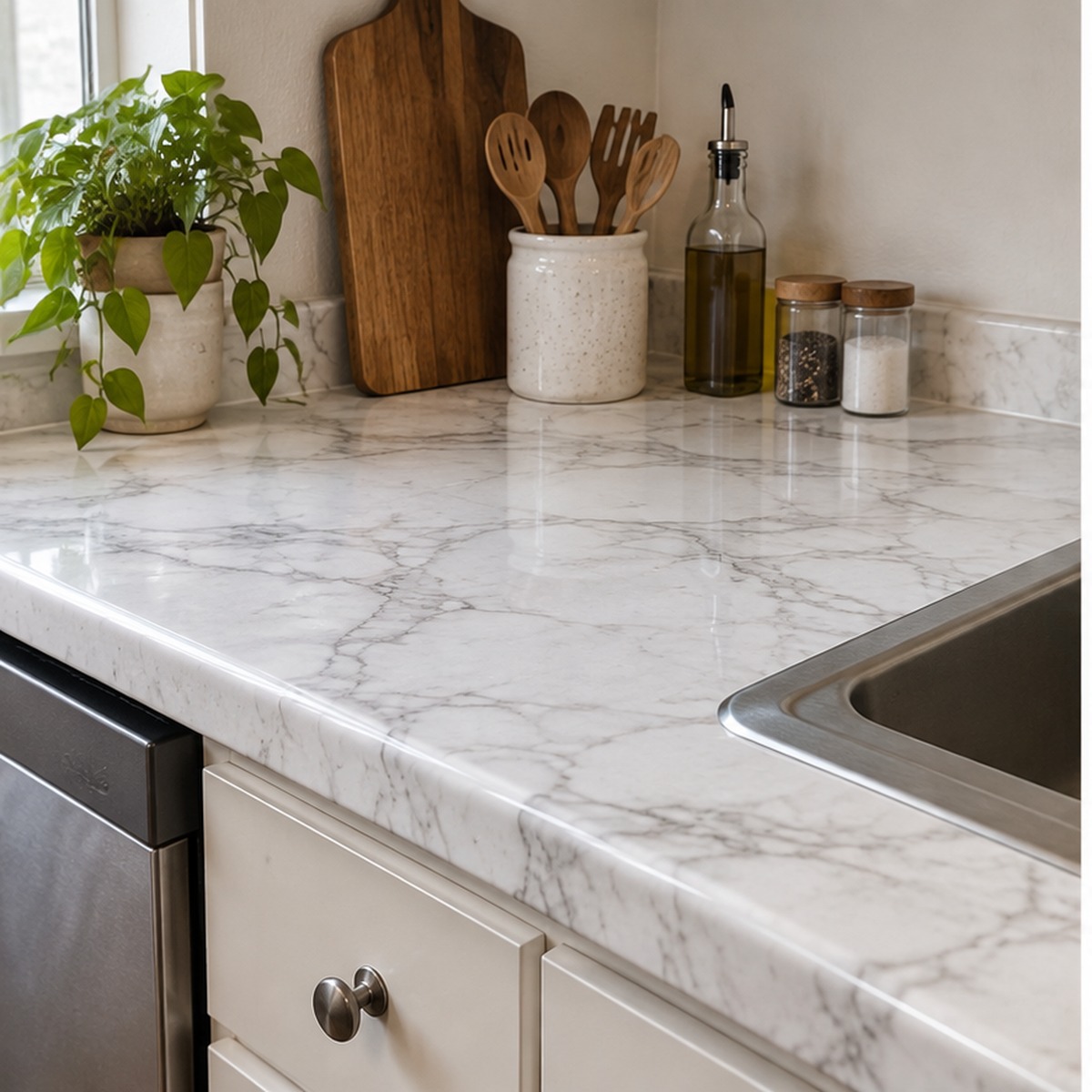
LACHEERY Thick White Marble Contact Paper
This type makes more sense when you want a smaller roll that feels easier to manage during installation. A narrower format can be less intimidating on a short counter or a simpler test project.
Good fit: a smaller countertop area, a straightforward section with fewer obstacles, or a project where easier handling matters more than reducing seams across the whole surface.
What to watch: a narrower roll often means more seams on a standard kitchen countertop. That makes planning around sink cutouts, corners, and visible joins more important—not less.
The current product guidance also suggests warming the adhesive with a hair dryer for removal, which is a useful reminder that removable does not automatically mean risk-free for every original surface.
Check current details on Amazon →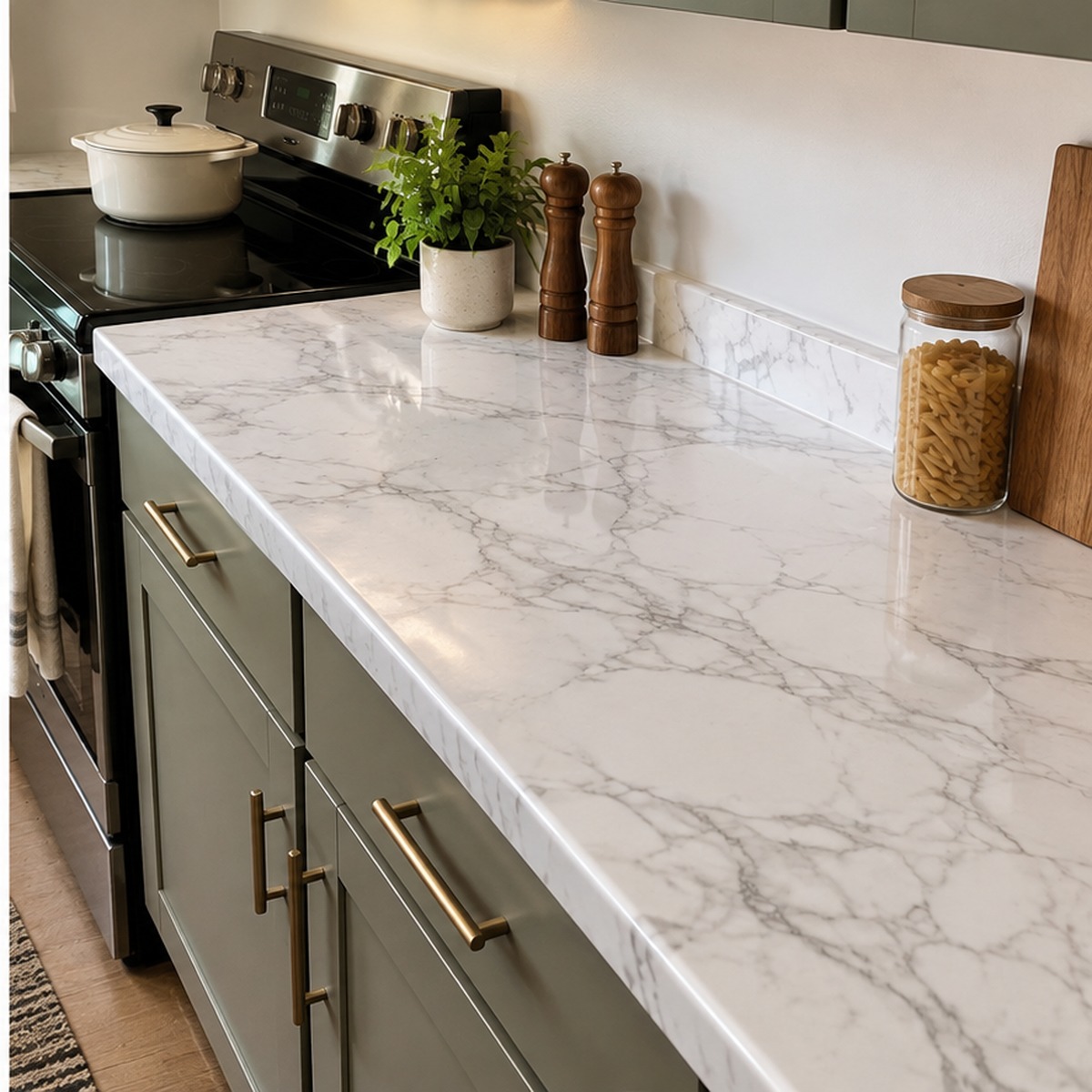
EZ FAUX DECOR White Marble Countertop Wrap
This type is a more deliberate countertop project. A 36-inch wide wrap gives you a better chance of covering more of the top surface with fewer visible seams, which can matter a lot for the finished look.
Good fit: a countertop where seam reduction matters, especially if you want the top surface to read as one more continuous wrap rather than several narrower strips.
What to watch: fewer seams does not automatically make the project easier. A wider, heavier-duty wrap can become more demanding around sink cutouts, corners, edges, and installation alignment.
Heavy-duty also does not automatically mean renter-safe. If protecting the original finish is one of your top priorities, treat stronger material and adhesive as a tradeoff—not just an upgrade.
Check current details on Amazon →If seams, sink cutouts, and eventual removal already sound like too much: stop looking for a supposedly better contact paper. Work around the countertop instead.
See ways to work around ugly rental countertops →The Bottom Line
Contact paper is most worth doing when the countertop is genuinely one of the kitchen’s biggest visual problems and the surface is simple enough that installation, daily use, and eventual removal all feel manageable.
The weaker case is not just a difficult counter.
It is a counter you only mildly dislike.
If the visual payoff is small, even an easy project can be unnecessary. If the payoff is large, a slightly fussy one may still be worth it.
The useful question is not whether contact paper works.
It is whether this countertop is worth covering.
More Worth-It Decisions for Renters → Worth It?
FAQs
Is contact paper good for countertops?
It can be a reasonable temporary cosmetic option when the existing countertop is smooth, stable, and in good condition. The layout matters too: simple flat runs are easier to cover than counters with many seams, narrow sections, rounded edges, or complicated sink cutouts.
Does contact paper damage countertops?
It can, depending on the adhesive, the surface underneath, the condition of the finish, and how long the material stays in place. A product being marketed as removable does not guarantee that every countertop will react the same way. Test an inconspicuous area first and avoid covering a surface that is already peeling, lifting, or deteriorating.
Can you use contact paper around a kitchen sink?
You can cover countertops around a sink, but that area is usually one of the hardest parts of the project because the material needs careful cutting and is exposed to frequent water and wiping. Follow the instructions for the specific product and pay particular attention to edges and seams.
Is contact paper heat resistant on countertops?
Heat limits vary by product. Do not assume the covered surface can be treated like the original countertop. Check the manufacturer’s instructions for the film you use and protect it from heat accordingly.
Is contact paper for countertops renter-friendly?
It can be renter-friendly when the surface is suitable, the covering can be removed cleanly, and your lease allows the change. But “removable” should not be treated as a guarantee. If you are unsure how the adhesive will behave or whether your landlord considers it an alteration, test first and ask before covering the full counter.