Privacy Window Film vs Curtains in a Rental: Which Solves the Problem Better?
Privacy window film or curtains? Compare daytime and nighttime privacy, daylight, view, control, and reversibility to see which works better in a rental.
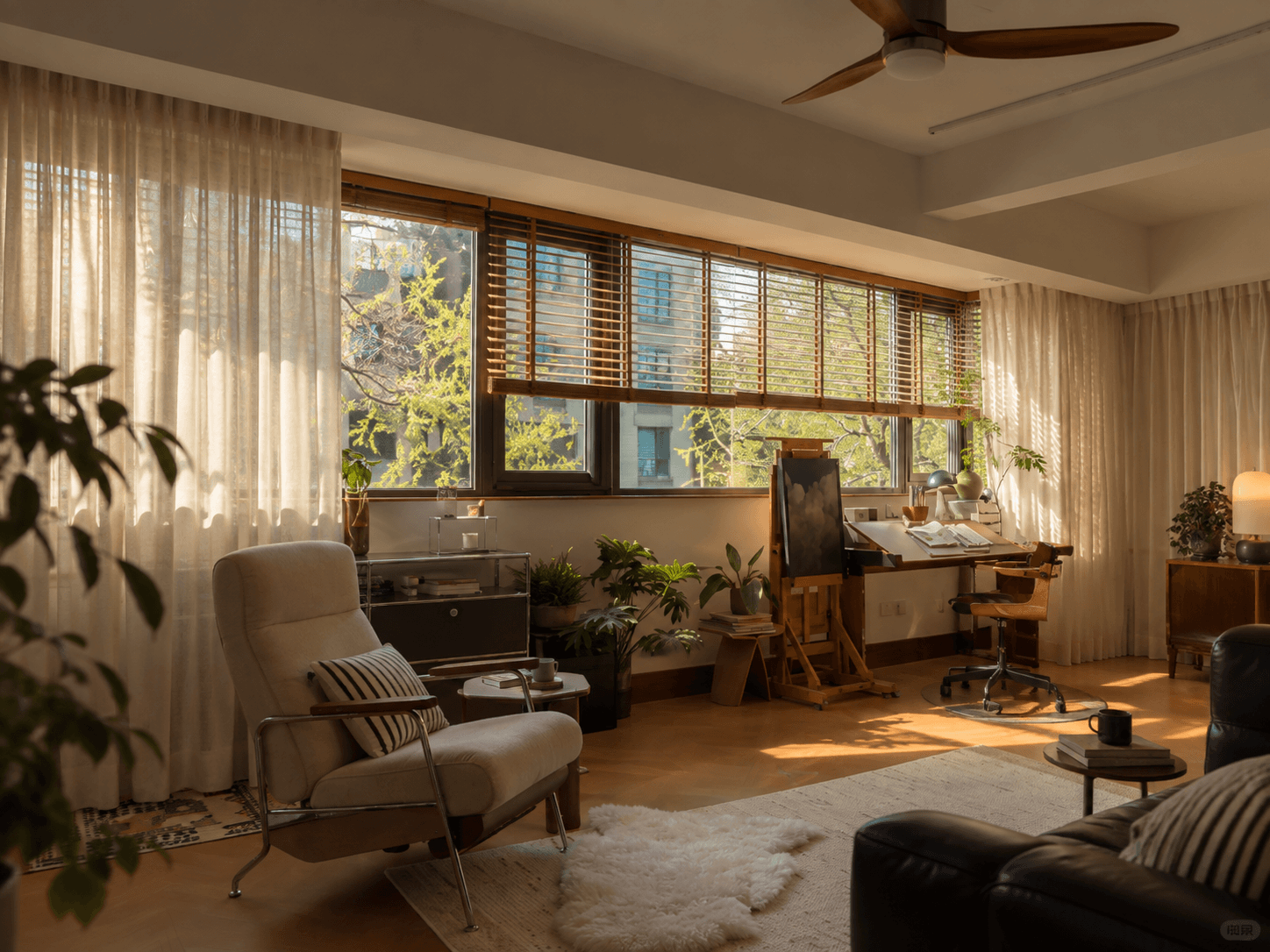
Privacy window film works best when you need daytime privacy without giving up most of the daylight. Curtains make more sense when you need reliable privacy after dark, blackout, or the ability to uncover the window completely.
The choice depends less on which option looks more renter-friendly and more on when you feel exposed, how much view you want to keep, and whether the whole window actually needs covering.
In some rentals, the best answer is not choosing one or the other—it is giving each one a different job.
Quick Take
First, Figure Out When the Window Feels Too Exposed
Before adding anything, pay attention to when the privacy problem actually happens.
For a ground-floor living room, it may be people walking past during the day. In another apartment, the issue may be a neighbor’s window directly across from yours. Sometimes the window feels completely fine until the lights come on at night.
That distinction matters because daytime privacy and nighttime privacy are not the same problem.
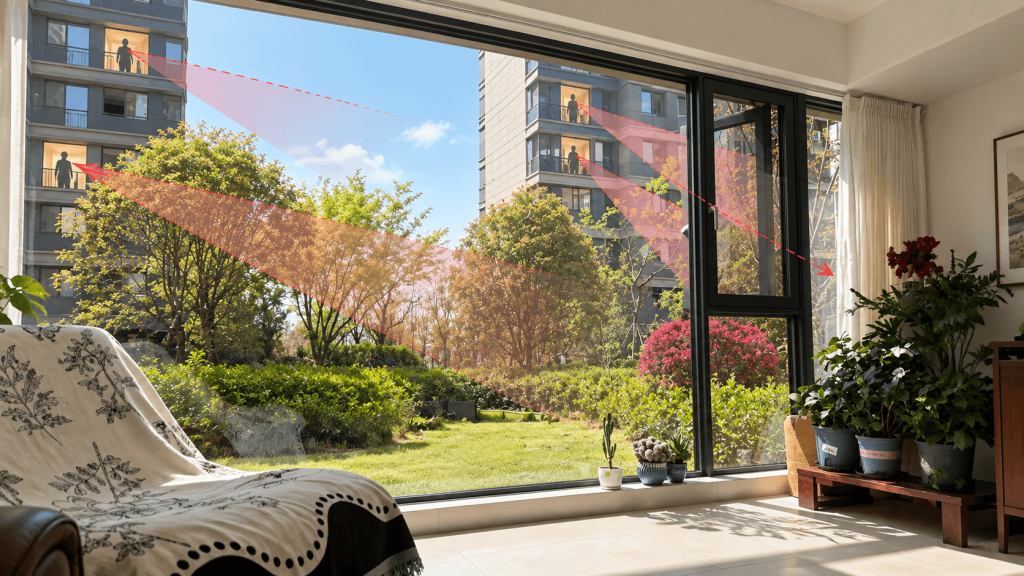
Also ask whether privacy is actually the issue. If the existing blinds already block the view when you need them to, but you mainly dislike how they look, start with [Ugly Vertical Blinds in a Rental? What Should You Actually Do?] instead.
Then get specific: do you need to cover the whole window, or only the lower half? Do you need privacy all day, or only for a few hours? Do you still want to see outside?
Those answers usually make the choice much easier.
Choose Privacy Window Film When You Want Privacy Without Closing Off the Room
Privacy film works best when you want to reduce visibility into the room without keeping curtains closed all day.
A street-facing living room is a good example. Curtains may solve the privacy problem, but they can also take away the daylight you wanted from the window in the first place.
Frosted film can blur the view through the glass while still letting light in. That makes it useful for lower-level windows, bathroom windows, entry sidelights, or another apartment facing directly toward yours.

The tradeoff is the view.
Keeping daylight is not the same as keeping the view.
Frosted film may keep the room bright while making the outside scene blurry. If the window has a view you actually enjoy, covering the whole pane can feel like giving up too much.
Reflective or one-way film preserves more of the outward view in the right daytime conditions, but it is less dependable once the lighting reverses at night. I would not treat it as a substitute for curtains if nighttime privacy really matters.
If the room is already dark, be especially careful about reducing what the window gives you. [How to Make a Dark Rental Apartment Feel Brighter] may be worth checking before adding another layer to the glass.
Choose Curtains When You Need Control
Curtains are better when your privacy needs change throughout the day.
You can leave the window completely open when you want light and a view, then close it when the room feels exposed. In a bedroom, curtains can also handle room-darkening or blackout at the same time.
That makes them more flexible than film.
With frosted film, the glass stays frosted until you remove it. With curtains, you can get the full window back in seconds.
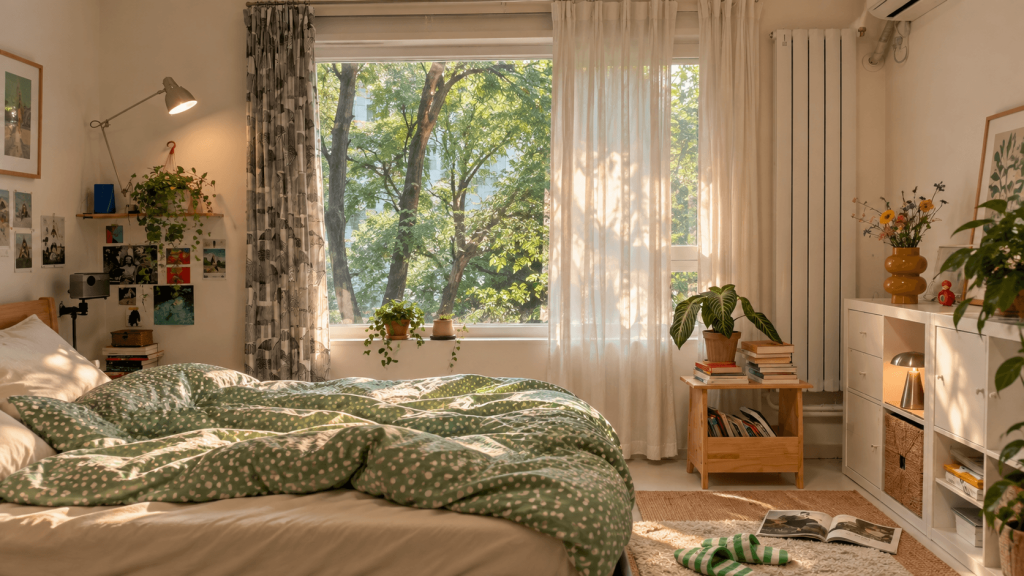
If your rental already has vertical blinds that cannot be removed, curtains may still be an option. Here’s how to hang curtains over vertical blinds without removing them.
If you have horizontal blinds instead and are deciding whether they should come down first, see how to replace horizontal blinds with curtains in a rental.
The tradeoff is that curtains only provide privacy when they are closed. If you want passive daytime privacy without constantly covering and uncovering the window, film may fit the problem better.
Cover the Sightline, Not the Whole Window
A privacy problem does not always need a whole-window solution.
If people outside can only see through the lower half of the glass, start there. A lower section of frosted film may block the uncomfortable sightline while leaving the top of the window clear.
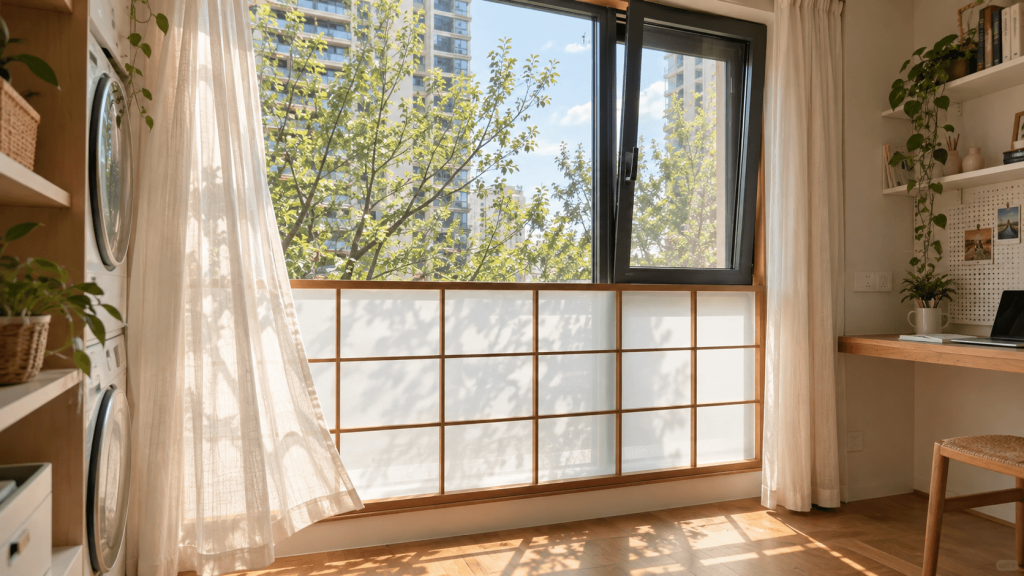
The same idea works for a bathroom window or entry sidelight. Cover the part that creates the exposure instead of treating every inch of glass as a problem.
Film and curtains can also split the job. A small amount of film can handle daytime street-level privacy, while curtains stay available for night.
That is not about adding more layers for the sake of it. It is about giving each one a specific job.
When I Would Add Neither
Sometimes the existing window treatment is already doing enough.
If your blinds give you privacy when you need it, adding film or curtains may solve a problem you do not really have. You may simply want the blinds to look less prominent.
I would also wait if the privacy issue is mostly an assumption. A window can feel exposed from inside even when the actual sightline from outside is limited.
If possible, check it from outside during the day and after dark. You may find that the problem is smaller than it feels from the sofa.
And if solving a minor privacy issue means giving up a lot of daylight or a view you like, that trade may not be worth making. Renter-friendly does not automatically mean worth adding.
Before adding another layer to the window, it can help to step back and ask whether the rental change is actually worth it.
So, Window Film or Curtains?
Choose window film when the main problem is daytime exposure and you want to keep the room feeling open.
Choose curtains when you need privacy after dark, want room-darkening, or care about getting the full view back whenever you want.
And if only part of the window is exposed, start with that part.
Then make the fix as small as the problem allows.
Cover the sightline, not the window.
FAQ
Does privacy window film work at night?
It depends on the type. Frosted film continues to obscure the view because it diffuses what can be seen through the glass, while reflective or one-way film depends much more on lighting conditions. If you need dependable privacy after dark, curtains or blinds are the safer choice.
Does privacy window film still let natural light in?
Many films do, but they can still change how bright or clear the window feels. Frosted film may preserve plenty of daylight while removing much of the view, so those two things should not be treated as the same benefit.
Is privacy window film renter-friendly?
Some removable or static-cling films are designed for temporary use, but “removable” does not guarantee every product will behave the same way on every window. Check the film instructions, glass condition, lease or building rules, and test first when appropriate.
Is privacy film better than curtains for a ground-floor apartment?
Often for daytime privacy, yes—especially if you want to keep natural light while blocking a street-level sightline. If you also need reliable privacy at night, curtains or a limited film-and-curtain combination gives you more control.