Is Peel-and-Stick Backsplash Worth It in a Rental Kitchen?
Peel-and-stick backsplash can transform a rental kitchen, but is it worth it? Check the wall, heat, moisture, seams, outlets, removal risk, and effort first.
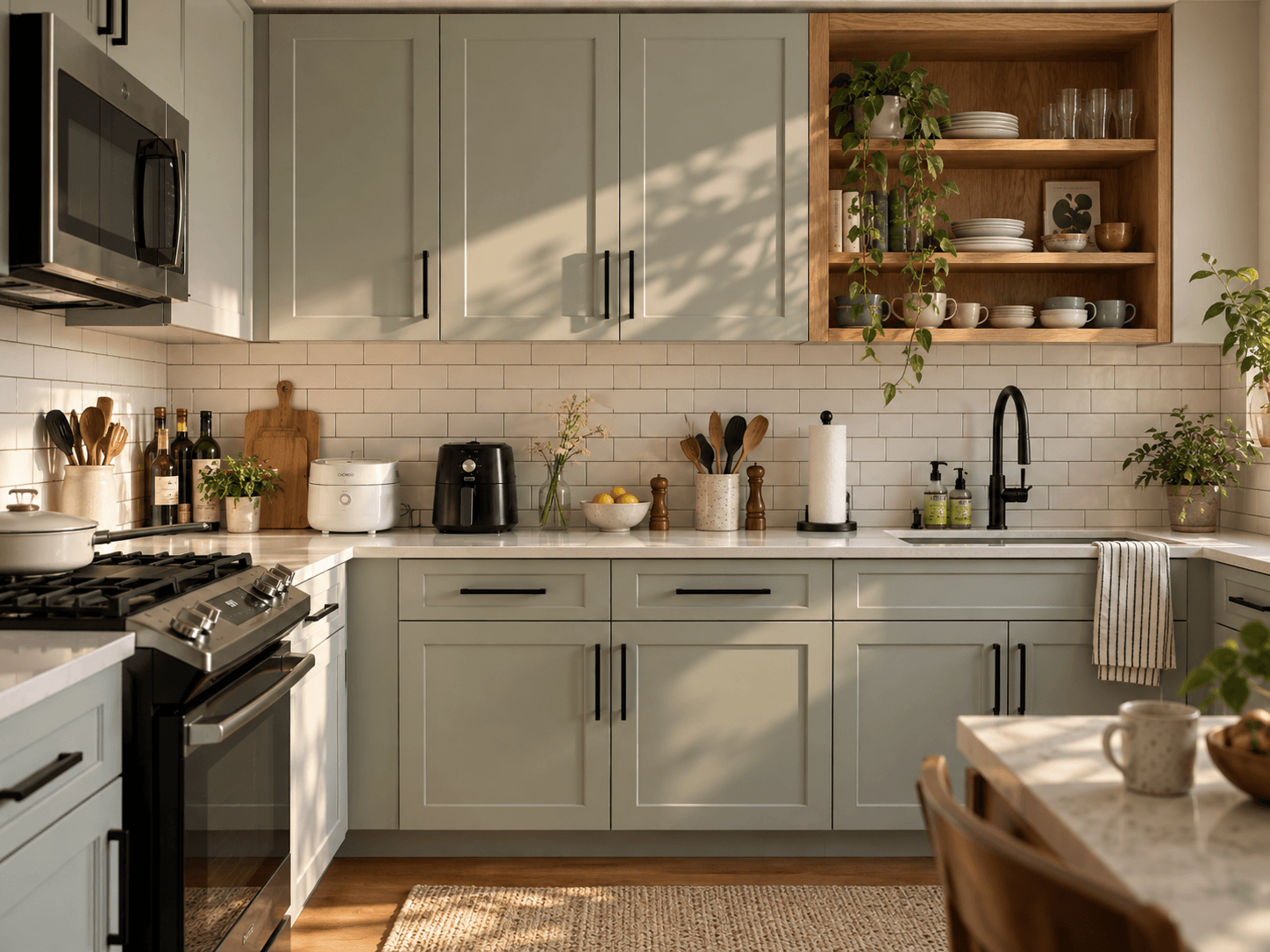
Peel-and-stick backsplash can be worth it in a rental kitchen when the wall is a good candidate and the backsplash is actually the surface making the room feel dated. But “removable” does not automatically mean low-risk or low-effort.
Before choosing a tile look, check the wall underneath, heat and moisture exposure, seams and outlets, removal risk, and how much the finished change would actually improve the kitchen.
If the backsplash is only one small part of the problem, covering it may be more project than payoff.
Quick Take
Already know peel-and-stick fits your wall and location? See the two tile types worth comparing →
Use the One-Surface Test Before You Buy Anything
Take a photo of the kitchen from the angle you see most often.
Now imagine the backsplash becoming a plain, quiet surface while everything else stays exactly the same.
If the room immediately feels calmer, the backsplash is probably carrying enough visual weight to justify a project.
If your eye still goes straight to the cabinets or counters, changing the backsplash may improve one surface without changing how the kitchen actually reads.
That is the point where I would stop and solve the bigger problem first.
If the cabinets are doing most of the visual work, start with Ugly Rental Kitchen Cabinets? What to Change—and What Not To. If the counters dominate instead, Ugly Rental Countertops? Cover Them, Work Around Them, or Leave Them Alone is the better place to start.
And if only one short backsplash section looks especially bad, test that area before committing to the full run. A contained change can be enough.
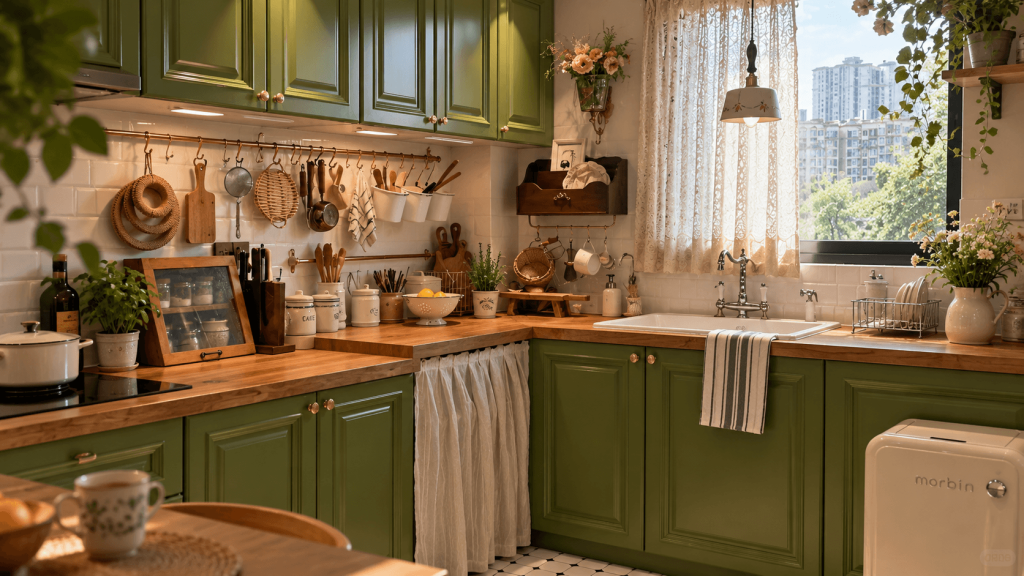
When Does Peel-and-Stick Backsplash Work Best? Start With the Surface
Once you know the backsplash is worth changing, look at what you would be sticking the material to.
Smooth, stable, clean surfaces are the easier candidates. Deep texture, loose paint, damaged wall areas, uneven tile, or heavy grease buildup make the result less predictable.
Existing tile is not automatically a problem, but grout depth and surface condition matter.
It also helps to remember that “peel-and-stick backsplash” is not one material. Products vary in thickness, adhesive, flexibility, and what surfaces they are designed for.
So instead of asking whether peel-and-stick works over tile in general, ask:
Will this specific product work on this specific surface?
If the wall or tile already feels questionable, I would stop there. A temporary update is not worth creating a repair problem at move-out.
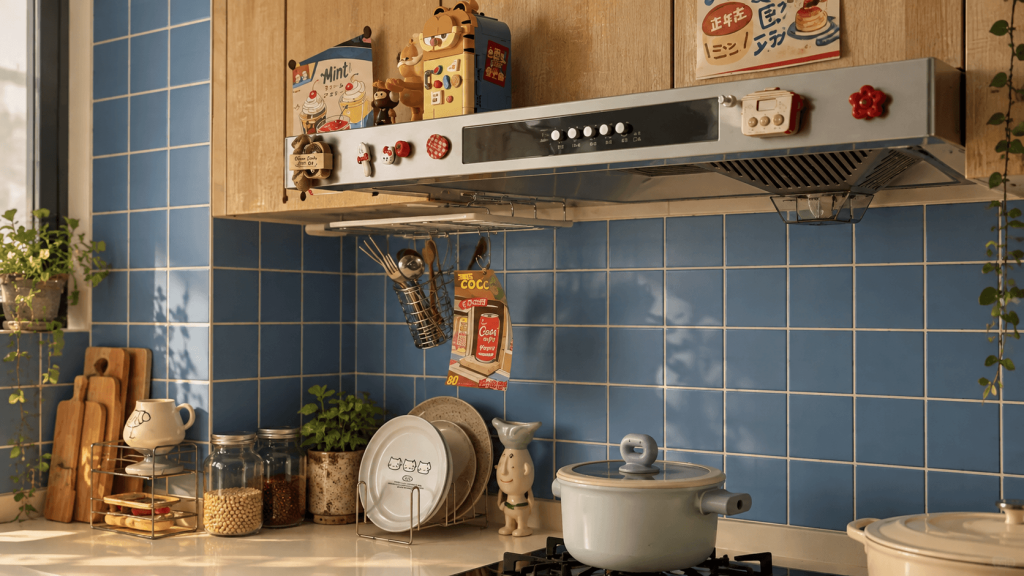
Check Heat and Water Before You Put Peel-and-Stick Backsplash Near the Sink or Stove
A kitchen backsplash deals with more than a bedroom wall does.
There is steam, grease, splashing, cleaning, and sometimes significant heat.
That does not rule peel-and-stick out. It just means the product has to match the location.
Check the manufacturer’s instructions for moisture, direct water exposure, heat, and placement around cooking surfaces rather than relying on a broad label such as “heat resistant.”
A backsplash behind a coffee station has a very different job from one directly behind a sink or stove.
If the area you most want to cover is also the area with the toughest heat or moisture conditions, check those limits before buying anything.
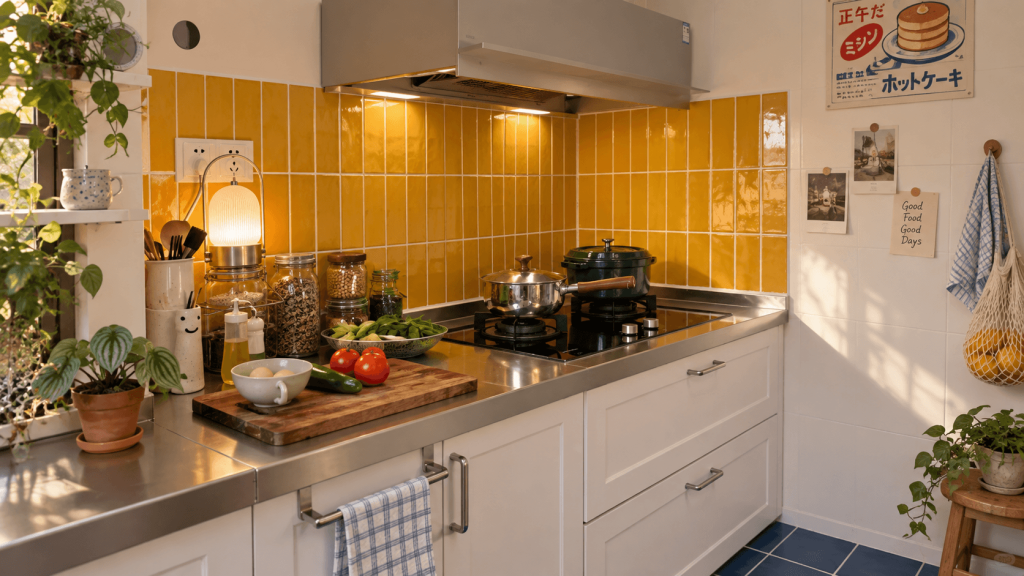
Count Seams, Outlets, and Removal—not Just Square Feet
Backsplashes look small, but much of the work is in the details.
Outlets, corners, cabinet edges, pattern alignment, and visible seams can turn a short strip of wall into a surprisingly fiddly project.
A small surface can still be a fussy project.
A simple, uninterrupted backsplash may be completely reasonable. A small one broken up by several outlets and awkward cuts may take far more effort than the square footage suggests.
Then there is removal.
At some point, the material has to come back down. Count that as part of the project now rather than treating it as a problem for move-out day.
The same logic applies to other temporary kitchen surfaces. If you are also thinking about the counters, Are Contact Paper Countertops Actually Worth It in a Rental? covers the same install-now, remove-later tradeoff on a much larger area.
You do not need a strict lease-length rule. You just need enough daily payoff to make both installation and eventual removal feel reasonable.
When I Would Skip Peel-and-Stick Backsplash
I would skip it if the backsplash is not the thing making the kitchen feel wrong.
I would also leave it alone if the surface is questionable, the product limits do not clearly fit the heat or moisture in that location, or the layout turns a small area into a project full of outlets, corners, and awkward cuts.
Moving soon can tip the decision too—but mostly when the visual payoff is modest.
A temporary project can still be a poor trade when the change is small and both installation and removal are fussy.
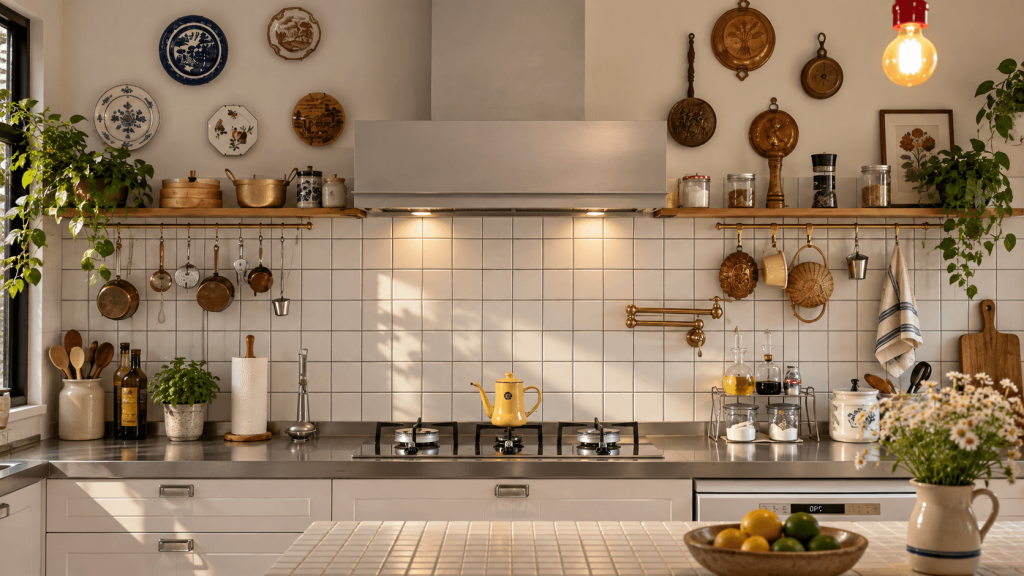
Two Peel-and-Stick Backsplash Types Worth Comparing
At this point, I would compare construction before color. A lighter gel-style tile and a thicker, stronger-adhesive tile can create very different rental projects even when both are sold as peel-and-stick backsplash.
Affiliate disclosure: We may earn a commission if you buy through links in this section, at no extra cost to you.
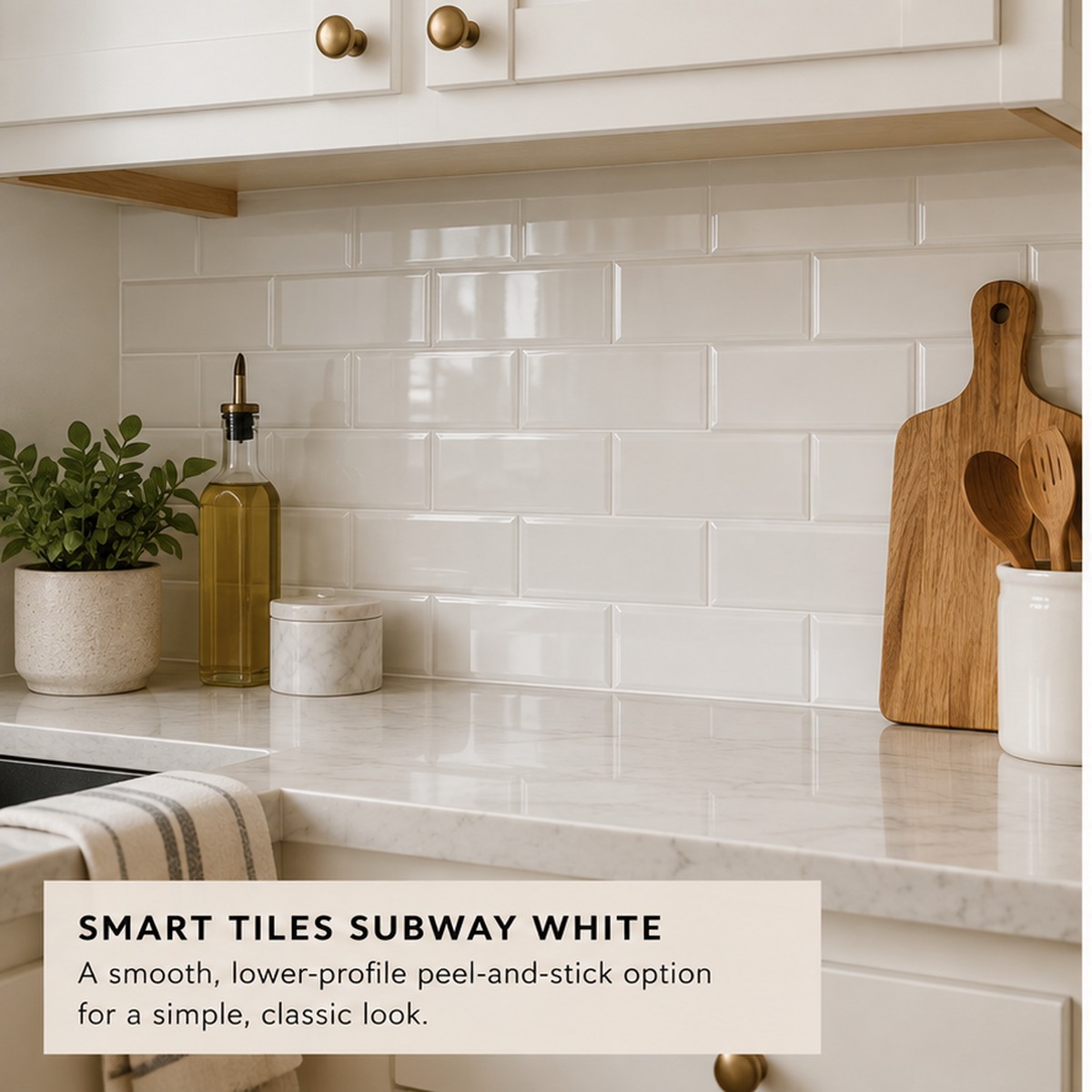
Smart Tiles Subway White Peel-and-Stick Backsplash
This type makes sense when you want a lightweight backsplash layer over an existing smooth surface rather than a thicker wall-tile project. Smart Tiles says this model can go directly over existing tile or other smooth surfaces and can be repositioned during installation.
Good fit: a smooth existing backsplash or wall where you want a simple subway-tile look without adding much physical thickness.
What to watch: the manufacturer does not recommend direct water contact and sets a 120°F maximum around heat sources. It also notes that the adhesive becomes permanently affixed after about 48 hours, and removal results still depend on the surface underneath.
Check current details on Amazon →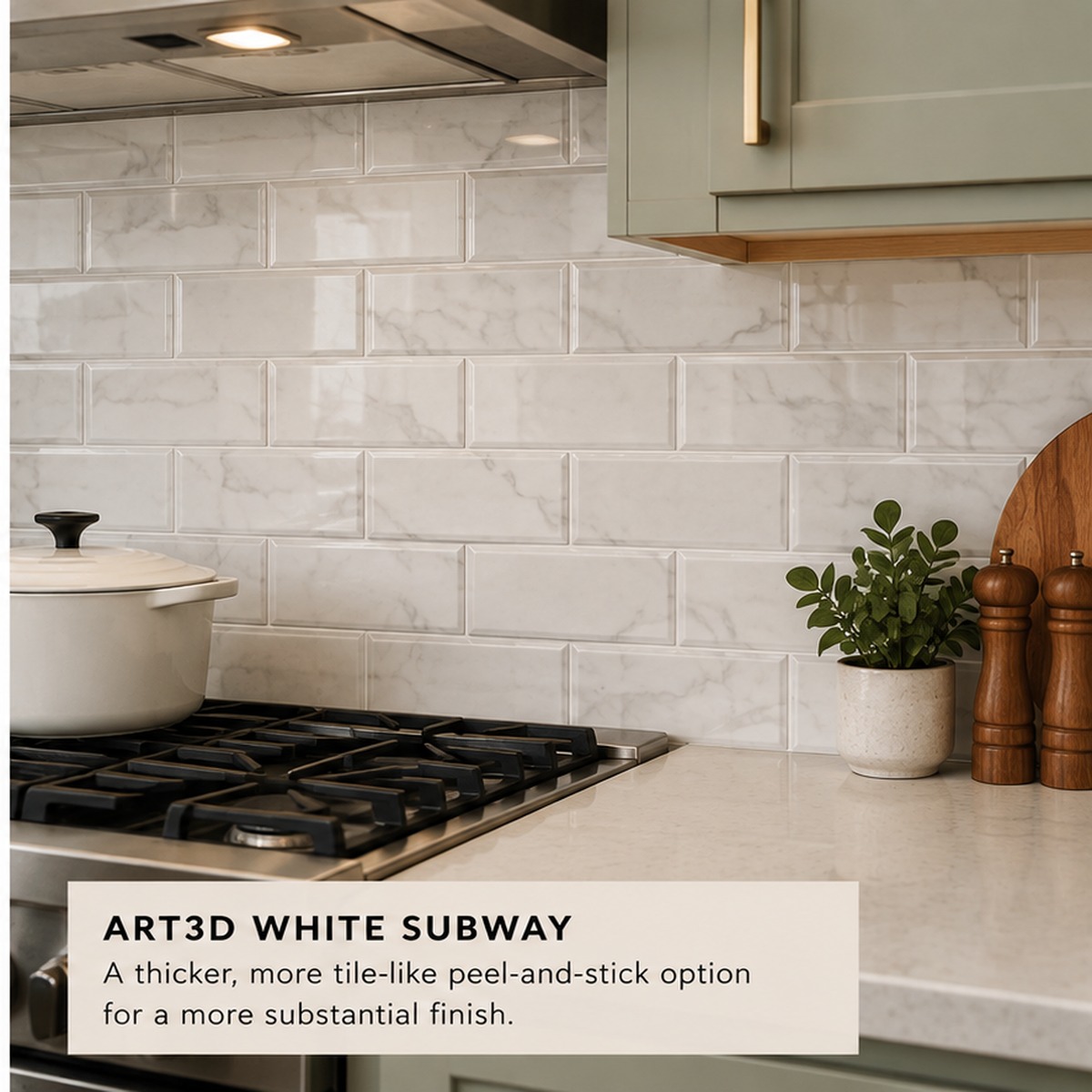
Art3d White Subway Peel-and-Stick Backsplash — Thicker Design
This is a more substantial version of the peel-and-stick idea. The thicker sheets create a more dimensional surface, so the finished backsplash reads more like a tile layer than a very thin wall sticker.
Good fit: a backsplash where you care more about a thicker, more dimensional finish and are comfortable treating the installation as a bigger commitment.
What to watch: stronger adhesive is not automatically a rental advantage. A product designed to hold more aggressively deserves more caution if protecting the original wall or tile is one of your main priorities.
Check current details on Amazon →If the wall, heat, or moisture conditions still make you hesitate: do not keep shopping for a supposedly better adhesive tile. The location itself may be telling you this is not the right project.
So, Is Peel-and-Stick Backsplash Worth It?
Yes—when four things line up.
The backsplash is actually the surface making the kitchen feel wrong. The wall or existing tile is a suitable base. The product fits the heat and moisture in that specific location. And the amount of cutting, installation, and eventual removal feels reasonable for the visual payoff.
That is a strong case for peel-and-stick.
The case gets much weaker when you are hoping one narrow strip of wall will rescue cabinets, counters, lighting, or a layout you still dislike.
The goal is not to cover as much as possible.
It is to make one small change that is visible enough to justify the work.It is a small surface doing enough work that you can stop there.
People Also Ask
Is peel-and-stick backsplash renter-friendly?
It can be, but “removable” does not guarantee every wall or finish will come through removal unchanged. Check the existing surface, your lease, product instructions, and a small test area before committing to the full backsplash.
Can peel-and-stick backsplash damage walls?
It can, depending on the adhesive, wall finish, paint condition, how long it stays up, and how it is removed. A wall that is already peeling, soft, damaged, or unstable is not a good surface to cover.
Can you put peel-and-stick backsplash over existing tile?
Some products can be installed over compatible existing tile, but grout lines, texture, cleanliness, and product requirements matter. Check the manufacturer’s instructions rather than assuming every peel-and-stick sheet works over every tile surface.
Can peel-and-stick backsplash go behind a sink or stove?
Only when the specific product is rated for the conditions in that location. Water, steam, grease, and heat can all affect adhesion and durability, so follow the product guidance rather than treating every peel-and-stick backsplash as interchangeable.