How to Work Around an Ugly Countertop Without Covering It
Don’t want to cover an ugly countertop? Use clutter, nearby colors, lighting, and movable decor to make the counter less dominant without changing the surface.
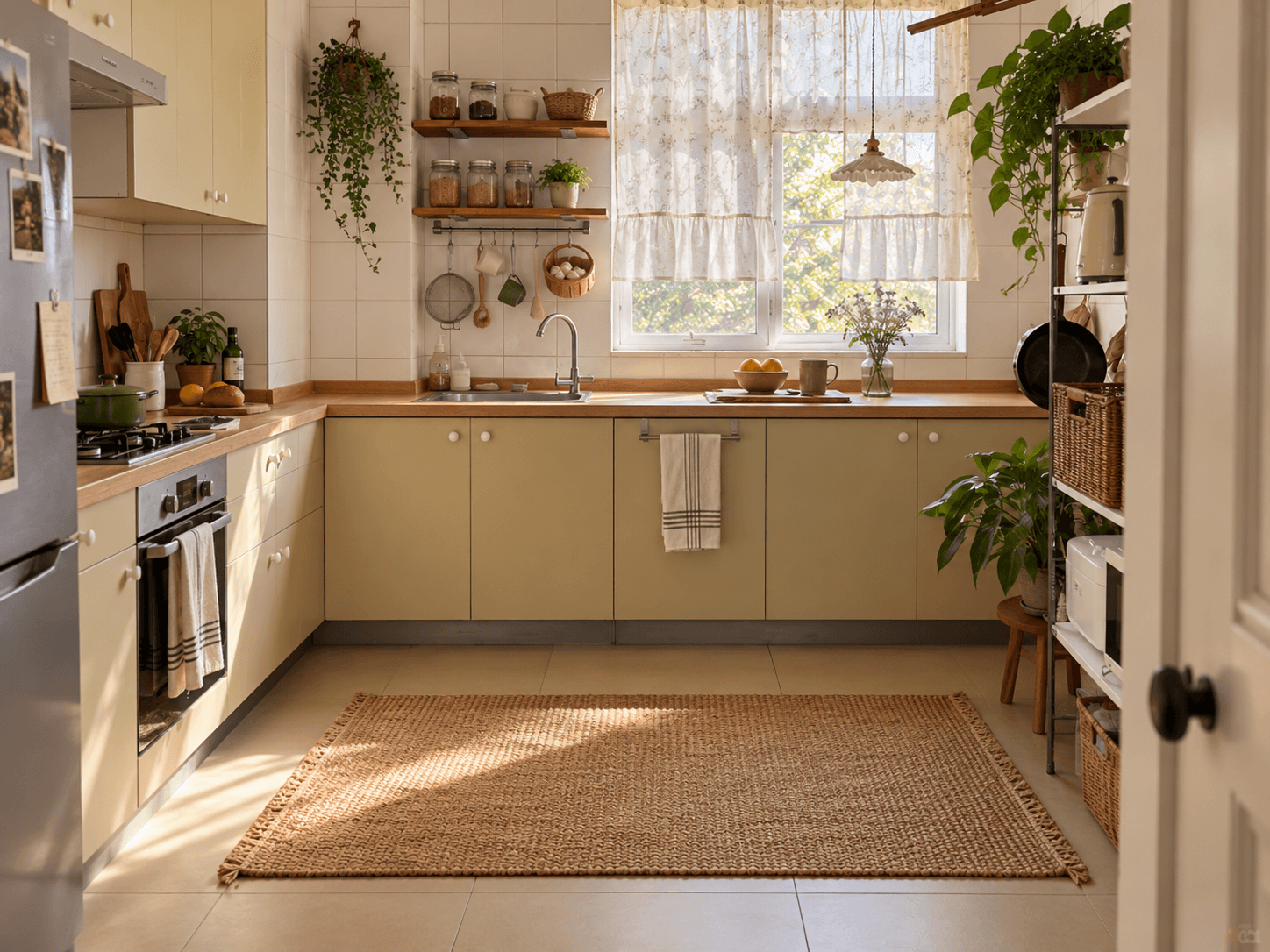
You looked at the sink cutout, the edges, the removal risk, or simply the amount of work—and decided contact paper is not worth it for this counter.
So the countertop is staying.
That does not mean the next step is to find five smaller ways to disguise it.
The better question is what is making the countertop feel more important than it needs to be.
If you are still deciding whether covering the surface is worth the effort, start with Are Contact Paper Countertops Actually Worth It in a Rental?
Here, assume the answer is no—or at least not yet.
Quick Take
First See the Counter Without Everything Sitting on It
Before changing anything around the countertop, clear one section of it.
Not the whole kitchen. Just the stretch you notice most from the doorway, dining area, or wherever you usually see the room.
Move the toaster. Put away the oil bottles, paper towels, utensil crock, tray, coffee supplies, or whatever normally lives there.
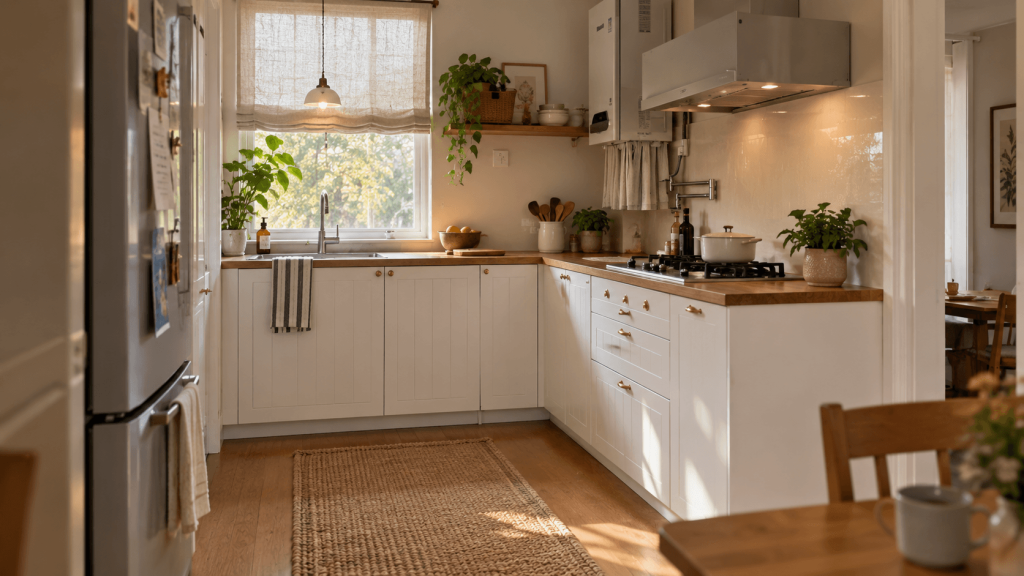
Then step back.
Ask:
Does the countertop itself still dominate the kitchen, or was part of the problem everything sitting on top of it?
A busy faux-granite pattern can get much louder once appliances, bottles, cords, containers, and small objects are layered across it.
If the surface feels calmer once those things are gone, you may not need another treatment yet.
If clearing it makes the finish even more obvious, that tells you something too: the surface itself has a strong visual presence, so the next step is to look outward.
Decide Whether the Counter Is Being Repeated or Fought
A dated countertop rarely exists by itself.
The cabinets, floor, backsplash, appliances, towels, and everyday objects all affect how strongly you notice it.
Sometimes the problem is repetition.
A warm brown countertop beside honey-oak cabinets and a tan floor can merge into one large warm block. Nothing is especially loud on its own, but there is very little separation.
If the cabinets are carrying most of that warm visual weight, How to Make Honey-Oak Rental Cabinets Feel Less Dated looks at that fixed surface from the cabinet side.
Other times, the countertop is being fought.
A busy warm counter beside cool gray accessories, patterned towels, colorful storage, and another strong surface can make every part of the kitchen compete for attention.
Those two situations need different responses.
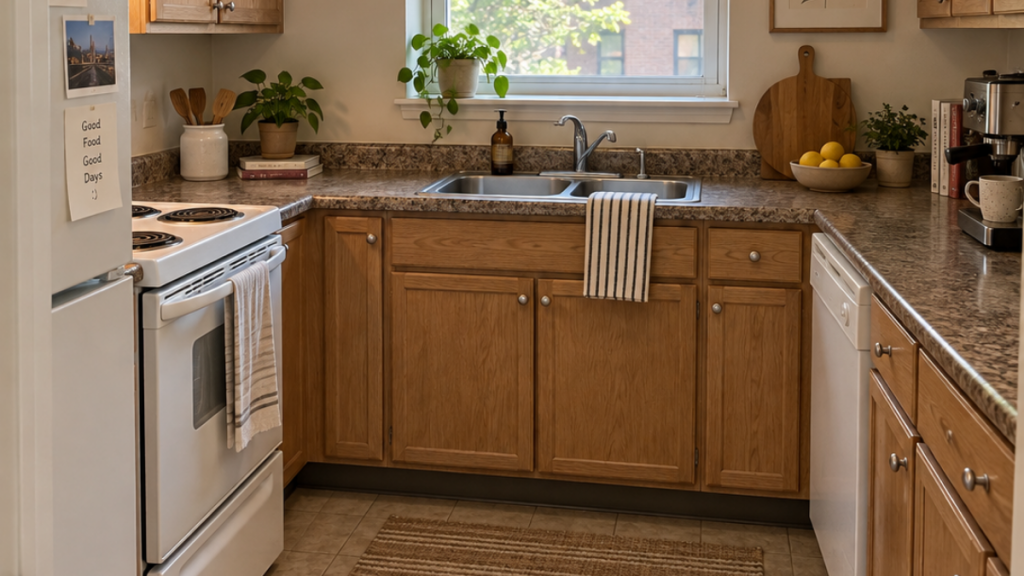
Before adding contrast, decide whether you already have too much contrast—or not enough separation.
If everything is blending together, look for one cleaner break.
If several finishes are already competing, simplify instead.
The goal is not to find the perfect palette for a countertop you did not choose. It is to stop the rest of the kitchen from either repeating it endlessly or fighting it.
Change the Closest Movable Layer First
Once you know what the relationship is, start with the closest thing you can change easily.
Not the backsplash.
Not the cabinet hardware.
Not another peel-and-stick project.
Look at the movable things that visually sit on or directly beside the counter: appliances that stay out, storage, towels, bottles, utensils, or a styling cluster.
Change one layer, then step back.
If the counter already feels less dominant, stop there.
That pause matters more than it sounds. A small improvement does not automatically need a second improvement.
Test the Light Before You Start Matching Colors
Some countertops look very different between daylight and evening.
Speckled laminate can read flatter at night. Beige surfaces can turn more yellow. Warm faux stone can look orange under one fixture and much calmer in daylight.
Check the countertop once during the day, then again under the kitchen light you normally use at night.
If it only looks especially muddy, yellow, gray, or harsh under one condition, that is useful information.
You do not need to turn this into a lighting project. You just need to know whether the finish itself is the problem or whether the light is exaggerating it.
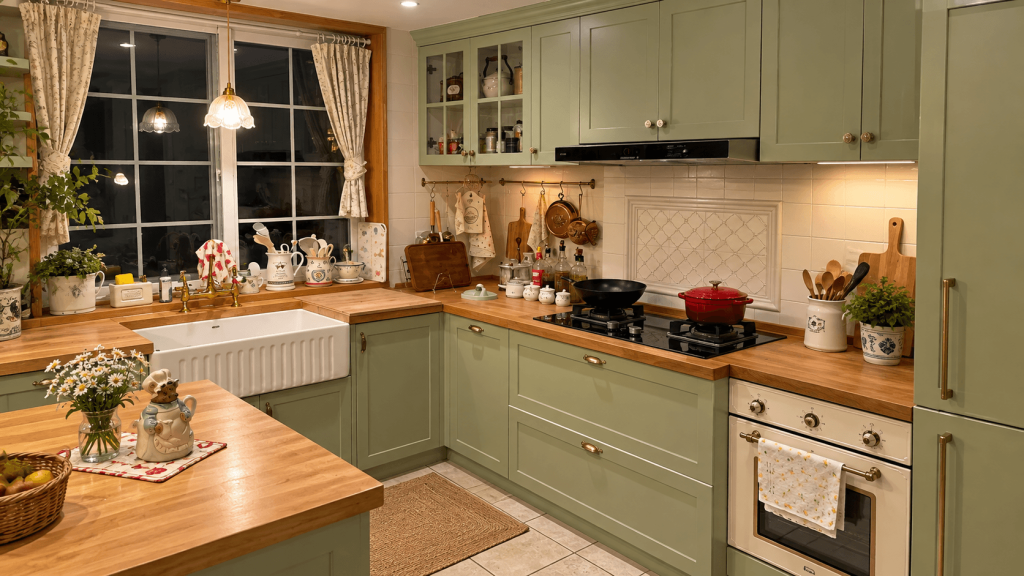
Only Add a New Visual Destination If the Counter Still Wins
After you clear the surface, simplify the nearest layer, and check the light, the countertop may still be the first thing you notice.
Only then does it make sense to give the eye somewhere else to land.
That does not mean surrounding the counter with more decor.
A window, dining area, one useful kitchen zone, or another movable element you already like may be enough to shift the room’s hierarchy.
One stronger destination is more useful than several small things trying to compete with the counter.
If creating that destination starts requiring several new purchases, the workaround is getting bigger than the problem.
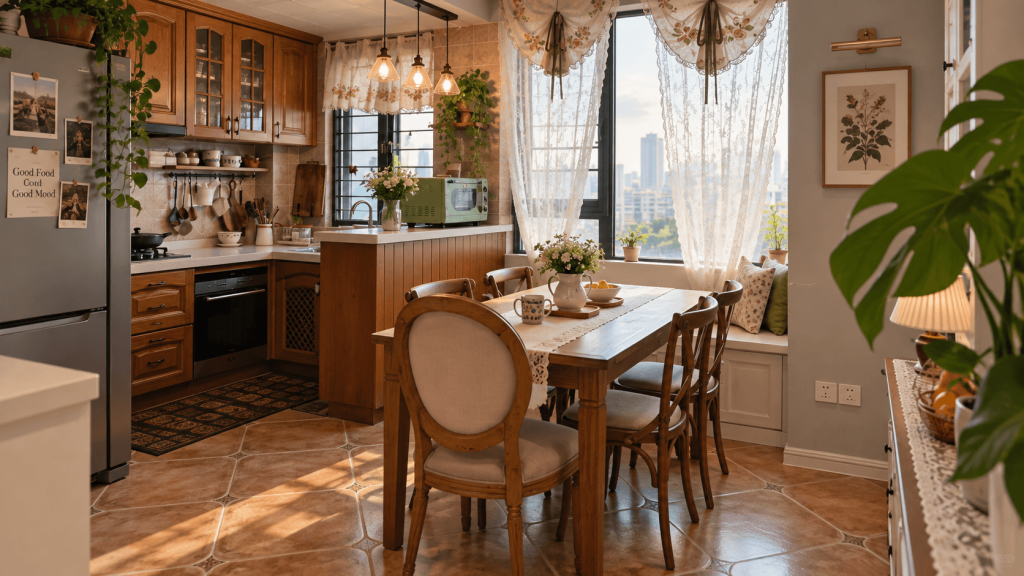
Don’t Build a Second Makeover Because You Skipped the First One
This is the easiest trap after deciding against contact paper.
You skip one surface project, then start another: backsplash, hardware, runner, shelf, lighting, more decor.
Any one of those changes may be reasonable.
Before adding another, ask:
Would I still want this change if the countertop were already a finish I liked?
If yes, it probably belongs to the room.
If no, it may just be compensation for the countertop.
That does not make it wrong. It means it deserves the same scrutiny as the contact paper project you already decided was not worth it.
Know When Working Around It Is Enough
After making a few small changes, look at the kitchen again from the place where you normally see it.
Then ask:
Do I still notice the countertop first—or do I simply still know that I don’t like it?
Those are not the same thing.
You can dislike the finish without still having a countertop problem.
If the kitchen feels calmer, the work surface stays usable, and your eye no longer keeps returning to the counter, the workaround may already be finished.
The countertop does not need to become beautiful.
It only needs to stop controlling the room.
And if it still bothers you, but covering it is still not worth the effort, risk, or cost, leaving it alone is a valid decision too.
You do not need a sixth workaround.
FAQ
How can I hide ugly rental countertops without contact paper?
Start by reducing what makes the countertop visually louder rather than covering it with more objects.
Clear the busiest section first, then look at the finishes and light around it. Change one nearby variable at a time and see whether the countertop becomes less dominant before adding anything else.
What can I put on an ugly countertop to make it look better?
Keep anything you add functional and limited.
A few useful objects can make a counter feel more intentional, but filling the surface with trays, cutting boards, plants, containers, or decor can reduce usable space while making the countertop busier.
How do you make dated countertops look less noticeable?
Look at how the countertop relates to the cabinets, floor, accessories, and lighting around it.
If everything repeats the same tone, create more separation. If several finishes are already competing, simplify instead.
What if I still hate the countertop after changing the kitchen around it?
Revisit whether altering the surface itself is worth the effort and risk.
If it still is not, the better decision may be to accept the countertop as a fixed rental constraint rather than continuing to build more workarounds around it.