How to Work With Beige Rental Carpet Without Covering All of It
Beige rental carpet making the whole room feel flat? Use floor-level separation, a portable palette, and better visual hierarchy to help it fade into the background.
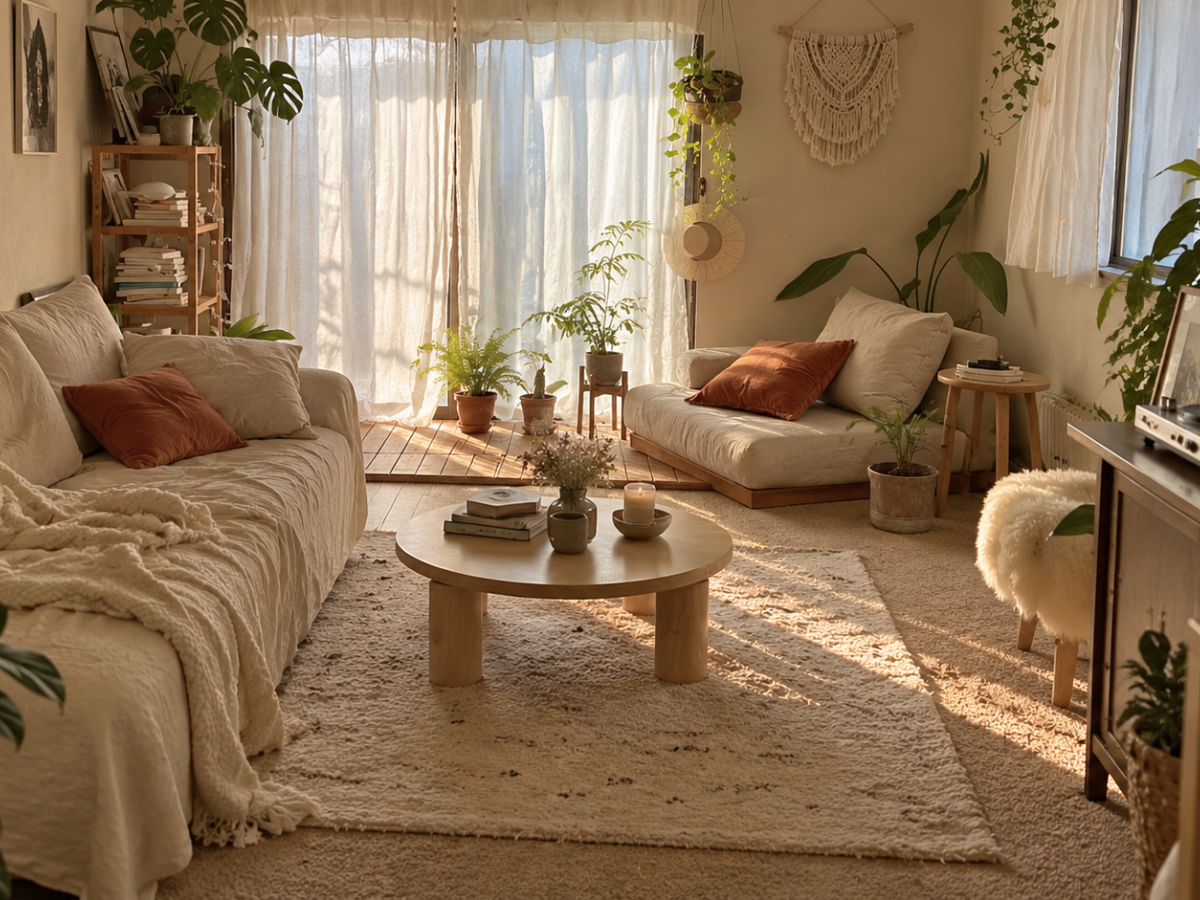
A living room with beige carpet does not need to become an all-beige room—or a full flooring project. The carpet usually feels most dominant when the furniture, walls, and textiles sit in the same pale range or when there is nothing else strong enough to organize the space.
Start by creating separation around the carpet before trying to hide all of it.
The goal is not to make the beige disappear. It is to give the room something more intentional to look at.
If you are deciding whether to add a rug over the carpet, Is It Worth Putting a Rug Over Rental Carpet? handles that decision separately. If you are already choosing between a large rug and broader temporary flooring, see Temporary Flooring vs a Large Rug: Which Is Worth It in a Rental?
Quick Take
First, Figure Out Why the Beige Carpet Feels So Noticeable
Before changing the room around the carpet, make sure you are reacting to its color rather than its condition.
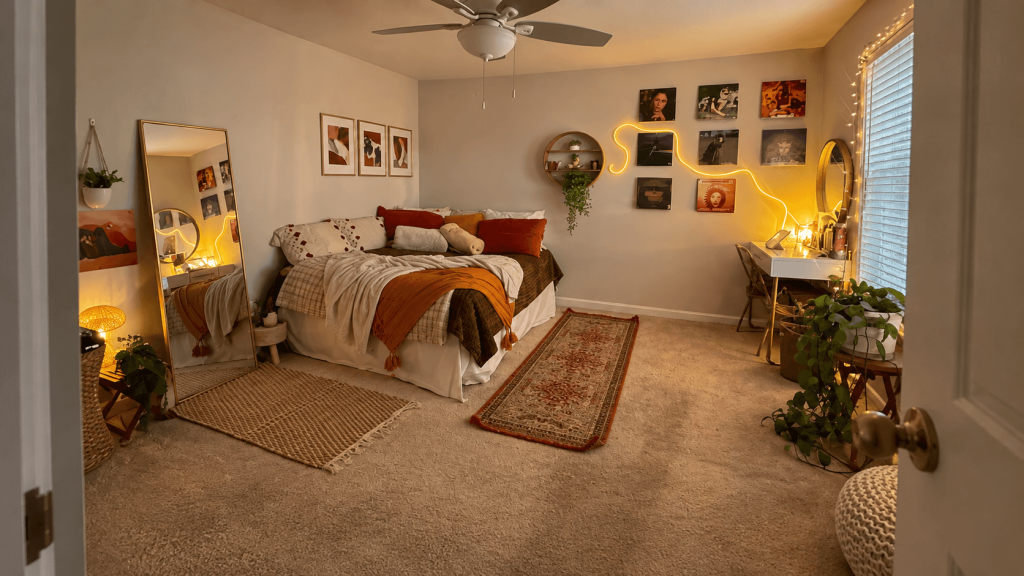
Beige carpet can shift a lot with wear. Flattened traffic paths may look darker, surface soil can turn warm beige gray, and uneven wear can make an ordinary neutral much harder to ignore.
Ask:
Would I still dislike this carpet if it looked like the least-worn section of itself?
If the answer is no, the main problem may be condition rather than beige. That belongs in cleaning, maintenance, or a landlord conversation—not in a decorating plan.
If the carpet is reasonably clean and intact and the room still seems to sink into it, then the visual problem is worth addressing.
Look at What Happens in the Bottom Third of the Room
Do not start with the wall art.
Look at the room from the carpet upward.
What happens where your furniture and textiles meet the floor?
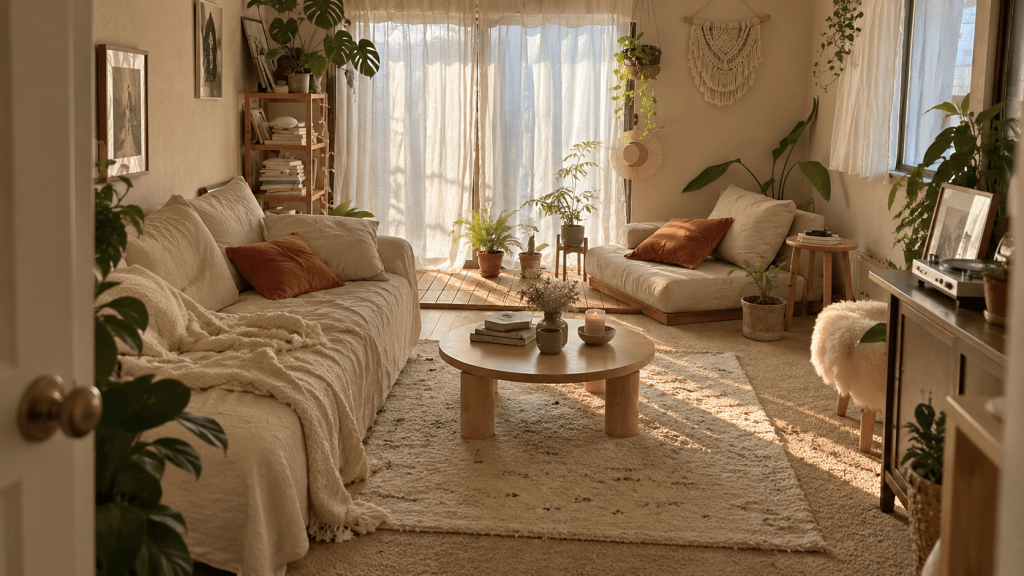
A pale sofa may almost disappear into beige carpet. Cream bedding can hang low enough to create one large light block with the floor. Pale curtains, light wood, tan baskets, and low furniture can all add another version of the same warm neutral close to the ground.
None of those things is necessarily wrong.
The problem is what happens when they all meet in the same part of the room.
If everything meeting the carpet has roughly the same visual weight, the carpet becomes the base color of the whole lower room.
So instead of asking what accent color you are missing, ask:
Where does this room need one clearer edge?
You may not need more color. You may just need one or two places where the furniture stops visually dissolving into the floor.
Create Separation Without Building the Room Around the Carpet
Once you see where the room is blending together, do not try to fix every pale thing.
Start with one or two important boundaries.
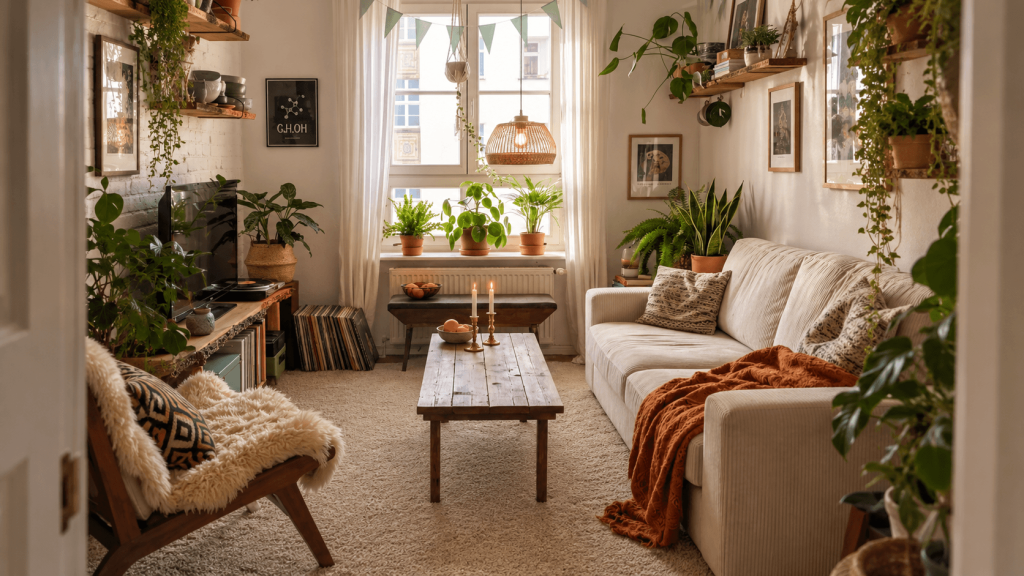
For example, a cream sofa can separate more cleanly from beige carpet when its medium-tone wood or dark metal legs stay visible, rather than disappearing behind another pale skirted base. Likewise, cream bedding or curtains that hang all the way into the carpet can extend the same light tone downward; shortening that visual overlap can create a clearer break without adding a new color.
The goal is not maximum contrast.
The carpet needs less agreement around it—not a room full of contrast.
This is also where beige carpet can quietly take over the palette. Because beige is easy to coordinate with, it is tempting to keep choosing cream, tan, oatmeal, warm wood, and natural textures simply because they all “go.”
They may match perfectly and still keep the carpet visually involved in every decision.
If the walls are contributing just as much to that continuous beige field, How to Live With Beige Rental Walls Without Making the Whole Room Beige handles the vertical side of the same problem.
The carpet does not need to be the palette starting point just because it covers the most square footage.
Acknowledge its undertone if you need to, then let the portable pieces you own relate to each other.
Let the carpet belong to the apartment. Let the portable palette belong to you.
If One Zone Still Feels Too Beige, Decide Whether It Is Actually a Rug Problem
After creating some separation, look at the room again.
Is the beige carpet still bothering you everywhere, or mainly in one place?
Maybe the bedroom now feels fine except for the open area around the bed. Maybe the living room works until your eye reaches the sofa and coffee-table zone.
At that point, you may no longer have a whole-room beige-carpet problem.
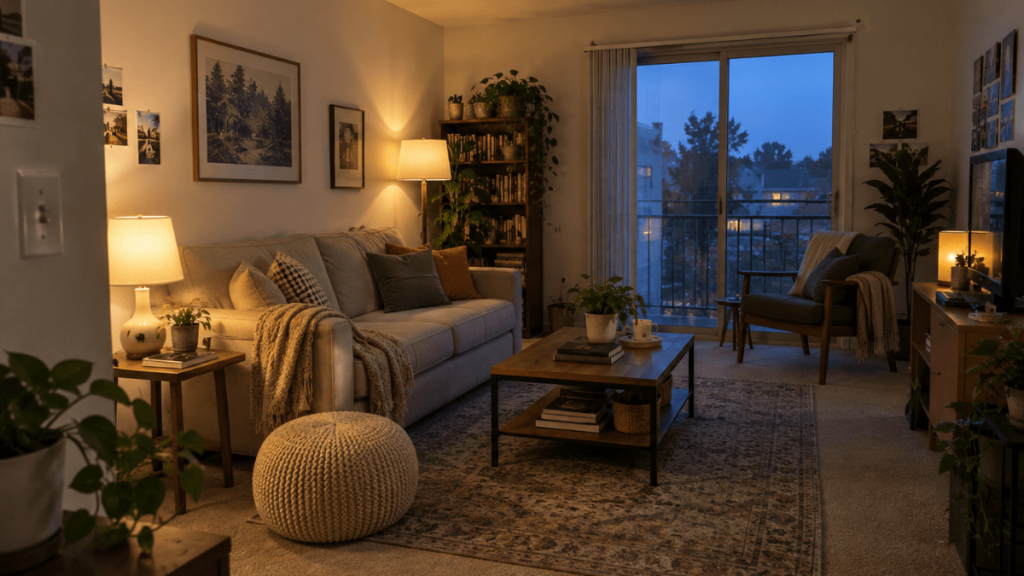
You may have a rug decision.
Ask:
Would changing this one central floor zone solve most of what still bothers me?
If yes, Is It Worth Putting a Rug Over Rental Carpet? is the next question to answer.
There is no need to keep changing furniture, curtains, baskets, and wall decor because one section of floor still feels unresolved.
And if the issue extends beyond a rug-sized zone and you are considering broader coverage, Temporary Flooring vs a Large Rug: Which Is Worth It in a Rental? handles that escalation.
Move Some Visual Weight Above the Floor
Sometimes the lower part of the room is no longer blending together, but the carpet still seems to define the space.
Look at where the room’s visual weight sits.
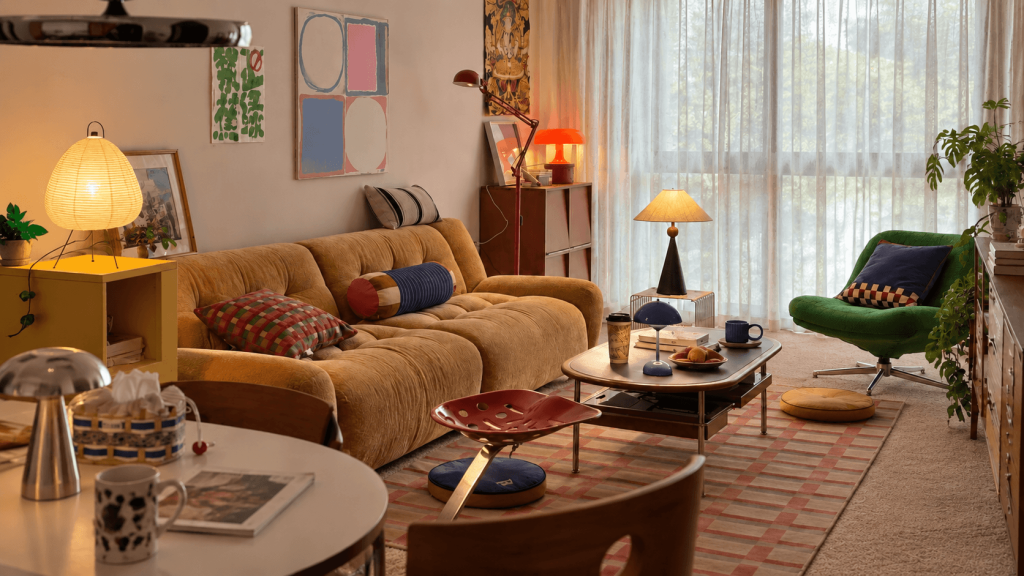
If almost everything substantial is low—sofa, bed, coffee table, baskets, low storage—the eye keeps returning to the floor plane.
Not every important part of the room needs to happen close to the carpet.
You may already have a window, headboard, taller furniture, or another existing feature that can carry more of the room visually.
The goal is not to distract from the carpet with wall decor.
It is to keep the floor from being the place where the whole room visually finishes.
The carpet matters less when the room has another natural destination for the eye.
Know When Beige Carpet Is Already Background
Beige carpet may never become something you actively like.
That is not the goal.
After creating a few clearer lower edges, letting your portable palette separate from the carpet, and giving the room some visual weight above the floor, step back again.
Ask:
Do I still notice the carpet first—or do I simply still know that it is beige rental carpet?
Those are different problems.
If the furniture no longer disappears into the floor and your own things feel more connected to each other than to the carpet, you may already be done.
This is also where overcorrecting can create a new problem. If every new change is darker, brighter, more saturated, or more patterned just to fight the beige, the carpet may not become quieter—everything else may simply become louder.
Use one final check:
Did this change make the carpet quieter—or did it just make everything else louder?
If it is the second one, stop.
The win is not forgetting that the carpet is beige.
It is reaching the point where beige is no longer the room’s main idea.
FAQ
How do you make beige carpet look better in a rental?
Start with the lower part of the room rather than immediately adding more decor.
If furniture, curtains, bedding, baskets, and the carpet all sit in the same pale range, creating one or two clearer boundaries can help the carpet recede. Also make sure the problem is actually the carpet color and not wear, soil, or uneven condition.
What colors go with beige rental carpet?
Many colors can work with beige, but the carpet does not need to become the starting point for your entire palette.
Let the portable pieces you actually own relate to each other first. You can acknowledge the carpet’s undertone without repeating beige, tan, cream, and warm neutrals throughout the whole room.
Should I put an area rug over beige carpet?
Sometimes.
If the carpet mainly bothers you in one central seating or sleeping zone, a rug may solve that specific floor problem without requiring you to redesign the rest of the room around the carpet.
How do I make a room with beige carpet feel less boring?
Do not assume the answer is simply more color or more decor.
First check whether the lower half of the room is blending into one pale neutral field. Create separation where it matters, then give the room some visual weight above the floor so the carpet is not carrying the whole composition.