Should You Change Cabinet Hardware in a Rental? When It’s Worth It—and When It Isn’t
Thinking about changing cabinet hardware in a rental? Check the existing holes, whole-kitchen cost, reversibility, and whether new hardware will actually fix the problem.
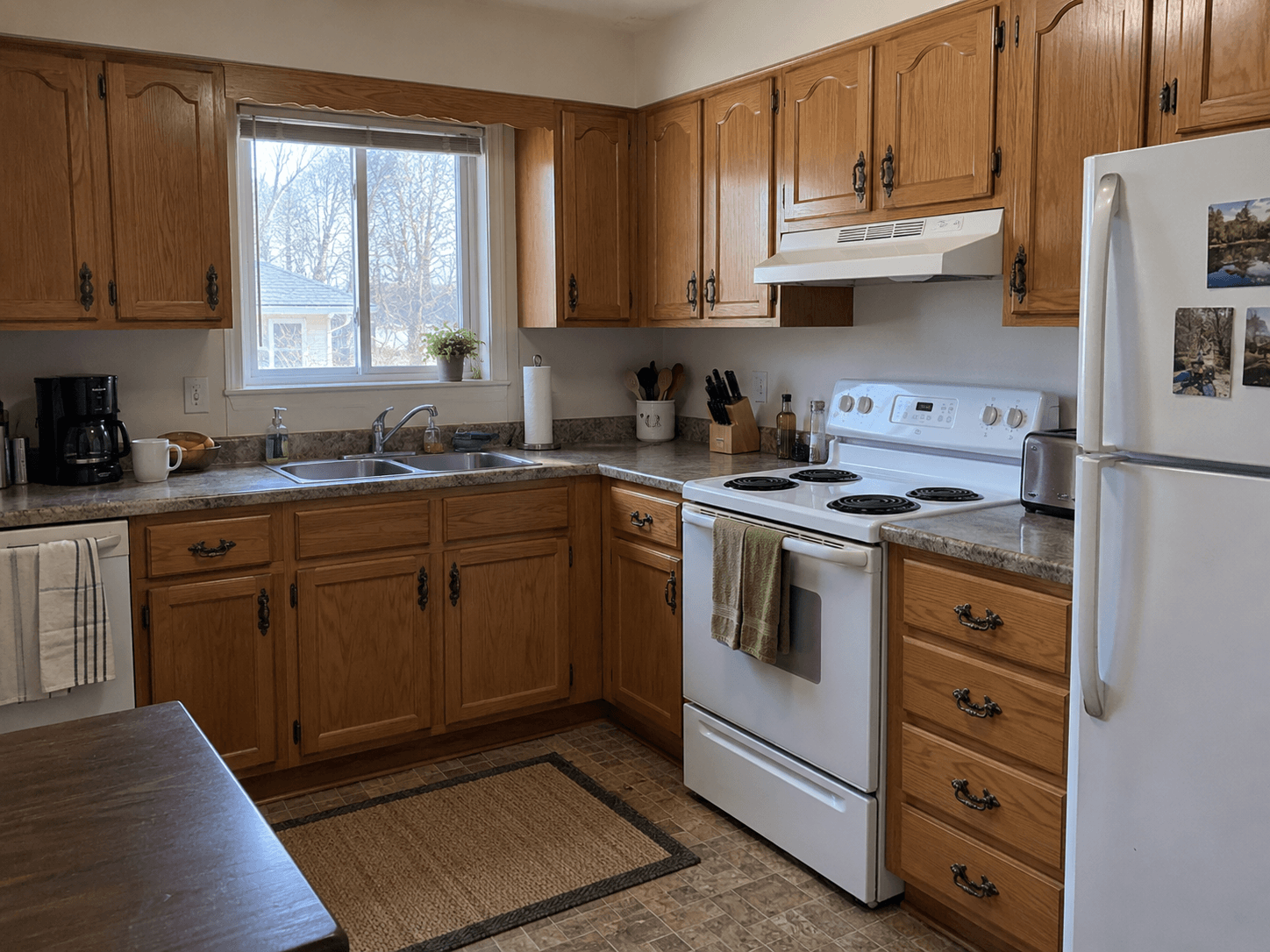
You’re looking at a dated rental kitchen, and the cabinet hardware seems like the obvious thing to change.
It’s small, removable, and much easier to imagine replacing than the cabinets themselves. Take out a few screws, put something nicer in their place, and maybe the whole kitchen feels better.
Sometimes it does.
But easy to change doesn’t automatically mean worth changing.
If the knobs or pulls are genuinely part of what makes the cabinets feel dated, replacing them can make a surprisingly noticeable difference. If the cabinet color, door style, finish, or condition is doing most of the visual work, though, you may simply end up with nicer hardware on cabinets you still don’t like.
So before you start looking at brass pulls or matte black knobs, ask a more useful question:
Will changing the hardware change what bothers you about the cabinets enough to justify replacing every piece?
Quick Take
First, Is the Hardware Actually What Looks Dated?
Try mentally removing the hardware from the cabinets for a moment.
If the knobs or pulls disappeared, would the cabinets still bother you just as much?
That question is more useful than asking whether new hardware would look better. Of course new hardware can look better than hardware you already dislike. What matters is whether the old hardware is carrying enough of the problem for removing it to change the room.
Sometimes it is.
Heavy decorative pulls can make otherwise ordinary cabinets feel much older. Hardware that has been painted over, badly worn, or finished in a way that draws too much attention can do the same thing.
But sometimes the handles are just sitting on top of a much bigger problem.
If what you notice first is a strong orange or honey-toned wood finish, a dated door profile, peeling laminate, chipped paint, or simply a large wall of cabinets in a color you dislike, changing the hardware will not make any of that disappear.
Hardware can change how a cabinet reads. It cannot replace a change you actually wanted to make somewhere else.
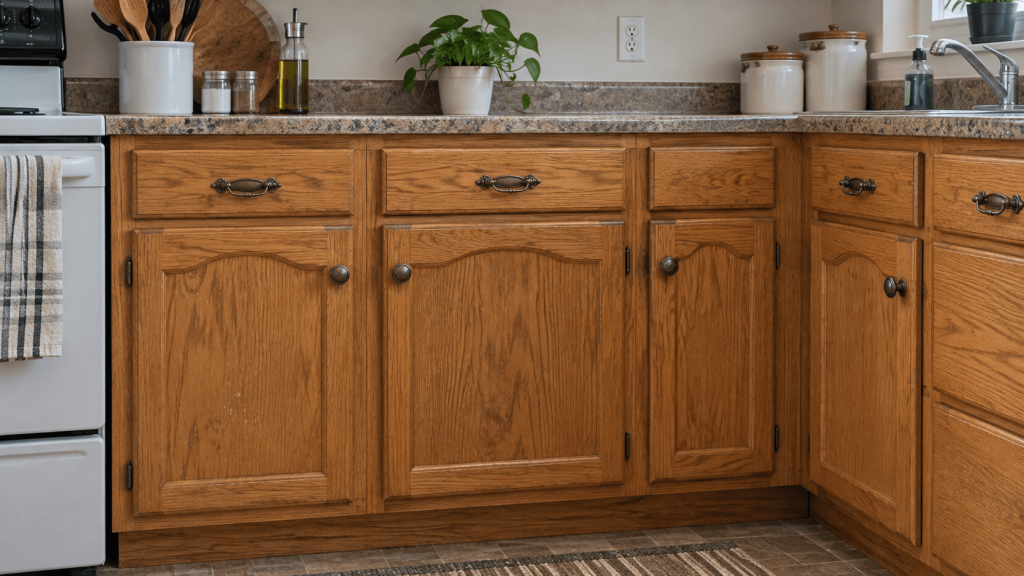
If you’re still not sure which part of the kitchen is bothering you, start with Ugly Rental Kitchen Cabinets? What Should You Actually Change?
And if the wood tone is clearly the issue, How to Make Honey-Oak Rental Cabinets Feel Less Dated Without Covering Them is the more useful next step.
When Changing the Hardware Is Usually Worth It
Cabinet hardware tends to be worth changing when three things line up: the existing hardware is genuinely part of the visual problem, the replacement works with what is already there, and you’ll get enough use from the change to justify doing the whole kitchen.
The hardware is carrying enough of the visual problem
There is a difference between hardware that is simply not your favorite and hardware that noticeably dates the cabinets.
Maybe the pulls are oversized and ornate in a kitchen that would otherwise feel fairly simple. Maybe they have been painted over several times. Maybe their finish clashes with everything around them.
In those cases, taking the old hardware away removes something you actively dislike.
A useful test is whether your reaction is closer to:
These cabinets would feel much calmer without those handles.
Or:
I still don’t like the cabinets, but maybe better handles will distract me.
The first is a much stronger reason to make the change.
The replacement works with what is already there
The simplest version of this project uses the holes that already exist.
A single-hole knob is usually straightforward to replace with another single-hole knob. With a two-hole pull, you need to know the distance between the two mounting holes.
That measurement is called the center-to-center spacing.
You don’t need to learn much more than that before shopping. If the replacement matches the existing holes, you are still dealing with a straightforward hardware swap.
If it requires new holes, you are not.
Drilling into a cabinet door or drawer front is a different decision from removing one handle and installing another in the same place. Check your lease or property rules before treating that kind of change as a normal reversible upgrade.
You’ll get enough use from the change
A removable upgrade can still be a poor use of money if you barely get to enjoy it.
Think about how long you expect to stay and how much the cabinets affect how the kitchen feels to you now.
You can often remove hardware you bought and take it with you when you move. But that does not mean it will fit the cabinets in your next home.
Treat that as a possible bonus, not the reason the purchase makes sense.
The change should be worth living with in this kitchen first.
When New Hardware Probably Won’t Solve the Problem
Cabinet hardware gets recommended so often in rental makeover advice that it can start to feel like a default answer.
It shouldn’t be.
There are kitchens where changing it makes a noticeable difference. There are others where it barely touches what actually feels wrong.
The cabinets are what you actually dislike
If the wood tone dominates the kitchen, the door profile feels dated, or the finish is chipped and worn, a new pull is still attached to the same cabinet.
It may make that cabinet feel a little more intentional. It may improve one detail.
But it does not change the surface, shape, or condition you were reacting to in the first place.
If the cabinet surface is the part you actually want to change, decide whether contact paper is worth using on your rental cabinets before assuming a full wrap is the next step.
This is especially easy to forget while shopping. A beautiful handle photographed against a clean cabinet door can look far more transformative than it will across the cabinets you actually have.
The change would require altering the cabinets
Maybe you have single-hole knobs but want long pulls.
Maybe the pulls you like use different hole spacing.
At that point, you are no longer deciding whether to swap hardware. You are deciding whether to alter the cabinet so different hardware can fit.
That is a different project.
If the replacement requires new holes, stop and reassess before treating it as a simple reversible upgrade.
There may be another option that works with what is already there. If there isn’t, leaving the hardware alone may make more sense than permanently changing the cabinet for a relatively small visual gain.
You’re asking the hardware to solve a different problem
This is usually where expectations get out of proportion.
If you know the orange wood tone is what bothers you, brass pulls will not make the cabinets stop looking orange.
If the kitchen feels heavy because cabinets cover an entire wall, smaller knobs will not remove that visual mass.
Hardware can shift the emphasis.
It cannot solve a different problem just because that problem is harder to change.
Count the Whole Kitchen Before You Call It a Cheap Upgrade
A cabinet pull may cost only a few dollars.
That doesn’t mean replacing the hardware in your kitchen costs only a few dollars.
Before comparing finishes or styles, count the cabinet doors and drawers you would actually need to change. If the kitchen mixes knobs and pulls, count those separately too.
Then use the number that matters:
Number of pieces × price per piece = the cost of the upgrade.
A $5 pull sounds inexpensive on its own.
Twenty-four of them is a different decision.
The point isn’t that cabinet hardware is necessarily expensive. Compared with many kitchen changes, it can still be relatively affordable.
The problem is that it is easy to judge the price of one piece when what you are actually buying is a whole kitchen’s worth.
So step back and use a little Rental Math.
How much visual impact do you expect?
What will the whole project cost?
How reversible is it?
And how long will you be there to enjoy it?
A cheap knob doesn’t automatically make the full project a cheap upgrade.
Before You Order a Full Set, Test One Cabinet
If the numbers still make sense, you don’t need to commit to the whole kitchen yet.
Test one cabinet.
Remove one existing knob or pull first.
If it is a two-hole pull, measure from the center of one mounting hole to the center of the other. That is the spacing a replacement needs to match if you want to reuse the existing holes.
Then look at the cabinet underneath.
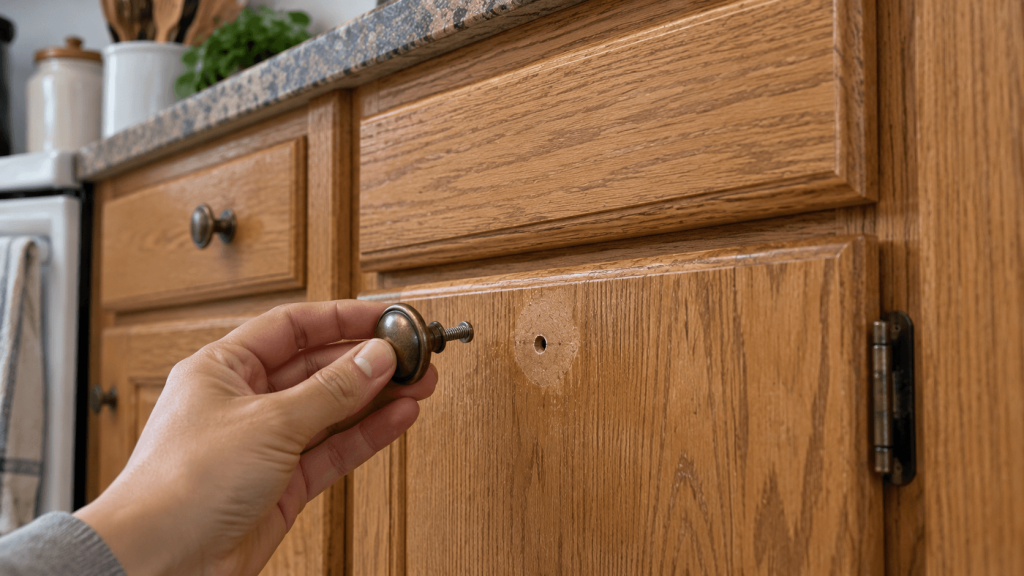
You may find a lighter or darker footprint where the old hardware covered the finish. There may be paint buildup, a small chip near a screw hole, or discoloration you couldn’t see before.
A smaller replacement might expose it. A larger one might cover it.
Finding that out on one cabinet is much better than discovering it after you’ve ordered an entire set.
If possible, try one replacement.
Install it, then step back.
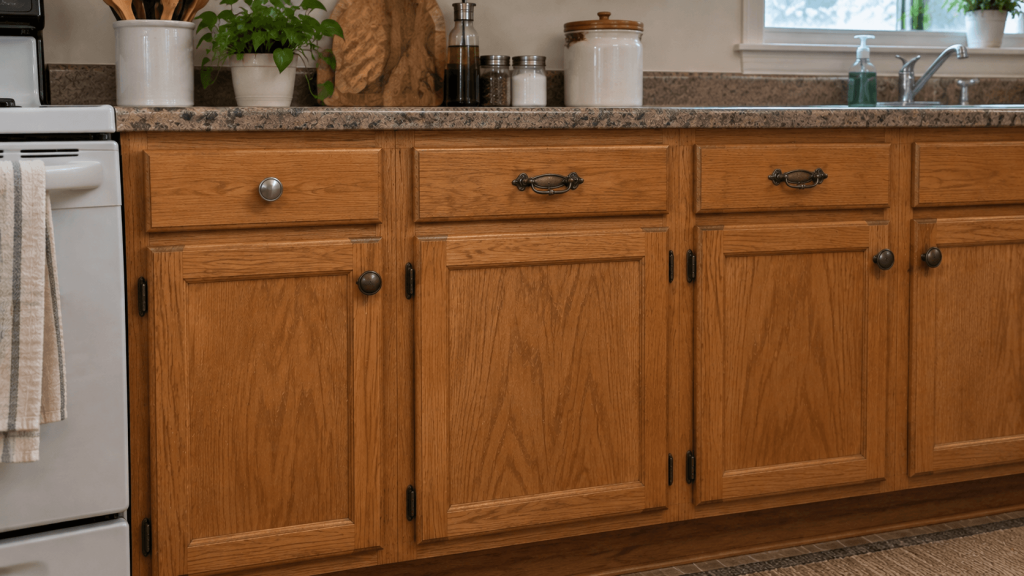
Don’t stare at the new handle. Look at the cabinet.
Does the cabinet itself feel better?
Does the hardware sit cleanly against the surface?
Does it cover what the old piece left behind?
Most importantly, does it change the thing you hoped it would change?
If it does, buying the rest becomes a much easier decision.
If your reaction is, “The handle looks nicer, but I still dislike the cabinet just as much,” you’ve learned something useful before spending much money.
Keep the Original Hardware Like It Belongs to the Apartment
If the hardware came with the rental, treat it as part of the apartment even after you remove it.
Keep the original knobs, pulls, and screws together in a labeled bag or container. If different doors or drawers use different pieces, take a quick photo before removing them.
And don’t assume that replacing the hardware means the original pieces are yours to discard.
Check your lease or property rules, especially if the language around fixtures, alterations, or move-out restoration is unclear.
If you need to put the kitchen back the way it was when you leave, the project is only reversible if you still have the pieces needed to reverse it.
So, Should You Change Your Rental Cabinet Hardware?
There are three reasonable answers.
Change it
Change the hardware if the existing knobs or pulls are clearly part of what makes the cabinets feel dated, the replacements fit the holes already there, and the whole-kitchen cost makes sense for the amount of change you expect.
That is the version of this project that earns its reputation as a simple rental upgrade.
Test one first
Test one cabinet if you think the hardware could help but you’re not sure how much.
This is especially useful if you don’t know what is hiding underneath the existing hardware or whether the cabinets themselves are the bigger problem.
One test piece can answer both questions.
Leave it alone
Leave the hardware alone if the cabinet finish, door style, condition, or overall color is the real reason you dislike the kitchen.
Also reconsider the project if the hardware you want requires drilling new holes or otherwise altering the cabinets.
If changing the hardware changes enough of what bothers you, it can be an easy rental upgrade to justify.
If it doesn’t, being easy to undo isn’t much of a reason to do it.
FAQ
Can you change cabinet hardware in a rental?
It depends on your lease or property rules. Using the existing holes and keeping the original hardware makes the change more reversible than drilling new holes, but rental policies vary.
Do replacement cabinet pulls need the same hole spacing?
If you want to reuse the existing holes, yes. For a two-hole pull, measure the center-to-center distance between the current mounting holes and choose a replacement with matching spacing.
Can you replace a cabinet knob with a pull in a rental?
A cabinet knob typically uses one mounting hole, while a pull typically uses two. Changing from a knob to a pull may therefore require an additional hole, which turns a simple swap into a cabinet modification.
Is changing cabinet hardware worth it if the cabinets are still ugly?
Only if the hardware itself is a meaningful part of what bothers you. If the cabinet color, finish, door profile, or condition is the main problem, new hardware may improve one detail without changing how you feel about the cabinets overall.
If you are dealing specifically with honey-oak cabinets, work with the finish before assuming the hardware needs to fix it.