Ugly Rental Kitchen Cabinets? What to Change—and What Not To
Ugly rental kitchen cabinets? See what to change first, when hardware or lighting may be enough, and when covering the cabinets is actually worth the work.
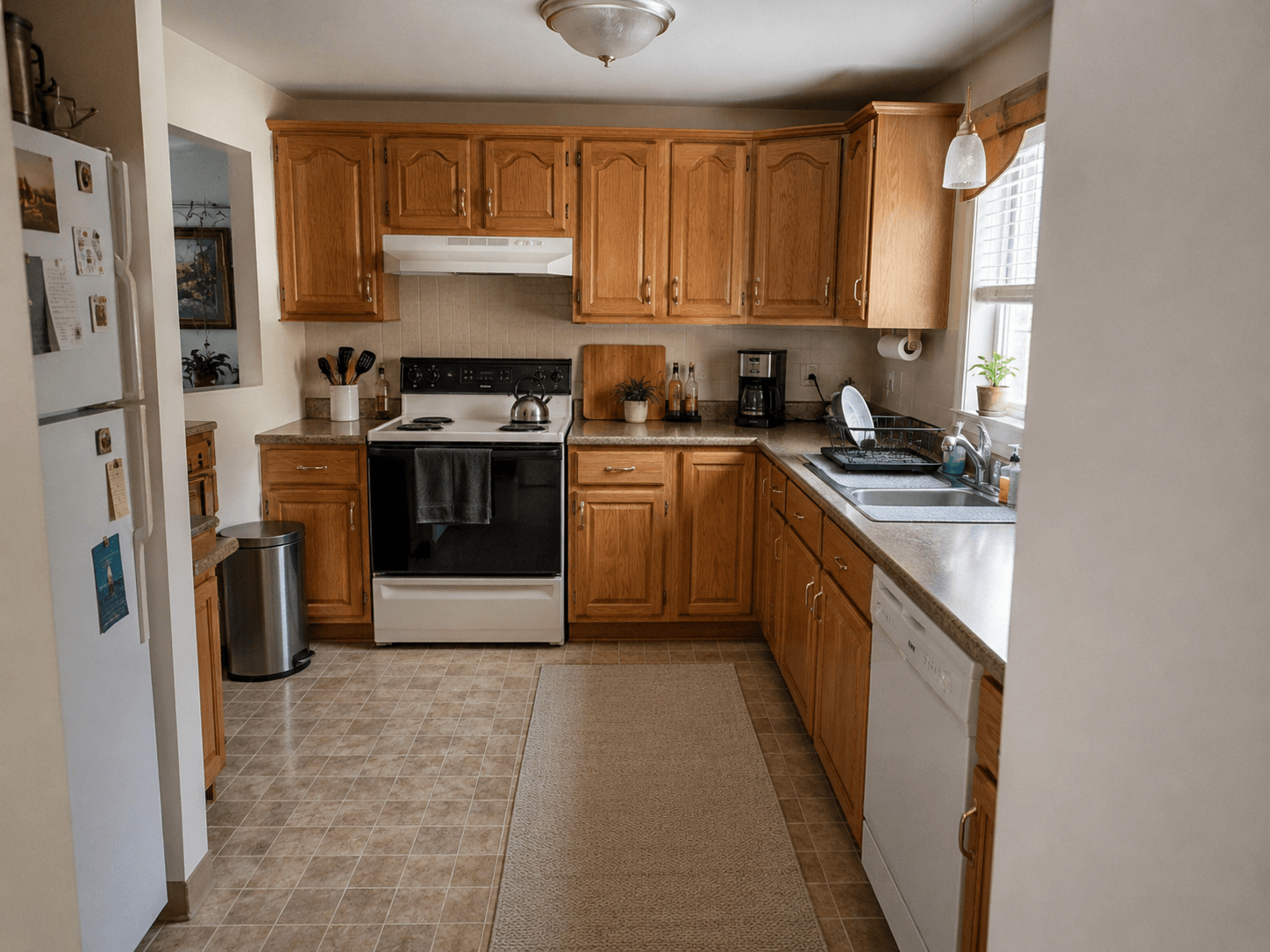
Ugly kitchen cabinets are hard to ignore in a rental because they take up so much visual space. But the cabinets themselves are not always carrying the whole problem.
Lighting, countertops, hardware, clutter, and nearby finishes can all make dated cabinets feel more dominant than they really are.
Before you cover, paint, or wrap the cabinet doors, step back and figure out how much of the problem actually belongs to the cabinets.
Quick Take
First, Separate Ugly Cabinets From Bad Cabinets
There’s a difference between cabinets you wouldn’t have chosen and cabinets that aren’t working properly.
Honey oak you dislike, dated dark finishes, flat laminate doors, or old-fashioned hardware are mostly aesthetic problems.
A door hanging off its hinge is different. So are drawers that won’t close, broken shelves, swollen material, water damage, or surfaces that are already peeling or delaminating.
Those are things to document and bring to your landlord or property manager rather than cover up.
A dated cabinet finish may be your decorating problem. A cabinet that’s deteriorating isn’t.
If the cabinets are honey oak and the finish itself has to stay, see how to make honey-oak rental cabinets feel less dated without covering them.
Before You Touch the Cabinets, Look at the Whole Kitchen
When you dislike your cabinets, it’s tempting to inspect the cabinet doors themselves and start imagining them in another color.
Try looking from farther away first.
Stand where you normally enter the kitchen and look at the entire room.
Maybe the cabinets are warm, but so is the busy brown granite directly below them. Maybe the doors themselves are fairly plain, while ornate pulls are doing most of the work of making them feel dated. Or maybe the honey oak looks acceptable during the day and turns aggressively orange under a cool overhead light at night.
Countertop clutter can add another layer. A coffee maker, toaster, dish rack, bottles, packages, and cooking tools all sit directly against the cabinets, adding more shapes and colors to a kitchen that may already feel visually busy.
None of those things means you suddenly have to like the cabinets.
They just make it harder to tell what you’re actually reacting to.
Try this instead:
If you mentally changed the cabinet color but left everything else exactly the same, would you actually like the kitchen?
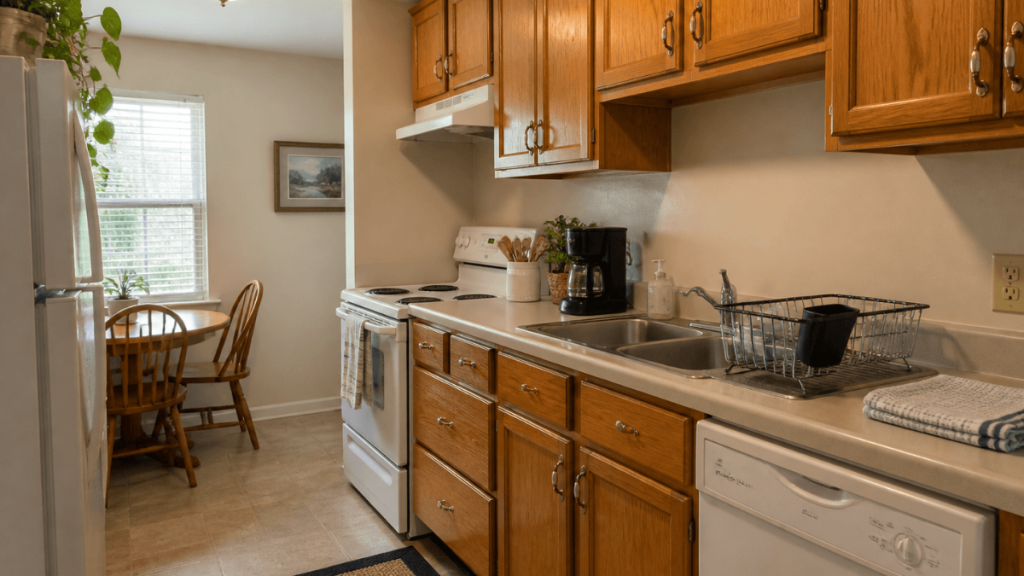
Sometimes the cabinets are not the finish creating the clash. If they become easier to live with once you imagine a quieter backsplash, it may be worth asking whether peel-and-stick backsplash is actually worth it in your rental kitchen before covering the cabinets themselves.
Change the Easier Things Before You Change the Cabinets
You don’t have to prove that a smaller change will solve everything.
You only need to find out whether it solves enough.
Start With the Hardware
If the cabinet doors themselves are relatively simple but the knobs or pulls feel noticeably dated, hardware is one of the easiest places to test that.
But easy to replace doesn’t automatically mean worth replacing. Before you commit to the whole kitchen, it helps to decide whether changing cabinet hardware in a rental is actually worth it for the cabinets you have.
If it is, keep the swap as simple and reversible as possible.
Use the existing holes. A new pull that requires different spacing may mean drilling into a cabinet that doesn’t belong to you.
And keep every original knob, pull, and screw. Put them together in a labeled bag or box somewhere you’ll actually remember at move-out.
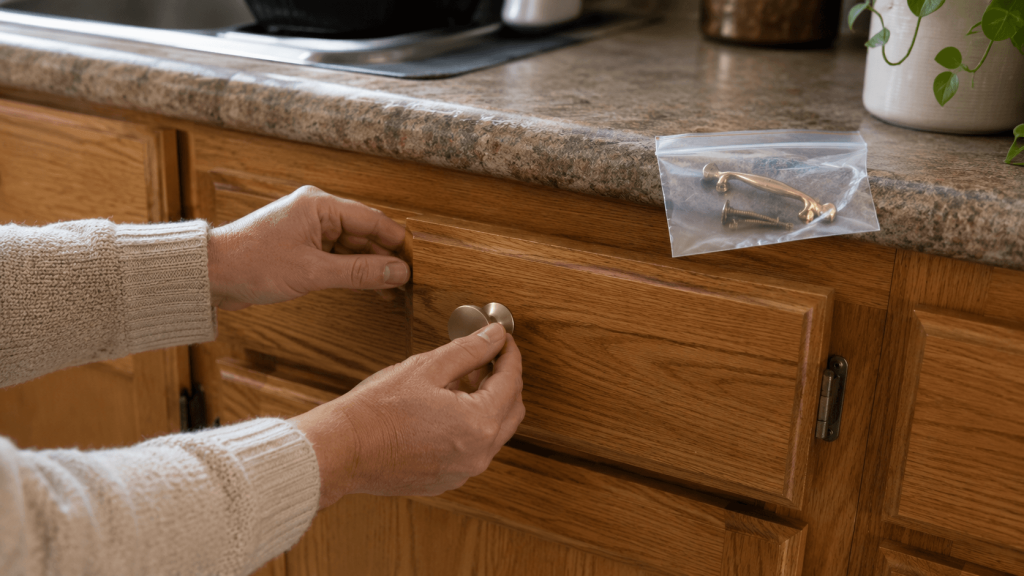
Then live with the change before doing more.
Also look at the cabinets at different times of day. If they only become the color you hate once the overhead light is on, part of the problem may belong to the lighting rather than the cabinet finish.
The same goes for what’s happening directly below them.
You don’t need to strip your counters down to an empty minimalist surface. But clearing enough everyday clutter to see the kitchen properly can tell you whether the cabinets still feel overwhelming once there’s less visual competition around them.
If the countertop itself is part of what’s bothering you, that’s a separate decision rather than another reason to immediately change the cabinets. See what to do about ugly rental countertops before deciding the cabinets need to change too.
If lighting is making every finish in the room harder to live with, start with our guide to fixing a dark rental apartment before changing the cabinets themselves.
Temporary Cabinet Covers Are More Work Than They Look
Once the easier changes are in place, you may still look at the kitchen and think:
No. It really is the cabinets.
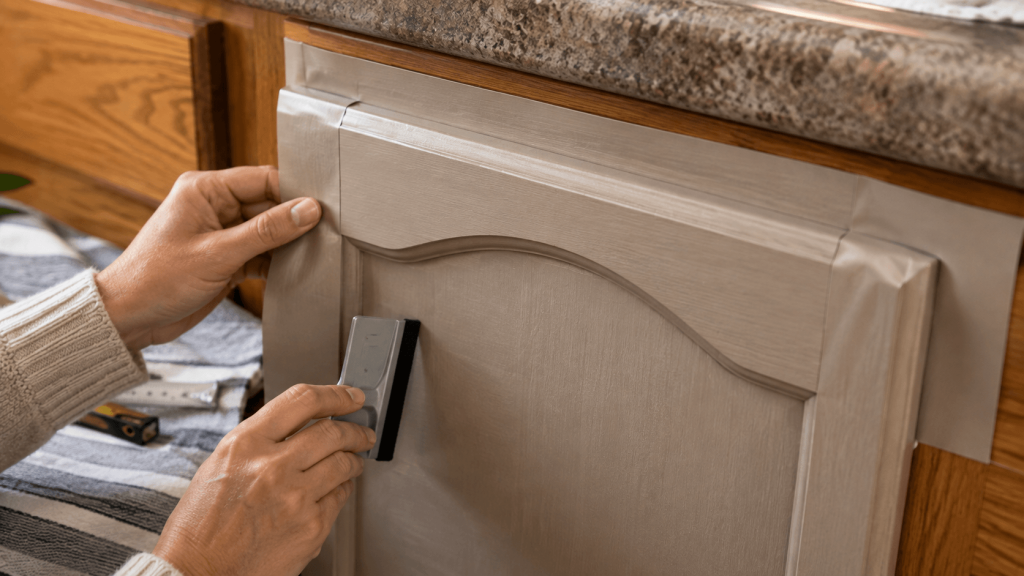
At that point, removable wallpaper, contact paper, or vinyl wrap can look tempting.
If contact paper is the option you’re considering, first decide whether contact paper for rental cabinets is actually worth it. The surface condition, door shape, amount of cabinetry, and time left on your lease can turn a simple-looking wrap into a very different project.
A dramatic before-and-after can make the project seem like a simple matter of choosing a finish and sticking it onto the doors.
But a cabinet door isn’t a decorative surface you only look at.
You touch it. You pull on it. You open and close it repeatedly. You wipe it down. In a kitchen, it may also be exposed to grease, moisture, and heat.
So the useful question isn’t only:
Will this material stick?
It’s also:
Will it still look good after months of being touched, wiped, opened, and closed—and will it come off cleanly later?
And if only one run of cabinets—or the doors facing your living area—is what really bothers you, don’t assume every door and drawer needs the same treatment.
Flat Doors Are Not the Same as Detailed Doors
Look closely at the doors before deciding how easy a temporary cover will be.
A flat slab door gives you a relatively simple surface.
A Shaker-style door has recessed areas and more edges. Raised-panel and routed doors add even more corners, grooves, and changes in depth.
Those details may be part of what gives the cabinet character, but they also make a smooth temporary covering harder to execute neatly.
A material that looks effortless on one flat door in a product photo may become a very different project when you have twelve detailed doors and six drawer fronts.
Test Before You Commit
“Test it in a hidden spot first” sounds like universally safe advice.
It isn’t.
A test only makes sense if the existing finish is sound enough to test in the first place.
If the cabinet surface is already peeling, flaking, bubbling, or separating at the edges, applying adhesive to it may damage an already fragile finish. That’s a maintenance issue to raise with the landlord, not a good surface for an experiment.
If the finish is in good condition, check your lease and the temporary covering manufacturer’s instructions before committing to the whole kitchen. A small inconspicuous test can then give you some information about adhesion and removal on your particular surface.
“Removable” on the package is useful information.
It isn’t a guarantee about every cabinet finish in every rental.
Painting Is a Different Decision
Painting rental cabinets belongs in a different category from swapping hardware or trying a removable decorative treatment.
It changes the existing finish itself.
If your landlord has given you clear permission to paint, you can decide whether the result is worth the work. Without that permission, “I’ll just paint them back before I move” shouldn’t automatically be treated as a reversible plan.
Cabinet painting also involves more than the price of a can of paint. Done properly, there may be cleaning, prep, hardware removal, priming, multiple coats, drying time, and a kitchen full of doors and drawers to work through.
And if you’re expected to restore them later, you’ve created a second project for move-out.
Know When the Cabinets Are Better Left Alone
Two rental upgrades can have the same price and very different value.
Imagine you have $120 to spend on a kitchen you expect to live with for another year.
That $120 could go toward hardware you may be able to use again. It could go toward better lighting or an organizer that moves to your next home.
Or it could go toward vinyl for the cabinet doors.
The vinyl may create the biggest visual transformation. But when the lease ends, you may spend another afternoon removing it before throwing it away.
That doesn’t automatically make the vinyl a bad purchase. If the cabinets bother you every day and you’ll enjoy the result for several years, the temporary nature of the material may be completely acceptable.
But the purchase price alone doesn’t tell you that.
A renter also has to think about what remains valuable after this particular kitchen is no longer theirs.
So before taking on a cabinet makeover, ask yourself how much of what you’re buying is for your home—and how much is for this apartment.
If you’re weighing the visual payoff against cost, effort, and how long you’ll stay, our Worth It? framework can help you make that call.
Don’t Make the Cabinets a Bigger Project Than They Need to Be
Kitchen cabinets take up so much visual space that they’re easy to blame for everything you dislike about a rental kitchen.
Sometimes changing them is worth it. But sometimes the better move is changing the hardware, the light hitting them, or simply what’s competing with them.
Start with the part you can change easily. Then look at the kitchen again.
If the cabinets still feel like the problem, you’ll be making that decision with much better information.
FAQs
How can I make ugly rental kitchen cabinets look better?
Start by checking whether the cabinet finish is actually carrying most of the visual problem. Hardware, lighting, countertop clutter, and nearby finishes can all make dated cabinets feel more dominant. Change the easiest variable first, then decide whether the cabinet surface still needs attention.
Can I change cabinet hardware in a rental?
Often you can swap knobs or pulls reversibly, but check your lease first and keep all of the original hardware. Using the existing holes avoids turning a cosmetic change into a permanent modification.
Can I put contact paper on rental cabinets?
Possibly, but the answer depends on the existing finish, the shape of the doors, how much cabinetry you plan to cover, and whether the material can be removed cleanly later. A product labeled removable is not a guarantee that every cabinet finish will tolerate adhesive.
How can I update oak kitchen cabinets without painting?
Before covering or painting the wood, look at the hardware, lighting, countertop, backsplash, and other warm finishes around it. Sometimes changing what surrounds the oak makes more difference than changing the cabinet surface itself.